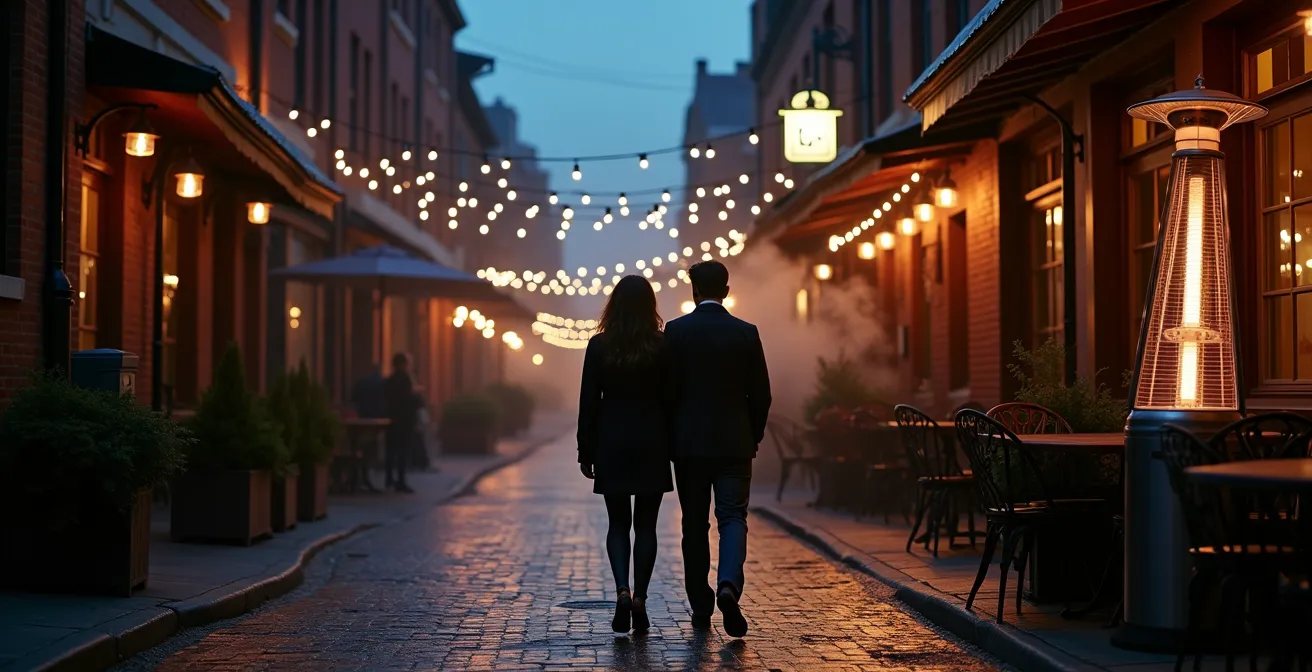
The Distillery District offers a premium date night, but its true value isn’t found in the price tag—it’s unlocked through your strategy.
- Avoid low-value costs like peak-time entry fees and inconvenient on-site parking by planning your arrival time and transportation.
- Focus your spending on high-impact experiences like a curated food tour or a unique gin-making class for a greater return on your investment.
Recommendation: Instead of a standard, single-restaurant dinner, design a multi-stop tasting tour for a more dynamic, memorable, and ultimately more valuable evening.
The question inevitably arises when planning a special evening in Toronto: is a night out in the Distillery District truly worth the premium? You see the photos, you hear the buzz, and you know the ambiance is unmatched. But as a discerning couple, you’re rightfully wary of the line between a genuinely elevated experience and a beautifully packaged tourist trap. The conventional wisdom is to simply book a reservation far in advance and prepare for a pricey bill. It’s a passive approach that often leads to a pleasant, yet forgettable, evening that doesn’t quite justify the expense.
This perspective, however, misses the point entirely. The value of the Distillery District isn’t a fixed commodity you purchase; it’s an experience you actively curate. The secret to a successful date night here lies not in simply spending money, but in understanding the district’s unique ecosystem. It’s about a strategic cost-benefit analysis: knowing where to splurge for maximum impact and where to save without sacrificing an ounce of romance or sophistication. The district is a stage, and the most memorable evenings are directed, not just attended.
But what if the key wasn’t the final bill, but the return on your experiential investment? What if you could bypass the common frustrations—the crowds, the parking woes, the overpriced entrées—and orchestrate an evening that feels exclusive and thoughtfully planned? This guide is not about whether the Distillery District is “worth it.” It’s about *how* to make it worth it. We will deconstruct the experience, from navigating its heritage-protected cobblestones to choosing a tour that reveals its true character, providing you with a concierge’s blueprint for a date night that delivers on its premium promise.
This article provides a detailed roadmap for curating your perfect Distillery District experience. Each section addresses a critical decision point, offering insider strategies to maximize value and romance. Explore the sections below to master every aspect of your visit.
Summary: A Strategic Guide to the Distillery District’s True Value
- Why the Distillery District’s Cobblestones Are Protected by Heritage Laws?
- How to Secure Tickets for the Winter Village Without Waiting in the Cold?
- El Catrin or Cluny Bistro: Which Patio Offers the Best Atmosphere for Groups?
- The Parking Mistake That Costs Visitors $30 CAD and 40 Minutes of Walking
- Where to Take the Best Instagram Photos in the Distillery Without Crowds?
- Polson Pier Sunset or Graffiti Alley Portraits: Which Photo Tells a Better Story?
- Walking Tour or Segway Tour: Which Is Better for Exploring the Distillery District?
- Ghost Walks or Food Tours: Which Guided Experience Reveals the Real Toronto?
Why the Distillery District’s Cobblestones Are Protected by Heritage Laws?
The premium you pay in the Distillery District is, in part, for the privilege of stepping back in time. The very ground you walk on is not a modern imitation but a genuine piece of Toronto’s industrial history. The district, a stunning collection of Victorian Industrial architecture, has been protected under the Ontario Heritage Act since 1976. This designation was critical, saving the area from demolition after its industrial life ended and ensuring its preservation. It means that every element, especially the original cobblestone streets, must be maintained to preserve its authentic character. This isn’t just about aesthetics; it’s about maintaining a tangible link to the 19th-century Gooderham & Worts distillery, which was once the largest in the world.
This historical integrity is the foundation of the district’s unique atmosphere, but it comes with a practical challenge for visitors. Navigating these authentic, uneven surfaces requires forethought, especially for a romantic evening. The wrong footwear can quickly turn a magical night into a painful ordeal. To ensure your focus remains on the ambiance and your partner, rather than on your feet, a strategic choice of shoes is non-negotiable. It’s a small detail that makes a significant difference in the overall quality of your experience.
Here is a practical guide to navigating the historic streets with grace and comfort:
- For Women: Opt for block heels (a maximum of 2-3 inches) or stylish wedges for stability. Stilettos are a definitive mistake on these surfaces. In colder weather, ankle boots with rubber soles are both practical and chic. Always have a pair of backup flats if wearing heels.
- For Men: Leather dress shoes are appropriate, but ensure they have rubber soles for grip. Smooth leather bottoms can be treacherous, especially if the stones are wet. Chelsea boots offer a sophisticated look with added ankle support.
- Accessibility: For those who need it, accessible ramps are located near the Trinity Street entrance. You can also utilize the smoother pathways that run alongside the building edges to minimize time on the main cobblestones.
How to Secure Tickets for the Winter Village Without Waiting in the Cold?
The Distillery Winter Village is arguably Toronto’s most enchanting holiday experience, but its popularity can lead to long queues in freezing temperatures—the antithesis of a sophisticated date night. The key to enjoying the magical atmosphere without the hassle is a strategic approach to ticketing and timing. While the event is free on weekdays before 4 PM, the real magic happens after dark when the lights create a festive glow. For these peak times, a $15 general admission fee applies, and queues can be substantial.
Paying for a ticket only to spend 30 minutes shivering in a line represents poor value. A savvy couple understands that the real luxury is bypassing this inconvenience entirely. Fortunately, there are several “atmosphere hacking” techniques to ensure you walk right in, preserving the romantic mood and maximizing your time enjoying the village itself. These strategies transform the entry fee from a simple cost into a part of a well-planned, seamless experience. The most effective method leverages the district’s own ecosystem: the restaurants.

By planning ahead, you can turn a potential frustration into a moment of effortless entry. Consider these local strategies to bypass the lines:
- Book a Dinner Reservation: This is the premier strategy. Diners with reservations at participating restaurants can access the Winter Village at no additional cost and typically use a separate, faster entrance. You are turning a required cost (dinner) into a value-added benefit (skip-the-line access).
- Visit on Off-Peak Days: If your schedule is flexible, visiting on a Tuesday, Wednesday, or Thursday before 4 PM is not only free but also significantly less crowded, offering a more intimate experience.
- Purchase Express Tickets: For approximately $39.50, express tickets offer skip-the-line privileges at all gates, even on sold-out dates. This is a splurge, but it guarantees immediate access if you’re short on time or visiting on a prime Saturday night.
- Target the ‘Shoulder Season’: The decorations often remain up until early January. From January 1-4, the village is still beautiful, but tickets are typically no longer required.
El Catrin or Cluny Bistro: Which Patio Offers the Best Atmosphere for Groups?
While the question asks about groups, a discerning couple can extract the crucial information needed for a date night: atmosphere. Choosing between El Catrin Destileria and Cluny Bistro is a classic Distillery District dilemma, and the right answer depends entirely on the narrative you want for your evening. Both offer exceptional patios, but they tell two very different stories. This choice is a perfect example of “value curation”—it’s not about which is objectively better, but which is better for the specific mood you want to create.
El Catrin is an explosion of vibrant, festive energy. Its patio is famous for its dramatic décor, fire pits, and the constant, lively buzz of music and conversation. It’s the place for a high-energy, celebratory date. In contrast, Cluny Bistro offers a slice of modern Parisian romance. Its atmosphere is softer, more elegant, and built for quiet conversation over a glass of wine. The soundscape is one of clinking glasses and hushed tones, not upbeat music. Making the right choice here is critical for your experience ROI; a couple seeking intimate conversation will feel out of place at El Catrin, while a couple celebrating a milestone might find Cluny too subdued.
To make an informed decision, a direct comparison of their atmospheric qualities is essential. This table breaks down the key differences to help you align your choice with your desired date night vibe.
This table, based on an analysis of the district’s top restaurants, provides a clear framework for your decision.
| Aspect | El Catrin | Cluny Bistro |
|---|---|---|
| Atmosphere Style | Vibrant Mexican fiesta with bold flavors create a festive, yet intimate vibe | Modern French bistro with Parisian romance |
| Best For Couples | High-energy celebratory dates | Quiet conversation and classic elegance |
| Patio Features | Colorful décor, upbeat music | European café style, softer ambiance |
| Noise Level | Lively buzz and music | Clinking glasses and conversation |
| Reservation Priority | Essential on weekends | Recommended for patio seating |
However, for the ultimate “strategic splurge,” a top-tier concierge might suggest looking beyond these two excellent options. For a truly elevated culinary experience, Madrina Bar y Tapas offers an authentic, Michelin-recognized Spanish tapas journey that transcends the typical dinner format, providing both exquisite food and a sophisticated, intimate setting.
The Parking Mistake That Costs Visitors $30 CAD and 40 Minutes of Walking
Nothing shatters the illusion of a seamless, romantic evening faster than the logistical nightmare of parking. The single most common and costly mistake visitors make is defaulting to the on-site parking lots. During peak hours, finding a spot is a stressful hunt, and the cost can easily reach $30 CAD for an evening. Worse, the lots are located on the periphery of the pedestrian-only zone, often requiring a lengthy, cold walk before your date has even officially begun. This is a classic example of a low-value cost—a significant expense that adds stress and inconvenience rather than enhancing the experience.
A strategic approach to transportation is the first and easiest way to increase your “experience ROI.” The money and time saved by avoiding on-site parking can be reallocated to something that actually adds value, like a pre-dinner cocktail, a unique dessert, or a small souvenir from an art gallery. The Distillery District is remarkably accessible by other means, and choosing an alternative is a hallmark of a savvy local, not a flustered tourist. This isn’t about being cheap; it’s about being smart and prioritizing spending on the memorable parts of the night.
The following cost analysis demonstrates just how inefficient driving can be compared to more elegant solutions.
Cost Analysis: Driving vs. Alternative Transportation
Based on typical visitor experiences, driving and parking directly at the Distillery can cost a couple approximately $40 for an evening out when factoring in gas and a $30 parking fee. In stark contrast, the district is easily reachable by a combination of the TTC Subway and Streetcar or Bus, costing a mere $6.50 per couple for a round-trip. For those who prioritize door-to-door comfort, an Uber or Lyft from most central Toronto neighbourhoods typically ranges from $15-25 for a round trip—still significantly less than the cost and stress of parking, especially on a busy weekend evening.
By eliminating the parking problem, you begin your date with a sense of ease and control. You arrive at the entrance relaxed and ready to immerse yourselves in the atmosphere, having already made your first strategic decision of the night. It’s a simple shift in planning that has an outsized impact on the quality of your entire evening.
Where to Take the Best Instagram Photos in the Distillery Without Crowds?
In an area as visually stunning as the Distillery District, capturing the moment is part of the experience. However, the most obvious photo spots—like the iconic heart sculpture or the main thoroughfare of Trinity Street—are often swarmed with crowds, making an intimate, romantic shot nearly impossible. A key element of “atmosphere hacking” is knowing where to find the quieter, equally beautiful backdrops that tell a more personal story. The best photos are rarely taken in the most popular places, but in the thoughtfully discovered ones.
Professionals have a secret: it’s not just about location, but also about timing. As wedding photographers who frequent the district advise, the most compelling images come from taking advantage of different lighting conditions throughout the day. Instead of one long photo session, they recommend splitting portraits into several shorter ones to capture different moods. The golden hour (the hour before sunset) bathes the west-facing patios in warm, flattering light. Even more magical is the blue hour—the 30 minutes just after sunset—when the historic buildings are illuminated against a deep blue sky, creating an atmosphere of pure romance that is impossible to replicate midday.
Beyond timing, here are some specific, less-trafficked locations to capture your perfect shot:
- The Second Floor Secret: The Artscape buildings on site are publicly accessible. Head to the upper levels for unique, elevated views looking down on the cobblestone streets, capturing the patterns and architecture without the crowds.
- Early Morning Magic: For the truly dedicated, arriving before 10 AM guarantees you nearly empty streets bathed in the soft, golden light of the morning.
- Tank House Lane: This narrower alley offers a more dramatic, industrial atmosphere with its towering brick walls and is often overlooked by the main flow of traffic.
- The ‘Love Locks’ Installation: While it has become more popular, the area around the ‘Love Locks’ installation near Trinity Street remains a quintessential spot for a couples’ photo, symbolizing connection amidst history.
- Rainy Day Advantage: Don’t be deterred by rain. Shooting through the steamy window of a café like Balzac’s can create an incredibly cozy, intimate, and romantic photo that feels authentic and spontaneous.
Polson Pier Sunset or Graffiti Alley Portraits: Which Photo Tells a Better Story?
For a Toronto-based couple, the question of a “photo story” is about defining the narrative of their relationship at that moment. Is it epic and grand, edgy and creative, or timeless and romantic? The location you choose is the backdrop to that story. Polson Pier offers the definitive, sweeping skyline shot—it’s a declaration of love against the backdrop of the entire city. Graffiti Alley, in contrast, provides a vibrant, dynamic, and urban-creative setting. It speaks to a modern, artistic connection. Both are excellent, but they tell very different tales.
The Distillery District, however, offers a third narrative that is arguably the most versatile and romantic: timeless, historical, and artistic love. Its unique blend of preserved Victorian architecture, cobblestone streets, and modern art installations allows for a multitude of stories within one location. You can capture a classic, elegant portrait against a 19th-century brick wall, a playful moment near a modern sculpture, or a cozy, intimate shot on a warmly lit patio. It’s this multifaceted character that makes it a superior choice for many couples.
More importantly, the Distillery District excels where the other two locations falter: after dark. As a local photography expert notes, “The Distillery District’s lighting—from gas lamps to art installations to restaurant glows—tells a more dynamic story after sunset, a time when both Polson Pier (too dark) and Graffiti Alley (poorly lit) lose their photographic appeal.” This is the district’s ultimate advantage for a date night. Your photo opportunities don’t end when the sun goes down; they transform.
This comparative table breaks down the narrative and practical considerations for each location.
| Location | Story It Tells | Best Season | Lighting Window |
|---|---|---|---|
| Polson Pier | Epic skyline romance | Fall (September-October) | Golden hour only (1 hour before sunset) |
| Graffiti Alley | Urban creative love | Spring/Summer | Midday for vibrant colors |
| Distillery District | Timeless, historical, and artistic love | Winter (especially during Winter Village) | Blue hour & after dark with lights |
Walking Tour or Segway Tour: Which Is Better for Exploring the Distillery District?
When it comes to exploring the rich history and hidden corners of the Distillery District, the choice between a walking tour and a Segway tour presents a clear cost-benefit analysis. A Segway tour, while novel, is a significant splurge, costing approximately $60 per person. In contrast, a traditional walking tour is far more economical at around $25 per person. For a couple, that’s a difference of $70—money that could be much better allocated towards the actual “tasting” part of the district.
From a concierge’s perspective, the Segway tour offers poor value for its price. It’s a gimmick that keeps you elevated above the very details you’re there to see—the texture of the cobblestones, the intricacies of the brickwork, the inviting doorways of small galleries. It’s a passive, surface-level experience. A walking tour is better, allowing for a more intimate connection with the surroundings. However, the most sophisticated and rewarding option is to reject the pre-packaged tour model entirely and create your own.
By designing a self-guided tasting tour, you transform a passive sightseeing activity into an active, curated culinary journey. This “strategic splurging” approach allows you to control the pace, focus on your own interests, and experience the district’s best offerings directly. For a similar total cost as a Segway tour for two, you can enjoy a progressive dinner of shared plates, drinks, and desserts, creating a far more memorable and romantic experience.
Your Action Plan: A Self-Guided Tasting Tour Itinerary
- Start with an aperitif and atmosphere: Begin at Spirit of York Distillery. For a truly unique experience, book their ‘Make Your Own Gin’ class ($75) for a hands-on, memorable activity.
- Move to savoury small plates: Stop at Pure Spirits Oyster House & Grill. Share a dozen fresh oysters and a glass of champagne ($40) for a classic, sophisticated treat.
- Indulge in a rich interlude: Head to SOMA Chocolatemaker. Share one of their famous Mayan hot chocolates or a selection of their artisanal truffles ($8-15) to warm up and savour the moment.
- Conclude with coffee and conversation: End your tour at Balzac’s Coffee Roasters. Find a seat on their Parisian-style patio for an afternoon espresso or evening decaf ($6), reflecting on your curated journey.
- Assess the value: The total cost for this experience is roughly $130-$145 for two, comparable to the $120 for a Segway tour, but the return on investment in terms of taste, romance, and memory is infinitely higher.
Key Takeaways
- The Distillery District’s premium is justified not by default, but by strategic planning that prioritizes high-value experiences over common, low-value costs like parking.
- The most rewarding experiences often involve bypassing traditional formats (e.g., a single dinner) in favour of curated, multi-stop journeys like a self-guided tasting tour.
- Understanding the district’s unique characteristics, from its heritage cobblestones to its after-dark lighting, is essential for unlocking its full romantic and photographic potential.
Ghost Walks or Food Tours: Which Guided Experience Reveals the Real Toronto?
To truly understand the “real” Toronto as revealed in the Distillery District, you must decide which layer of its history you want to uncover: its romanticized culinary present or its gritty, industrial past. A food tour and a ghost walk offer two compelling but fundamentally different narratives. Choosing between them is a matter of defining what kind of “authentic” experience you seek for your date night.
As one expert from Go Tours Canada suggests, a food tour can be positioned not as an alternative to dinner, but as a “smarter dinner.” The argument is persuasive: for a price similar to a single high-end entrée, a couple can sample 5-6 different local specialties. This offers superior value, variety, and a more dynamic evening than being seated at one table for two hours. It’s a form of strategic splurging that aligns perfectly with a modern, foodie-centric view of the district.
Position a Distillery-specific food tour not as an alternative to dinner, but as a ‘smarter’ dinner. For a similar price as one high-end entrée, a couple can sample 5-6 different local specialties, offering better value and variety.
– Go Tours Canada, Distillery District Food Tour Guide
However, the Haunted Walk of Toronto’s “Spirits of the Distillery District” tour uncovers a darker, arguably more authentic, truth. This 90-minute evening tour delves into Toronto’s industrial past, sharing tales of the harsh working conditions and fatal accidents at the original Gooderham & Worts distillery. It’s history, ghost stories, and a great excuse to hold hands if you ‘get scared.’ This experience peels back the polished veneer of the modern district to reveal the 19th-century, working-class grit upon which it was built. It provides a narrative depth that a food tour, focused on the present, simply cannot match.
Your perfect Distillery District evening awaits. It’s time to move beyond the standard dinner reservation and start curating an experience that is a true reflection of its value and your own discerning taste. Apply this strategic mindset, and you will find the premium price tag is more than justified.