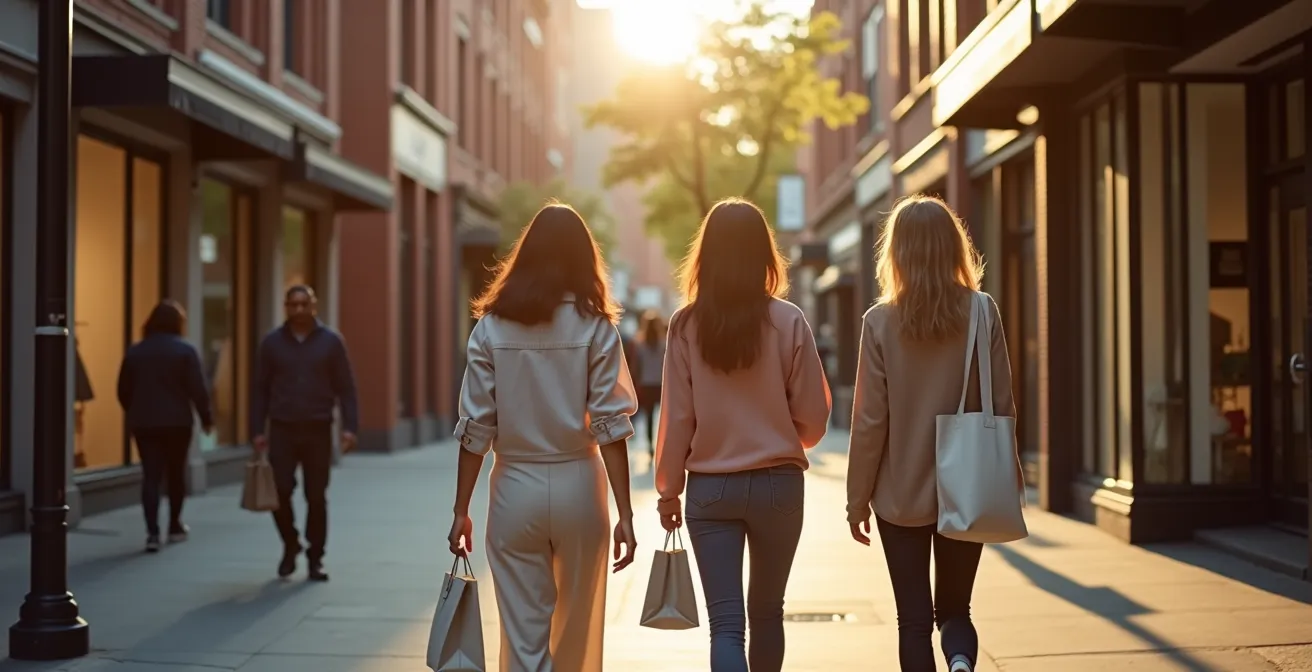
Building a capsule wardrobe on Queen West means looking beyond the global brands to curate a collection that tells an authentic Toronto story.
- The area’s high foot traffic attracts major chains, creating a “retail paradox” that pressures indie designers, making mindful shopping more crucial than ever.
- True value lies in authenticity: learning to spot real vintage treasures and supporting collaborative local models is key to a meaningful wardrobe.
Recommendation: Embrace a vibe-driven approach. Whether it’s the park-ready aesthetic of Trinity Bellwoods or the budget gems of Kensington Market, let the neighborhood’s character guide your curation.
Queen West. The name itself conjures images of vibrant street art, effortlessly cool Torontonians, and a seemingly endless stretch of unique boutiques. For any fashion-forward professional, it feels like the natural epicentre for building a capsule wardrobe that’s both stylish and personal. The common advice is simple: walk the street, pop into shops, and support local. But as you stroll past the familiar logos of international giants nestled between independent storefronts, a question arises: is it still that simple?
The reality of Queen West today is more complex. It’s a neighborhood defined by a fascinating tension—a retail paradox where global commercial appeal and fierce local creativity coexist. Building a truly meaningful wardrobe here is no longer just about shopping; it’s an act of cultural curation. It demands a deeper understanding of the forces shaping the street, from soaring commercial rents to the subtle signals that separate a true vintage piece from used fast fashion. It’s about knowing when to picnic in Trinity Bellwoods and when to seek the sophisticated energy of the Fashion District.
But what if the key wasn’t just *what* you buy, but *how* and *why* you buy it? This guide moves beyond the surface-level shopping tour. We’ll explore the economic pressures on local artists, provide the tools to identify authentic vintage, and help you furnish your entire life—from your closet to your condo—with pieces that carry a genuine Toronto narrative. This is your playbook for becoming a conscious curator in the city’s most iconic fashion landscape.
This article will guide you through the intricate cultural and retail landscape of Queen West and its surrounding areas. Follow this summary to navigate the key themes we’ll explore in your quest for an authentic Toronto style.
Summary: A Stylist’s Guide to Queen West’s Fashion Landscape
- Why International Brands Are Fighting for Retail Space on Queen West?
- How to Explore Graffiti Alley Without Trespassing on Private Property?
- Trinity Bellwoods or Fashion District: Which Section Suits Your Saturday Vibe?
- The Pricing Shift That Is Pushing Indie Artists Out of Queen West Studios
- How to Furnish a 600 sq ft Condo with Finds from Queen West Design Stores?
- The “Vintage” Label Trap That Makes You Overpay for Used Fast Fashion
- Leslieville or Roncesvalles: Which Neighborhood Offers the Best Weekend Brunch Vibe?
- How to Find Authentic Vintage Gems in Kensington Market Under $50 CAD?
Why International Brands Are Fighting for Retail Space on Queen West?
The magnetic pull of Queen West on international brands is no accident; it’s a calculated move based on one undeniable factor: visibility. The street isn’t just a Toronto icon; it’s a high-traffic artery pulsing with the exact demographic these brands crave. This phenomenon has only intensified recently, driven by an impressive 80% increase in foot traffic from 2020 to 2022 as the city’s retail pulse recovered. This surge represents a massive audience of style-conscious locals, tourists, and creatives—all potential customers walking right past the front door.
For a global brand, securing a spot here is about more than just sales. It’s about cultural relevance. Being on Queen West is a statement that you are part of Toronto’s vibrant, trendsetting scene. The relocation of established brands like Moscot to the area highlights this strategy. They are not just opening a store; they are tapping into the neighborhood’s “younger, trendier audience” and leveraging the built-in energy and foot traffic that indie boutiques spent decades cultivating. It’s a classic case of the retail paradox: the very “cool” factor created by local artists and entrepreneurs is what makes the area so attractive to large corporations.
This creates a challenging environment for the discerning shopper. On one hand, the convenience of familiar brands is present. On the other, the very soul of the neighborhood—its independent spirit—is under pressure. Understanding this dynamic is the first step toward shopping with intention. It transforms your choices from passive consumption to an active vote for the kind of retail landscape you want to see. The fight for retail space is real, and every dollar you spend is a voice in that conversation.
How to Explore Graffiti Alley Without Trespassing on Private Property?
Graffiti Alley, or Rush Lane, is more than just a backdrop for your next profile picture; it’s a living gallery and a cornerstone of Queen West’s creative identity. It’s where street art and high fashion intersect, creating a uniquely Toronto aesthetic. However, its charm lies in its semi-official nature—it’s a public laneway, but it backs onto private businesses and residences. Exploring it respectfully is key to preserving it for everyone.
The first rule is to treat it like a museum, albeit one with no walls. Stay within the main laneway, which runs south of Queen Street West from Spadina Avenue to Portland Street. The most iconic and expansive murals are fully visible from this public path. Trespassing into adjoining parking lots or trying to access fire escapes for a “better angle” is not only illegal but also disrespects the residents and businesses who call this area home. The beauty of the alley is its democratic nature; the best views are available to everyone without needing to cross boundaries.
To make your exploration a true fashion and art pilgrimage, structure it with an itinerary. This turns a simple walk into a curated experience, connecting the art on the walls with the fashion in the shops. A great plan blends photo opportunities with cultural stops that define the neighborhood’s vibe.
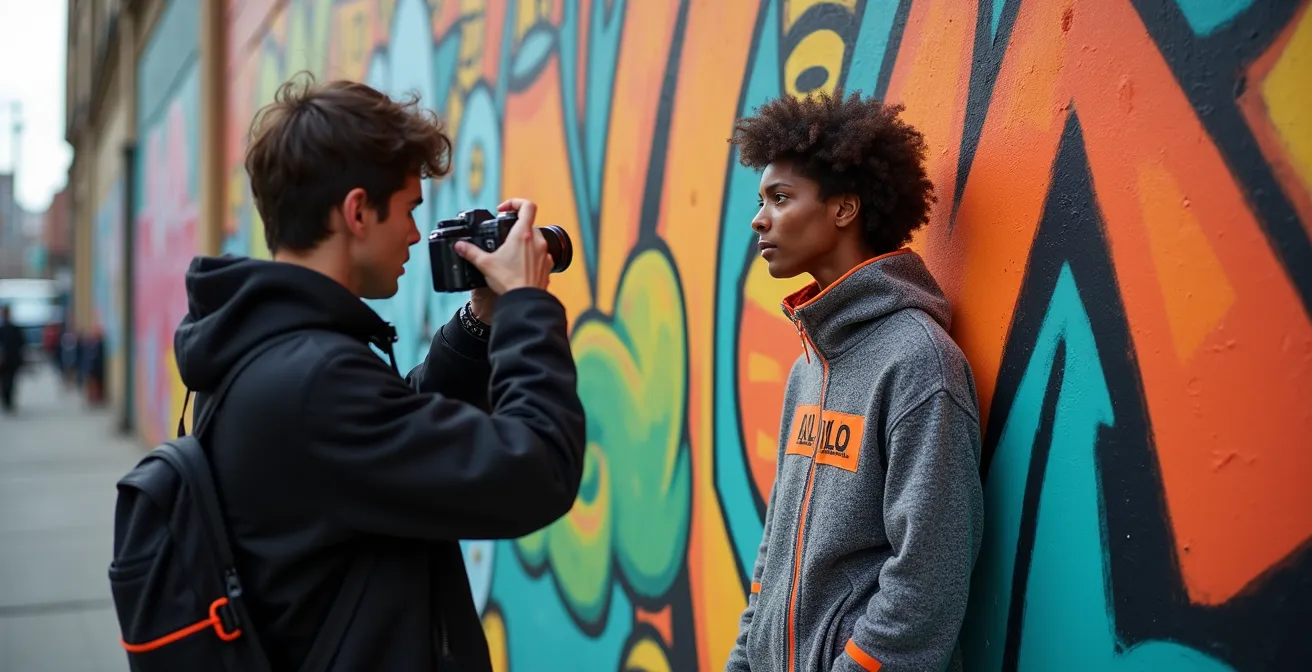
As the image above suggests, the alley is a powerful setting for capturing your own Queen West style. The key is to interact with the art, not just use it. A well-planned visit ensures you can capture stunning photos, discover local brands, and soak in the creative energy, all while being a respectful visitor.
A Curated Art & Fashion Walk Through the Alley
- Start at the Source: Begin at the corner of Rush Lane and Portland Street for some of the most famous and expansive mural backdrops.
- Shop the Vibe: Stop at Freshly Baked Tees (557 Queen St W) to find street-art-inspired fashion that directly reflects the art you’re seeing.
- Gallery Hop: Take a break from the street and visit the Stephen Bulger Gallery for curated photography exhibitions, offering a different lens on visual culture.
- Refuel Creatively: Grab a coffee at I Deal Coffee on nearby Ossington Avenue, a hub for local creatives and a perfect spot to people-watch.
- Golden Hour Finish: End your tour at Trinity Bellwoods Park as the sun sets for perfect golden hour photos of your new outfits.
Trinity Bellwoods or Fashion District: Which Section Suits Your Saturday Vibe?
A Saturday on Queen West isn’t a one-size-fits-all experience. The “vibe” shifts dramatically as you move along its length, particularly between the relaxed, green-space-adjacent world of Trinity Bellwoods and the polished, urban sophistication of the Fashion District further east. Choosing where to spend your day depends entirely on the aesthetic and energy you’re looking to channel. It’s about vibe-driven exploration—matching the neighborhood to your mood.
The Trinity Bellwoods stretch is defined by a casual, almost bohemian air. It’s the land of picnics, dog walkers, and boutique shoppers who prioritize comfort and an effortlessly cool aesthetic. Here, your style can be more relaxed—think organic fabrics, oversized tote bags perfect for a park hang, and high-end sneakers. The boutiques reflect this, with stores like Oak + Fort and Gravitypope offering minimalist, high-quality basics. This area is for the Saturday where your goal is to unwind, browse, and maybe end up lounging in the park with a book and a coffee.
In contrast, the Fashion District, centered closer to Spadina, buzzes with a more focused, cosmopolitan energy. This is where you go for gallery hopping, evening drinks, and statement-making style. The outfits are more structured, the accessories are bolder, and the intention is more about being seen. It’s a different kind of performance. As local boutique owner Jonathan Elias of Lost & Found notes of the nearby Ossington strip, the energy is electric. In a quote for Destination Toronto, he states:
Ossington has an energy comparable to New York, Paris and Tokyo. You can feel excitement just walking [the strip] from Queen West to Dundas Street.
– Jonathan Elias, Owner of Lost & Found, quoted by Destination Toronto
This excitement translates to a more curated shopping experience, with higher price points and a focus on polished looks. The following table breaks down the key differences to help you choose your Saturday adventure.
| Aspect | Trinity Bellwoods | Fashion District |
|---|---|---|
| Typical Outfit | Relaxed organic fabrics, oversized totes, sneakers | Structured pieces, tailored trousers, statement accessories |
| Key Boutiques | Oak + Fort, Gravitypope, Lost & Found | Aritzia Babaton, CB2, Naked Bodyz Fashion |
| Vibe | Park-ready picnic aesthetic | Gallery hopping sophistication |
| Price Range | $50-200 per piece | $100-500 per piece |
| Best For | Casual weekend relaxation | Evening drinks and cultural events |
The Pricing Shift That Is Pushing Indie Artists Out of Queen West Studios
The vibrant creativity that put Queen West on the map was born in its affordable studios and storefronts, where indie artists and designers could experiment and grow. However, the neighborhood’s success has become its greatest challenge. A significant pricing shift, characterized by surging commercial rents, is fundamentally altering its DNA. The very artists who built its cultural capital are now being priced out, creating a crisis for the local creative ecosystem.
This isn’t just a perception; it’s a visible trend. As local real estate observations confirm, national chains are increasingly replacing local shops, particularly in the highly desirable stretch of West Queen West. These large corporations can absorb rent hikes that are simply untenable for a small-scale potter, painter, or fashion designer. The result is a slow hollowing-out of the area’s artistic core, replaced by a more homogenized, commercially-driven landscape. For the conscious consumer, this means it takes more effort to find and support the true local talent that still remains.
Yet, in the face of this pressure, innovative models of survival are emerging. These new approaches offer a blueprint for how local creativity can endure. A prime example is the evolution of spaces dedicated to fostering emerging talent, providing more than just retail space but a supportive ecosystem.
Case Study: The Toronto Designers Market’s Survival Model
Facing the same pressures, the Toronto Designers Market (rebranding as Wilkes & Bowens) has doubled down on its mission to incubate talent. Instead of just being a landlord, they’ve become a mentor. As owner Shane Ferguson explained to Retail Insider, “We don’t just sell their products; we provide them with resources and knowledge on how to scale their business.” This focus on mentorship and education has made them a crucial first step for new designers, actively fighting the displacement trend by building a sustainable community. It proves that with the right model, local design can still thrive.
Supporting these incubator spaces and the designers within them is one of the most powerful ways to ensure Queen West’s creative spirit continues to flourish. It’s an investment not just in a product, but in the future of Toronto’s design scene.
How to Furnish a 600 sq ft Condo with Finds from Queen West Design Stores?
The principles of building a capsule wardrobe—versatility, quality, and personal expression—translate perfectly to furnishing a small urban space like a typical 600 sq ft Toronto condo. The art of spatial curation is about making every piece count. Queen West’s design stores, from global players like CB2 and EQ3 to local artisan markets, offer all the components you need to create a home that is both functional and a true reflection of your style.
The key to small-space living is investing in multi-functional, high-impact “hero” pieces. Instead of cluttering your space with numerous small items, start with a foundational piece like a well-designed sofa or a solid bed frame from a store known for its understanding of urban scales, such as EQ3. These act as the anchor for your entire design. From there, think vertically and dual-purpose. Storage ottomans from Urban Barn can hide clutter while providing seating, and nesting tables offer flexibility without a large footprint.
Your capsule wardrobe itself can become a piece of decor. Rather than hiding your carefully curated collection, display it on a minimalist clothing rack from a design-forward brand like Umbra, headquartered right here in Toronto. This not only saves precious closet space but also turns your fashion finds into a dynamic art installation, adding personality and color to your room. It’s a seamless blend of your personal style and your living space, making the condo an extension of your wardrobe.
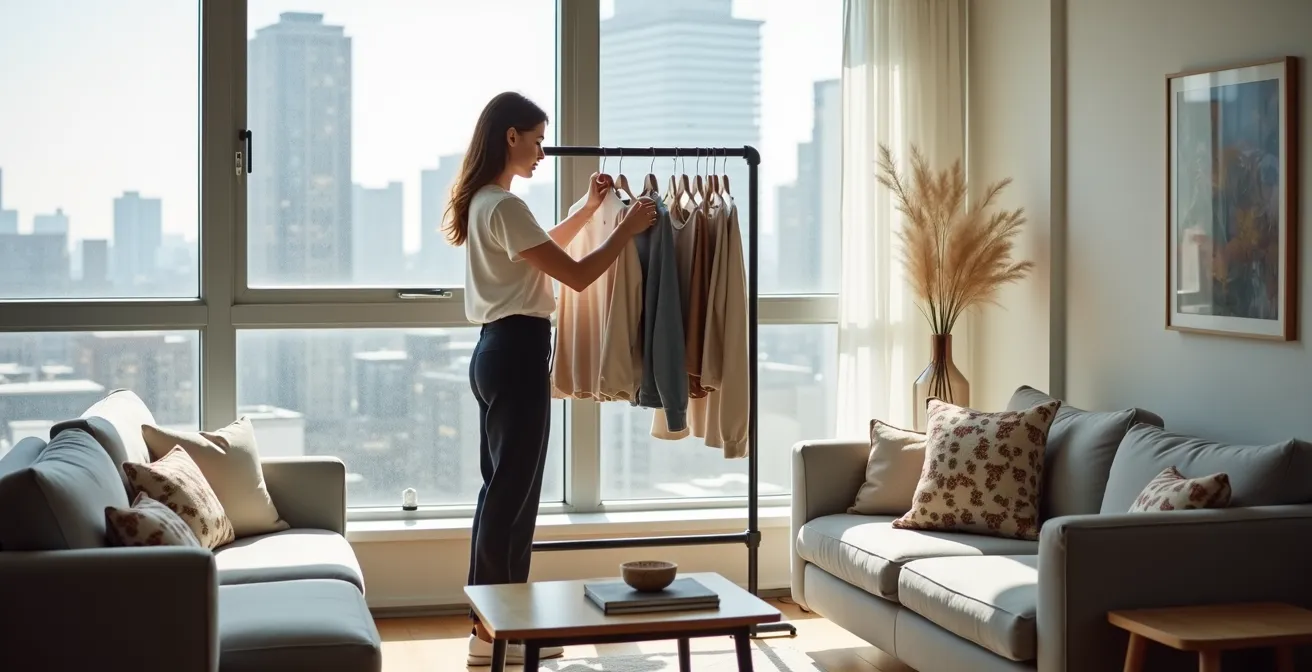
To execute this vision without breaking the budget, a clear strategy is essential. Allocate your resources wisely to ensure you get the most impact from your Queen West finds.
A Furnishing Strategy for a 600 sq ft Condo:
- Invest in Heroes: Dedicate the bulk of your budget to essential, high-quality furniture like a sofa and bed frame from stores like CB2 or EQ3.
- Embrace Multi-Functionality: Source clever, space-saving items like storage ottomans or nesting tables from places like Urban Barn.
- Display Your Style: Use minimalist Umbra clothing racks to turn your capsule wardrobe into a decorative element.
- Add Personality: Hunt for unique, personal touches like vintage textiles or ceramics at local artisan markets to make the space your own.
- Strategic Budgeting: A smart allocation would be approximately 60% on essential furniture, 25% on smart storage solutions, and 15% on decorative accents that inject personality.
The “Vintage” Label Trap That Makes You Overpay for Used Fast Fashion
In the hunt for unique pieces for your capsule wardrobe, the “vintage” label is a powerful lure. It promises history, quality, and a one-of-a-kind story. However, Queen West, like many fashion hubs, has a growing problem: the “vintage trap.” Unscrupulous sellers are labeling recent, mass-produced fast fashion as vintage, charging a premium for items that lack the quality and longevity of true vintage garments. Falling for this trap not only hurts your wallet but also undermines the very principle of sustainable, curated shopping.
To become a savvy vintage shopper, you must learn to look for authenticity signals. These are the subtle but clear indicators that separate a genuine pre-1990s garment from a five-year-old polyester piece. The most reliable signals are often hidden in the construction and labeling of the item. For example, the presence of a union label, like the ILGWU (International Ladies’ Garment Workers’ Union) tag, is a near-guarantee that a piece was made in North America before the mid-90s. Similarly, metal zippers often indicate an older garment, as plastic YKK zippers became dominant in the latter half of the 20th century.
Learning to spot these details transforms you from a passive consumer into an active investigator. You begin to read the story of the garment itself, not just its price tag. The real joy of vintage shopping is in this discovery—finding a piece with hand-finished seams or a tag from a defunct Canadian department store like Eaton’s or Simpsons. These are the details that give a piece its soul and make it a true treasure for your wardrobe narrative.
Case Study: The Dressing Room’s Curation as a Mark of Authenticity
A shining example of authentic curation is The Dressing Room on Queen West. Owner Mara Wood, a veteran wardrobe professional from the TV and film industry, sources her collection directly from sets. Her pieces aren’t just old; they have a documented provenance. Having dressed personalities on shows like *Master Chef Canada*, her collection consists of items she personally curated over 30 years. This approach—selling a personal, expertly gathered collection rather than random thrifted goods—is a hallmark of a trustworthy vintage seller. Her success, from a pop-up to a permanent Queen West location, proves there is a strong market for genuine, story-rich clothing.
Your Checklist to Spot Authentic Vintage in Toronto
- Check for Union Labels: Look for the ILGWU (International Ladies’ Garment Workers’ Union) tag, a strong sign of North American-made vintage.
- Hunt for Defunct Store Tags: A label from Canadian icons like Eaton’s or Simpsons instantly dates a piece and adds a layer of local history.
- Examine the Construction: Hand-finished seams, pinked edges, and metal zippers (as opposed to plastic) often indicate a garment made before the 1970s.
- Feel the Fabric: Be wary of heavy polyester blends, which were less common in older garments and are a hallmark of modern fast fashion.
- Question Multiples: If you see several identical “vintage” items on a rack, it’s a major red flag that they are likely recent overstock, not true vintage.
Leslieville or Roncesvalles: Which Neighborhood Offers the Best Weekend Brunch Vibe?
While Queen West is the heart of your fashion quest, your Toronto life extends beyond it. A weekend brunch is a sacred ritual in this city, and the neighborhood you choose says as much about your style as your outfit does. Two prime contenders for the perfect weekend vibe outside the downtown core are Leslieville in the east and Roncesvalles in the west. Each offers a distinct aesthetic, attracting a different crowd with its own unwritten style code.
Leslieville exudes a Creative Family Chic. It’s a hub for media professionals and young, stylish families. The vibe is polished but relaxed. Here, you’ll see designer denim paired with cozy Glerups slippers for a quick coffee run, or statement tees from local shops like Good Neighbour. It’s a neighborhood that values quality and design but doesn’t take itself too seriously. The brunch spots are trendy, the patios are sprawling, and the style is effortlessly put-together. It’s where you go when you want a sophisticated but comfortable scene.
Roncesvalles, or “Roncy,” offers a completely different flavour: Euro-Polish Bohemian. With its rich European heritage, the neighborhood has a laid-back, artsy, and slightly bohemian feel. The style is softer, featuring flowing dresses, comfortable Birkenstocks, and unique vintage finds from its many small boutiques. The brunch experience is less about seeing-and-being-seen and more about enjoying a delicious meal from a local European bakery or a long-standing neighbourhood diner. It’s the place for a slow, unpretentious weekend morning.
To help you decide where to debut your latest weekend look, here’s a breakdown of the style aesthetics of these neighborhoods, with Queen West included as a familiar baseline.
| Neighborhood | Style Aesthetic | Key Pieces | Where to Shop |
|---|---|---|---|
| Leslieville | Creative Family Chic | Designer denim, Glerups slippers, statement tees | Good Neighbour, Culture Athletics |
| Roncesvalles | Euro-Polish Bohemian | Flowing dresses, Birkenstocks, vintage finds | Local boutiques, European bakeries |
| Queen West (for comparison) | Urban Cool | Mix-and-match basics, vintage accessories | Kotn, Uncle Studios, Lost & Found |
Choosing your brunch spot becomes another act of curation—matching the location’s energy to your personal style for the day. It’s about building a life, and a wardrobe, that feels authentically you, from Monday’s meeting to Sunday’s mimosas.
Key Takeaways
- Queen West’s identity is shaped by the “retail paradox”: its indie-born coolness attracts global brands, creating a complex shopping environment.
- Curating a wardrobe or a home is about making intentional choices, from the vibe of a neighborhood to the multi-functionality of a furniture piece.
- Authenticity is the ultimate luxury. Learning to spot real vintage and supporting artist incubators is how you invest in quality and community.
How to Find Authentic Vintage Gems in Kensington Market Under $50 CAD?
You’ve learned to decode the retail landscape, identify true vintage, and curate your vibe. Now for the final test: the treasure hunt. Kensington Market is the raw, beating heart of Toronto’s vintage scene, a chaotic and colourful maze where true gems hide in plain sight. Unlike the more curated boutiques on Queen West, Kensington demands a hands-on approach. But for the dedicated seeker, it offers the ultimate reward: authentic, story-rich pieces for your capsule wardrobe, often for under $50.
Success in Kensington is a game of strategy and timing. The best finds aren’t discovered on a crowded Saturday afternoon. Go on a Tuesday or Wednesday morning when shops are restocking and the lanes are quiet. This is when you have the space to dig through bins and the time to chat with shop owners, who are often more open to bargaining on slower weekdays. Your goal is to look past the overwhelming racks and focus on the details—the texture of a silk scarf, the patina on a leather belt, the weight of an antique brass button. These are the tactile clues to quality and authenticity.
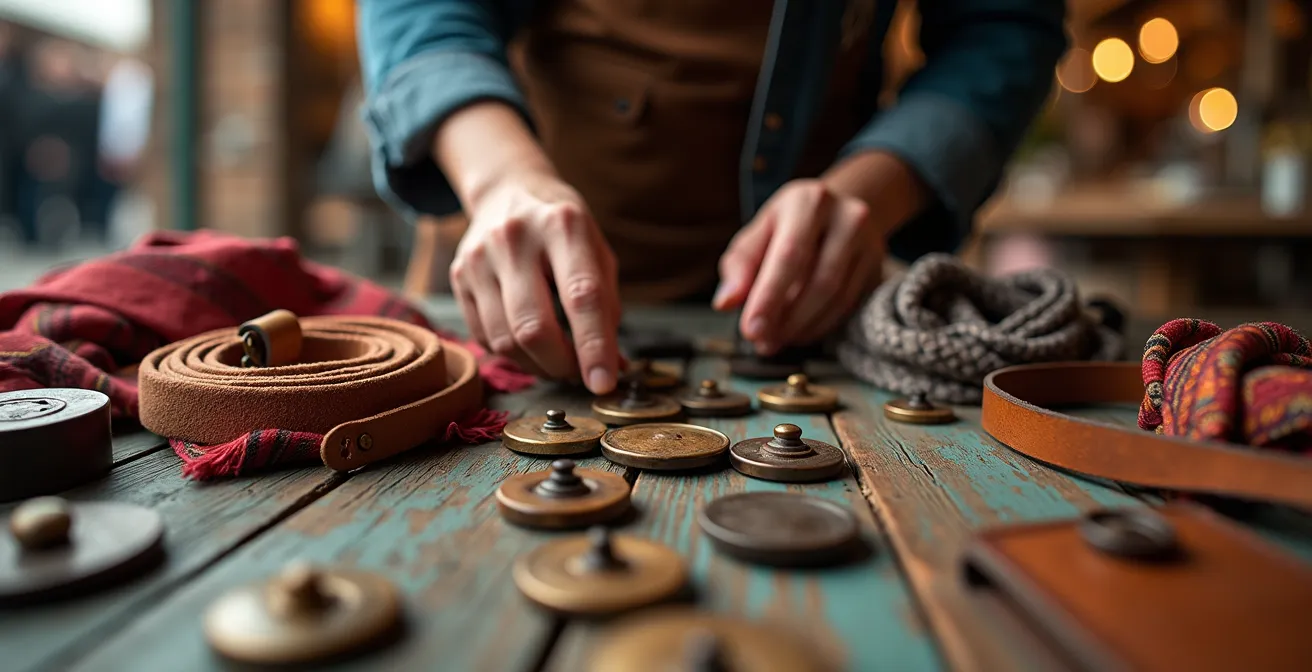
Think of it as a methodical route rather than a random wander. By having a plan, you can efficiently hit the spots most likely to yield affordable treasures. Start with accessories, which are often the most budget-friendly way to add vintage flair, and then move to the bargain bins of established clothing stores. This is where your trained eye for fabrics and construction will pay off, allowing you to quickly sift the gold from the dross.
The Kensington $50 Budget Shopping Route:
- Start Early: Arrive on a Tuesday or Wednesday morning to get first pick of fresh stock and avoid the weekend crowds.
- Accessories First: Hit Bungalow immediately for a curated selection of vintage accessories, where you can often find unique pieces under $20.
- Dig the Bins: Check the legendary bargain bins at Exile for vintage tees and denim, with many items priced between $10 and $20.
- Browse the Walls: Don’t overlook the accessory walls at stores like Space Vintage, perfect for finding unique belts and scarves that elevate an entire outfit.
- Last-Stop Sales: End your trip at One Heart, checking their end-of-season sale racks for deeply discounted gems.
This final step in your curation journey is about trusting your instincts and enjoying the thrill of the hunt. Kensington Market isn’t just a place to shop; it’s where your wardrobe’s most interesting stories begin.
Now that you have the map and the mindset of a curator, your Queen West journey truly begins. Start exploring, ask questions, and build a capsule wardrobe that not only looks great but also reflects the authentic, creative spirit of Toronto.