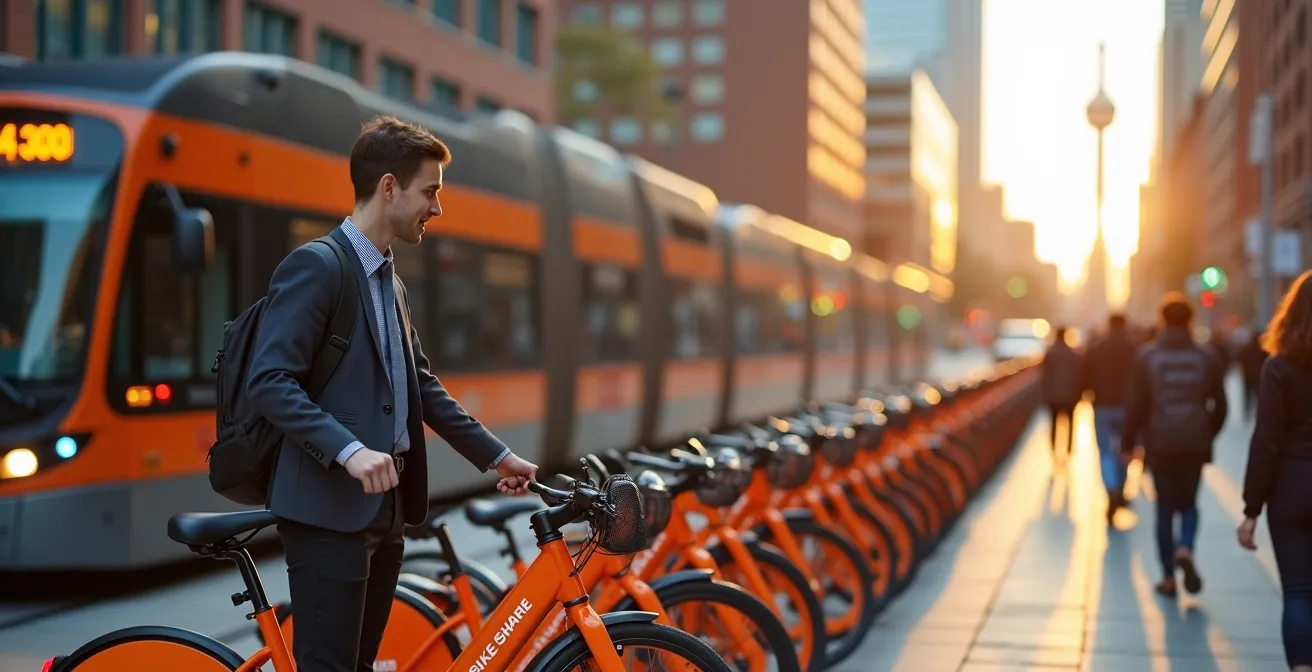
In summary:
- The key to avoiding overage fees is “dock-swapping”: docking your bike before the 30-minute limit and immediately taking out another.
- Strategically use the app to check “station tidal flow”—the predictable patterns of dock availability at busy hubs like Union Station.
- A docking failure isn’t the end. The green light is your only confirmation; a red or no light means your trip is still active.
- E-bikes are worth the surcharge for hills like the Davenport Escarpment, but classic bikes are more cost-effective for flat routes.
Riding a bike through Toronto is one of the city’s simple joys. The wind in your hair, the freedom from TTC delays, and the satisfaction of an eco-friendly commute. Bike Share Toronto makes this accessible to everyone, but there’s a common fear that holds many back: the dreaded, unexpected overage fee. You’ve heard the stories or maybe even experienced it—a short trip that somehow balloons into a costly charge on your credit card. Most advice simply says, “dock your bike every 30 minutes,” but this barely scratches the surface of what’s required to truly master the system.
The common approach is to just watch the clock, a reactive strategy that often leads to frantically searching for a full dock as your time runs out. But what if the secret wasn’t just about being timely, but about being strategic? What if you could use the system’s own logic to your advantage, turning a potential financial pitfall into a predictable, cost-free part of your daily routine? This guide moves beyond the basics. It’s about becoming a ‘system player’ who understands the nuances of station flows, docking protocols, and route planning.
We’ll transform you from a casual user into a savvy commuter. We will deconstruct the 30-minute rule, show you how to read the app like a pro, analyze when the e-bike surcharge is actually worth it, and reveal the single biggest docking mistake that costs users money. By the end, you won’t just know how to use Bike Share Toronto; you’ll know how to make it work for you, saving money and stress on every single ride.
This comprehensive guide will walk you through the essential strategies and insider tips to optimize your Bike Share experience. Below, you will find a detailed breakdown of each key topic, designed to empower you with the knowledge to ride confidently and cost-effectively across Toronto.
Summary: A Strategic Guide to Mastering Bike Share Toronto
- Why You Must Dock Your Bike Every 30 Minutes to Avoid Extra Charges?
- How to Use the App to Ensure There Is a Dock Available at Your Destination?
- Electric vs Classic Bike: Is the Extra Surcharge for E-Bikes Worth the Speed?
- The Docking Mistake That Keeps the Meter Running on Your Credit Card
- When to Avoid Bike Share During Salt Season to Stay Safe?
- How to Pack a Wagon for the Ferry to Avoid Multiple Trips?
- How to Rent a Bike on the Waterfront Trail Without Leaving a Massive Deposit?
- Top 5 Panoramic View Spots in Toronto for a Free Romantic Date?
Why You Must Dock Your Bike Every 30 Minutes to Avoid Extra Charges?
The 30-minute ride limit isn’t just a suggestion; it’s the foundational rule of the Bike Share Toronto system. Whether you have an annual membership or a short-term pass, your included fare covers unlimited trips, as long as each individual trip is under 30 minutes. The moment you cross that threshold, overage fees kick in. While it may not sound like much, these fees are designed to encourage bike turnover, not to facilitate long-term rentals. This is the core economic model of the service: high-frequency, short-duration use.
The financial penalty for exceeding the limit can add up quickly. According to the official Bike Share Toronto pricing structure, the overage charge is $0.12 per minute. A 45-minute trip, just 15 minutes over the limit, will cost you an extra $1.80. If you get distracted and let an hour pass, that’s $3.60 on top of your pass fee. This is the “hidden cost” that new users fear, but it’s entirely avoidable with a simple, proactive strategy known as dock-swapping.
Dock-swapping is the art of treating the system like a series of short relays rather than a single marathon. Instead of trying to complete your entire journey in one go, you plan a brief stop at a station along your route to “reset” your 30-minute timer. By docking your current bike and immediately unlocking a new one (or even the same one), you start a fresh, cost-free 30-minute session. This is the single most important habit for any cost-conscious commuter in Toronto.
Your Action Plan: Strategic Dock-Swap Protocol for Toronto Commuters
- Set a 25-minute timer on your phone the moment you undock. This gives you a crucial 5-minute buffer to find a station and dock properly.
- For downtown routes, identify mid-journey swap stations that are always reliable. Major hubs like Union Station or the stations around Yonge-Dundas Square are excellent choices.
- When approaching your 25-minute mark, find your pre-planned station, dock the bike firmly, and wait for the green light confirmation. This is non-negotiable.
- Immediately use your app or member key to unlock a new bike. You can now continue your journey with a fresh 30-minute window.
- For longer commutes, like from The Danforth to the Financial District, plan your swap at a major intersection like Sherbourne and Bloor, which serves as a natural halfway point.
How to Use the App to Ensure There Is a Dock Available at Your Destination?
The Bike Share app is more than just a tool for finding a nearby bike; it’s your crystal ball for predicting dock availability. The biggest frustration for a rider on a tight 30-minute schedule is arriving at a destination station only to find it completely full. This forces you into a frantic search for another station, all while the overage fee meter is running. The key to avoiding this is to think beyond your destination and understand the concept of “station tidal flow.”
Station tidal flow refers to the predictable, daily patterns of bike and dock availability based on commuter habits. For example, analysis shows that stations around Union Station and the Financial District empty out by 9:30 AM as people arrive for work, and then fill to capacity by 5:30 PM as they leave. Conversely, residential stations in areas like The Annex or Leslieville show the opposite pattern. By understanding this flow, you can anticipate whether your destination is likely to have empty docks when you arrive.
Your strategy should always involve having a Plan B and even a Plan C. Before you even start your trip, use the app to check your primary destination dock. Then, immediately identify two backup stations within a two-to-three-block radius. This is especially critical in high-density areas like the Entertainment District or Liberty Village during evenings and weekends, where station congestion is common. Having backups mentally mapped out removes the panic and turns a potential problem into a minor, pre-planned detour.

As you can see, the app provides real-time data. A green icon means plenty of docks, while yellow and red signal decreasing availability. Don’t just look at the number of available docks; look at the trend. If a station has only two docks left at 5 PM on a weekday, it’s a risky bet. Choose a slightly further but more secure station as your primary target. This proactive planning is the difference between a seamless ride and a stressful, expensive one.
Electric vs Classic Bike: Is the Extra Surcharge for E-Bikes Worth the Speed?
The arrival of e-bikes to the Bike Share Toronto fleet introduced a new variable for commuters: speed versus cost. E-bikes provide a welcome boost, especially for tackling Toronto’s inclines or covering long distances, but they come with a per-minute surcharge on top of your regular pass. The question for the cost-conscious rider is: when is this extra fee a smart investment and when is it an unnecessary expense?
The decision should be based on a simple framework: cost-per-minute-saved. You’re not just paying for a motor; you’re paying for time. On a flat, protected route like the Queens Quay waterfront trail, an e-bike might only save you two or three minutes over a classic bike. The surcharge, however, will still apply. In this scenario, the classic bike is the clear winner for value. But on an uphill battle, like climbing the Davenport Escarpment or heading north from the downtown core, an e-bike can easily shave 7-10 minutes off your travel time and save you a significant amount of physical effort. Here, the surcharge becomes a worthwhile payment for time and convenience.
To make the right choice, it’s also important to be able to spot an e-bike easily. As a helpful guide from pointA Toronto notes, the visual distinction is clear.
E-bikes are fully orange in colour and have a white lightning bolt on the wheels and basket
– pointA Toronto Guide, Your Complete Guide to Bike Share Toronto in 2025
This simple identifier allows you to quickly assess your options at the station. The following table provides a clear cost-benefit analysis for typical Toronto routes, helping you make an informed decision before you undock.
| Route Type | Classic Bike Cost (30 min) | E-Bike Cost (30 min) | Time Saved | Recommended Choice |
|---|---|---|---|---|
| Flat (Queens Quay) | $0 (within limit) | $1.00/ride + $0.12/min | 2-3 minutes | Classic |
| Uphill (Davenport Escarpment) | $0 (within limit) | $1.00/ride + $0.12/min | 7-10 minutes | E-Bike |
| Cross-city (Don Valley) | $0 (within limit) | $1.00/ride + $0.12/min | 5-8 minutes | E-Bike |
The Docking Mistake That Keeps the Meter Running on Your Credit Card
The single most feared scenario for a Bike Share user is what can be called a “ghost ride”: you dock your bike, walk away thinking your trip is over, but the system fails to register it. The meter keeps running, sometimes for hours, resulting in a shocking overage fee. This happens because of one simple misunderstanding: pushing the bike into the dock is not enough. The only thing that confirms a completed trip is a solid green light on the dock.
If you see a red light, or no light at all, the dock has malfunctioned and your trip is still active. Your first instinct should be to pull the bike out and try re-docking it firmly, perhaps in an adjacent empty dock. Sometimes the locking mechanism just needs a more forceful connection. However, if the failure persists after a few attempts, you must take immediate action to protect yourself from charges. Do not simply walk away and hope for the best.
This isn’t just a theoretical problem; it happens to real users. As one user’s experience highlights, being proactive is key to resolving the issue without financial loss.
A Toronto user reported being charged despite docking properly, finding the bike later with a red dot indicator showing malfunction. After providing video evidence of the malfunctioning dock to customer service and calling the support line, they successfully received a full refund of the overage charges.
– User on TripAdvisor
This experience underscores the importance of having a clear protocol. If you encounter a docking failure, you are in an emergency situation from a cost perspective. You need to follow a precise set of steps to document the issue and contact support. Having the Bike Share Toronto support number saved in your phone is a must for any regular rider. Taking a quick photo or video of the bike in the malfunctioning dock provides irrefutable evidence that can save you a significant amount of money and hassle.
When to Avoid Bike Share During Salt Season to Stay Safe?
Riding in Toronto isn’t always a sunny-day affair. The city’s winter, or “salt season,” introduces a unique set of challenges for cyclists. While Bike Share operates year-round, the combination of snow, ice, and corrosive road salt can make riding hazardous and damage the bikes. For the safety-conscious and cost-aware rider, knowing when to opt for the TTC instead is a crucial part of the strategy.
The primary danger is reduced traction. Road salt, while effective at melting ice, creates a gritty, often slushy surface that can compromise a bike’s grip, especially during turns. Furthermore, this salt is highly corrosive. It works its way into the bike’s chain, gears, and braking mechanisms, potentially impairing their function. A brake that feels responsive in dry conditions might be sluggish or less effective when coated in a salty grime. This makes a pre-ride safety check absolutely non-negotiable during the winter months.
Before you even undock, you should perform a quick audit of the bike. Squeeze the brake levers to ensure they feel firm. Visually inspect the tires for pressure, as cold air causes them to deflate faster. Look for obvious signs of heavy corrosion on the chain. Test the bell and verify the lights work, as daylight hours are limited and visibility is often poor. If you have a choice, stick to routes with protected bike lanes, like those on Richmond St. or Adelaide St., as they typically receive priority snow clearing from the city.
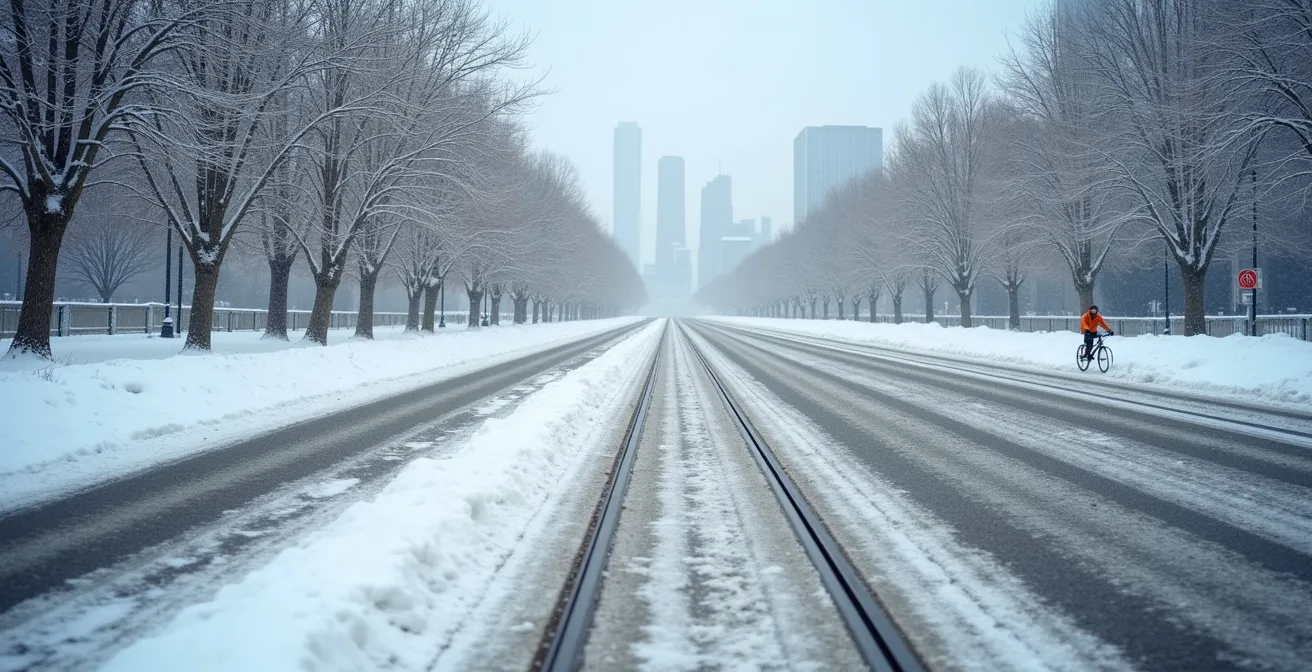
Sometimes, the safest decision is not to ride at all. During or immediately after a heavy snowfall or freezing rain event, even the most well-maintained bike is no match for treacherous conditions. The risk of a fall—and potential injury—far outweighs the benefit of a quick ride. On these days, consider your Bike Share pass as just one tool in your urban mobility toolkit, and choose a safer alternative.
How to Pack a Wagon for the Ferry to Avoid Multiple Trips?
A classic Toronto summer experience is taking the ferry from the Jack Layton Ferry Terminal to the Toronto Islands. Many people use Bike Share to get to the ferry, enjoying a pleasant ride along the waterfront before their island adventure. This is a fantastic strategy, but it comes with a critical piece of insider knowledge that can save you from a $400 relocation fee: mainland bikes cannot be taken to the islands.
The Bike Share system operates as two separate networks. You can ride a mainland bike right up to the ferry terminal, and there is a large, convenient station at Queens Quay and Yonge to dock it. Once you arrive on the island, a separate fleet of “Island Bikes” is available for rent at four locations: Ward’s Island Ferry Dock, Hanlan’s Point Ferry Dock, Center Island Station, and Hanlan’s Point Beach. Attempting to take a mainland bike on the ferry will result in a hefty penalty.
This is where planning your cargo comes in. If you’re bringing a wagon with coolers, blankets, and supplies for a day at the beach, your strategy should focus on the mainland portion of the trip. Use Bike Share for your personal transport to the terminal, allowing you to travel light and fast, separate from your gear. This is far more efficient than trying to wrangle a bike and a wagon through city streets. Dock your bike, consolidate your belongings into your wagon for the ferry boarding, and then rent a fresh Island Bike once you disembark.
This two-step approach leverages the best of both worlds. You get the speed and convenience of Bike Share for the city part of your journey and the freedom of an Island Bike for exploring the island’s car-free paths, all while avoiding the common and costly mistake of mixing the two systems. It’s the perfect way to start a stress-free day trip to one of Toronto’s most beloved destinations.
How to Rent a Bike on the Waterfront Trail Without Leaving a Massive Deposit?
Toronto’s Waterfront Trail is a stunning stretch of paved path perfect for a leisurely cycle, offering beautiful views of Lake Ontario. For tourists or residents who don’t own a bike, the immediate thought is to visit a traditional rental shop. However, this often comes with a significant barrier: a security deposit of several hundred dollars held on your credit card. This is where Bike Share Toronto offers a far more accessible and flexible alternative.
Unlike traditional rental shops, a Bike Share Toronto membership requires no security deposit. Even for Pay As You Go users, the hold is a minimal $50, a fraction of what most rental shops require. This immediately makes it a more appealing option for anyone wary of tying up a large amount on their credit card. Furthermore, the cost structure is significantly more favorable for shorter rides, and the station density along the waterfront means you’re never far from a pickup or drop-off point.
The system’s flexibility is another major advantage. Traditional rentals require you to return the bike to the same location you rented it from, forcing you into a round trip. With Bike Share, you can ride one-way from east to west, exploring as much of the trail as you like, and simply dock the bike at the station nearest to your final destination. As noted by Tangerine Bank’s guide, the network is extensive.
| Option | Deposit Required | Cost (2 hours) | One-Way Capable | Station Density |
|---|---|---|---|---|
| Bike Share Toronto | None (members) | $0-$7.20 | Yes | High along waterfront |
| Traditional Rental Shop | $200-$500 | $30-$40 | No (round trip only) | N/A |
| Pay As You Go Bike Share | $50 hold | $14.40 | Yes | High along waterfront |
This data clearly shows that for flexibility and low financial commitment, Bike Share is the superior choice for exploring the Waterfront Trail. You can enjoy a spontaneous ride along a section of the trail without the commitment of a full-day rental or a hefty deposit, making it the perfect tool for casual, cost-effective exploration.
Key Takeaways
- Mastering Bike Share is a strategy game, not just a bike ride. Proactive planning is everything.
- The 30-minute limit is your friend if you embrace “dock-swapping” to reset your timer on longer trips.
- Your only proof of a completed trip is the green light. A red or no light means you’re still being charged.
Top 5 Panoramic View Spots in Toronto for a Free Romantic Date?
Bike Share Toronto isn’t just a tool for commuting; it’s a key to unlocking some of the city’s most beautiful and romantic experiences for free. Instead of an expensive dinner, a cost-effective and memorable date can be a simple bike ride to a stunning viewpoint to watch the sunset over the skyline. The system’s extensive network places you within minutes of Toronto’s most iconic panoramic spots.
One of the most classic views is from Riverdale Park East. By docking at the Broadview/Langley station, you’re just a short walk from the top of the hill, offering a perfect, unobstructed view of the downtown core. For a more industrial-chic vista, a ride to Polson Pier is a must. After docking at Cherry Beach, a ten-minute ride along the waterfront brings you to the legendary spot where countless photos of the skyline have been taken.
For those willing to work a little harder—or wisely opt for an e-bike—the Chester Hill Lookout provides an intimate, breathtaking view nestled in a residential neighborhood. Dock at Broadview and Danforth and prepare for a short but steep climb that is well worth the effort. Further west, the elegant Humber Bay Arch Bridge offers a unique perspective, framing the skyline from across the water. Docking at Humber Bay Park West station gives you immediate access. Finally, for a modern and serene experience, Trillium Park at Ontario Place is unbeatable. Dock at the Ontario Place station and a two-minute ride will take you to a beautifully landscaped park with peaceful, ground-level views of the city lights reflecting on the water.
These five locations are just the beginning. Each offers a unique mood and perspective, all easily accessible with a Bike Share key and a bit of planning. It’s a perfect example of how this micro-mobility system can be used not just for getting from A to B, but for creating meaningful, affordable experiences in the city you love.
Now that you are equipped with the strategies of a true system player, from avoiding fees to discovering hidden gems, you can ride through Toronto with confidence and ease. The next step is to put this knowledge into practice on your next journey.