
The “per-person” price of a Toronto food truck is misleading; the true cost is driven by non-negotiable operational overhead and vendor risk mitigation.
- Minimum guarantees are required to offset high fixed costs, including annual permit fees exceeding $7,000 and commissary kitchen rentals.
- Venue logistics, from legal park permits to generator noise compliance with city bylaws, are critical and can add significant complexity.
- Menu choice directly impacts “service velocity,” affecting guest experience—assembly-line items like tacos serve up to 4x faster than made-to-order poutine.
Recommendation: Shift your focus from “price per plate” to “total event cost” by discussing minimum guarantees, permits, and power needs with vendors upfront.
The idea is captivating: a vibrant, trendy food truck rolling up to your Toronto event, delighting guests with gourmet tacos, wood-fired pizza, or classic poutine. It promises a casual, memorable, and often more affordable alternative to traditional catering. This leads every event planner and wedding couple to the same initial question: “How much does it cost per person?” While this seems like a straightforward starting point, it’s a question that barely scratches the surface of budgeting for this unique catering experience.
Most will tell you that costs vary with the menu and guest count, or that you need to book well in advance. These are truths, but they are superficial. The real financial story of food truck catering in a dense, highly regulated city like Toronto is one of operational economics. The final price on your invoice is shaped less by the cost of ingredients and more by a complex web of permits, insurance, vehicle maintenance, venue logistics, and the vendor’s need to mitigate financial risk.
But what if the key to smart budgeting wasn’t just comparing per-person prices, but understanding the hidden cost architecture behind them? This guide flips the script. We’re not just going to give you a price range; we’re going to give you the insider’s view. We will break down the crucial financial and logistical factors—from minimum guarantees and park permits to the surprising impact of generator noise—that truly define your food truck catering budget in Toronto. By understanding the ‘why’ behind the costs, you can plan a more successful and predictable event.
This article provides a transparent breakdown of the key considerations for hiring a food truck in Toronto. Discover the factors that influence pricing, the legalities of event setup, and strategic choices that ensure your guests have an unforgettable experience.
Summary: Hiring a Toronto Food Truck: What’s the Real Cost Per Person?
- Why Food Trucks Require a Minimum Guarantee Even for Small Parties?
- How to Legally Park a Food Truck in a Toronto Park for a Private Event?
- Tacos vs Poutine: Which Food Truck Cuisine Feeds a Crowd Faster?
- The Generator Mistake That Can Silence Your Food Truck Service
- When to Serve Late-Night Snacks to Maximize Guest Satisfaction?
- Why the Best Dim Sum Is Found in Markham and Not Downtown Chinatown?
- When to Book Private Workshops for a Bachelorette Party in the Distillery District?
- Why Toronto’s Urban Diversity Makes Specific Neighborhoods Recession-Proof Investments?
Why Food Trucks Require a Minimum Guarantee Even for Small Parties?
The first financial reality event planners encounter is the “minimum guarantee” or “minimum spend.” This isn’t an arbitrary fee; it’s the financial bedrock that makes a private event viable for a food truck operator in Toronto. Unlike a restaurant with predictable foot traffic, a food truck committing to a private event forgoes the opportunity to serve hundreds of customers at a busy public spot. The minimum guarantee ensures they can cover their substantial operational economics, regardless of your party’s size. In Toronto, these costs are significant and non-negotiable.
For context, the City of Toronto imposes hefty licensing fees from the start. Beyond that, vendors must secure commercial general liability insurance, often around $2 million, and rent space in a certified commissary kitchen, which can run thousands per month in the GTA. A study of industry data shows that a food truck in Toronto can generate $12,500 to $20,800 a month from public sales, a figure they must weigh against the guaranteed income from a private gig. This is why the average Toronto food truck catering event has a cost of around $1,301, with a typical range of $800 to $2,500.
The minimum guarantee is essentially the vendor’s break-even point plus a reasonable profit for a specific block of time. It covers not just the food, but the fixed costs of being legally operational in one of North America’s most expensive cities. It’s a risk mitigation tool that allows them to bring their kitchen to you.
Action Plan: Understanding a Food Truck’s Toronto Operating Costs
- Factor in one-year permit and licence application fees from the City of Toronto, which can total over $8,900.
- Calculate the vendor’s required $2,000,000 Commercial General Liability insurance policy into their overhead.
- Include commissary kitchen rental costs, which average $2,000-$3,000 monthly in the GTA, as a necessary fixed expense.
- Account for the 30-metre distance requirement from restaurants, which heavily restricts lucrative parking locations and influences their reliance on guaranteed private events.
- Add fuel costs, which can range from $500-$800 monthly based on daily travel and generator use.
Therefore, when you see a minimum spend, don’t view it as an overcharge for a small party. Instead, see it as the price of reserving a mobile culinary business exclusively for your event, covering the immense regulatory overhead required to operate in Toronto.
How to Legally Park a Food Truck in a Toronto Park for a Private Event?
Booking a food truck is one thing; legally placing it in a public park for your event is another challenge entirely. Toronto’s parks are governed by a strict set of rules, and compliance is non-negotiable. You cannot simply have a food truck pull up to your picnic. The primary instrument you will need is a Special Events Permit from the City of Toronto. This permit is the master key that opens the door to using parkland for private functions involving commercial services like food vending.
The application process requires you to detail the nature of your event, including food service. This automatically triggers a notification to Toronto Public Health to ensure the vendor meets all food safety standards. If your event includes alcohol, the complexity increases. You’ll need a Special Occasion Permit from the AGCO, and the presence of Pay Duty Police Officers often becomes a mandatory, and costly, requirement. This regulatory overhead is a crucial part of your event budget and timeline.
This paragraph introduces the complex topic of park permits. To better understand the specific requirements, the illustration below visually represents a compliant setup.
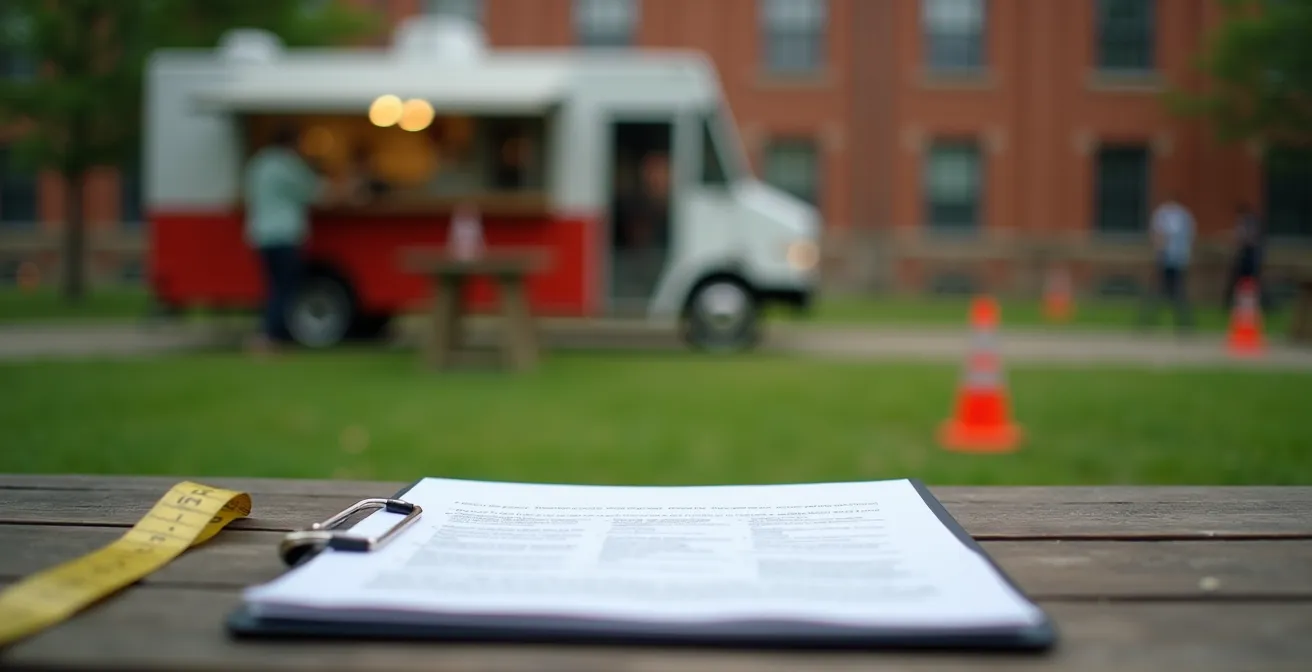
As this compliant setup demonstrates, every detail matters. Insurance is another critical checkpoint. The food truck vendor must have a minimum of $2,000,000 in Commercial General Liability (CGL) insurance, with the City of Toronto named as an additional insured party. You, as the event organizer, must ensure the vendor’s insurer sends the certificate directly to the city as proof. This protects both you and the city from liability.
This table summarizes the core permit requirements for a food truck in a Toronto park, based on information from the City of Toronto’s 311 service.
| Permit Type | Requirements | Key Restrictions |
|---|---|---|
| Special Events Permit | Required for food service in parks | Must notify Toronto Public Health |
| Alcohol Service (if applicable) | Special Occasion Permit from AGCO | Pay Duty Police Officers required |
| Insurance | $2,000,000 CGL with City as additional insured | Certificate must be sent from insurer |
| Location Rules | Private property allowed with owner permission | 30 metres from operating restaurants |
Ultimately, successfully hosting an event with a food truck in a Toronto park is a testament to meticulous planning. Start the permit process early and maintain clear communication with your vendor to ensure all paperwork is in order long before your event date.
Tacos vs Poutine: Which Food Truck Cuisine Feeds a Crowd Faster?
Choosing a menu isn’t just about taste; it’s a strategic decision that directly impacts your event’s flow and your guests’ experience. The crucial factor to consider is service velocity—how many plates a truck can serve per hour. A long, slow-moving line can dampen the mood of any party. Different cuisines are inherently faster or slower to prepare and serve from the tight confines of a truck, and understanding this can help you pick the right vendor for your crowd size and event style.
Cuisines built on an assembly-line model are the champions of speed. Think tacos, burritos, or BBQ sandwiches. The core components (proteins, sauces, toppings) are pre-cooked and held at temperature. The staff’s job is to assemble these components to order. This linear process is incredibly efficient, allowing experienced trucks to serve a plate every 30-60 seconds. For a large, hungry crowd, a taco truck is a logistical masterpiece, capable of feeding over 100 people an hour.
In contrast, cuisines that require made-to-order cooking for each plate are inherently slower. Poutine is a classic example. The fries must be deep-fried in batches, which takes several minutes. Wood-fired pizza is even more theatrical but slower still, as each pie is assembled and cooked individually. While these options offer incredible freshness and a “show” for guests, their service velocity is much lower. A poutine or pizza truck might only be able to serve 20-30 guests per hour, making them better suited for smaller gatherings or as a secondary, late-night option rather than the main meal for a large wedding.
This comparative table, based on industry service benchmarks, clearly illustrates the difference in service speed between popular food truck cuisines.
| Cuisine Type | Typical Service Time | Plates Per Hour | Assembly Method |
|---|---|---|---|
| Tacos | 30-45 seconds | 80-120 | Assembly line, pre-cooked proteins |
| Poutine | 2-3 minutes | 20-30 | Batch frying, made to order |
| BBQ Sandwiches | 45-60 seconds | 60-80 | Pre-smoked meats, quick assembly |
| Wood-fired Pizza | 3-5 minutes | 12-20 | Individual cooking, theatrical process |
When you consult with a vendor, ask them directly about their plates-per-hour rate for your specific guest count. An experienced operator will know their capacity and can advise you on whether their menu is a good fit for the pace and scale of your event.
The Generator Mistake That Can Silence Your Food Truck Service
One of the most overlooked aspects of food truck catering is power. A food truck is a commercial kitchen on wheels, and it needs a significant, stable source of electricity to run refrigerators, grills, lights, and pumps. While some venues offer “shore power” (a direct electrical hookup), most events rely on a generator. However, not all generators are created equal, and choosing the wrong one can bring your event to a screeching, and literal, halt due to noise complaints.
The critical factor is noise level, measured in decibels (dBA). Standard, open-frame contractor generators are notoriously loud, often exceeding 75-80 dBA. This level of noise is not just an annoyance that forces guests to shout over the engine’s roar; it’s often illegal. Toronto has specific noise bylaws to protect residents. For instance, Toronto Municipal Code Chapter 591 specifies noise limits in residential areas that can be as low as 55 dBA after 7 PM. A single noise complaint from a nearby resident can result in a visit from bylaw enforcement and an order to shut down the generator—and thus, the entire food service.
The professional solution is an inverter generator. These modern units are fully enclosed, significantly quieter (operating in the 55-65 dBA range), and produce a cleaner, more stable electrical current that is safer for sensitive kitchen equipment. While they are more expensive for vendors to purchase, they are the standard for any professional catering operation that respects the event’s ambiance and the law. When vetting a food truck, asking about their generator is not a minor technicality; it’s a crucial due diligence step.
Your Checklist: Generator Due Diligence for Event Planners
- Verify generator type: Insist on a modern inverter generator for quiet operation (ideally under 65 dBA).
- Check venue power access: Confirm if the venue offers a “shore power” hookup, which is always the best and quietest option.
- Request decibel rating: Ask the food truck vendor for the dBA rating documentation for their specific generator model.
- Assess venue restrictions: Confirm if the venue or neighbourhood (e.g., some Liberty Village condos) has an outright ban on gas-powered generators.
- Establish a contingency plan: Discuss what happens if the generator fails or a noise complaint is filed. Do they have a backup plan?
Before signing any contract, confirm in writing that the vendor will use a quiet inverter generator or that adequate shore power is available at your venue. This single detail can be the difference between a successful event and a silent, dark food truck.
When to Serve Late-Night Snacks to Maximize Guest Satisfaction?
The role of a food truck at an event, particularly a wedding, has evolved. It’s no longer just an alternative main course; it’s often a strategic “wow” factor deployed late in the evening. A late-night food truck serves a dual purpose: it re-energizes guests after hours of dancing and provides a memorable, interactive culinary experience that becomes a talking point of the night. But the key to success is timing. Serve too early, and guests are still full from dinner. Serve too late, and you miss a significant portion of the crowd.
The sweet spot for late-night food service is typically between 9:30 PM and 11:00 PM. This window is late enough that the formal dinner has settled and guests have worked up an appetite again, but early enough that most people, including older relatives and those with early morning commitments, are still present. It acts as a perfect bridge, re-engaging guests and giving the party a “second wind.”
As the team at Menu Food Truck, a Toronto wedding caterer, notes, a late-night truck transforms the guest experience. They highlight that it replaces the often “cold uneventful late night buffet bar” with something fresh and dynamic. Their experience shows that the “experience of gathering around the truck, anticipating the opening of the window and with everyone in a great mood hanging out and chatting, it adds a new atmosphere to your special day.” It’s a moment of shared fun that a static buffet simply cannot replicate. The key is deploying this experience when the maximum number of guests can enjoy it.
All the food trucks I looked into were out of our price range and on top of that, many guests who uber home usually don’t even get a chance to go outside to the food truck in time. I wanted something different where the guests would see the food and be able to enjoy it on their way out.
– Event Planner, After Party Food NYC
By scheduling the food truck to open during this peak late-evening window, you ensure it serves as a vibrant hub of activity rather than a missed opportunity for guests who have already called it a night. It becomes the final, delicious memory they take with them.
Why the Best Dim Sum Is Found in Markham and Not Downtown Chinatown?
To choose a truly memorable food truck, an event planner must think like a food critic and understand the evolving culinary landscape of their city. Food trends are not static; they are dynamic, and authentic culinary hubs shift over time. A perfect Toronto example is the migration of top-tier dim sum from downtown’s historic Chinatowns to the suburban expanses of Markham. Understanding this geographic and cultural shift provides a powerful lesson in finding “the next big thing” for your event.
For decades, Downtown Toronto’s Spadina and Gerrard Street East Chinatowns were the undisputed epicenters for authentic Chinese cuisine. However, as diaspora communities have grown and moved, and as commercial rents in the downtown core have skyrocketed, the center of gravity for the most authentic, high-quality dim sum has moved north. Markham and Richmond Hill now boast a concentration of large, modern restaurants that cater to a discerning local community, driving a level of quality and innovation that often surpasses older downtown establishments. This evolution is a natural part of a city’s growth; as the food scene analysis from Roaming Hunger notes, Toronto’s identity is built on its “Little Italy, Little India, Little Portugal, two Chinatowns,” and the constant evolution of these culinary neighbourhoods.
What does this mean for an event planner? It means looking beyond the obvious. The most talked-about food truck might not be the one permanently parked in a high-traffic tourist zone. It might be a newer vendor that caters to a specific, discerning neighbourhood, bringing a more authentic or innovative flavour profile. With a market of over 182 food trucks, trailers, and carts currently operating in the Toronto area, there is incredible diversity to explore. By looking for the “Markham” of food truck cuisines—that is, where the most passionate cooking is happening now—you can offer your guests an experience that feels fresh, authentic, and in-the-know.
Instead of just searching for “taco truck Toronto,” try searching for vendors specializing in regional cuisines or those popular at neighbourhood food festivals. Tapping into these emerging trends is how you find the vendor your guests will be raving about long after the party is over.
When to Book Private Workshops for a Bachelorette Party in the Distillery District?
Excellent event planning is all about timing, and this principle is magnified when organizing an experience in a high-demand location like Toronto’s Distillery District. Whether it’s a bachelorette party, a corporate outing, or a milestone birthday, coordinating multiple vendors—like a workshop and a food truck—requires a strategic booking timeline. The most desirable vendors and time slots are often claimed months, or even a year, in advance.
For a prime Saturday date during the popular spring-to-fall event season, you should be booking your preferred food truck 6 to 9 months in advance. These are the first vendors to get fully booked. Unique experiences, like a private spirit-tasting workshop or a craft class in the Distillery District, should be reserved 3 to 4 months ahead of time to secure your group’s spot. This staggered booking approach secures your anchor vendor (the food) first, then layers in the complementary activities.
Timing during the event day is just as critical. Here is a sample strategic timeline for a Distillery District bachelorette party:
- 3:00 PM – 5:00 PM: Schedule your private workshop. This afternoon slot avoids the biggest crowds and leaves the evening open for dining and socializing.
- 5:00 PM – 5:30 PM: Allow for a transition period as the workshop concludes and guests mingle.
- 5:30 PM: Arrange for the food truck to arrive and begin service. This provides a seamless transition from the activity to the meal, capitalizing on the group’s energy.
You must also be aware of the district’s major events. Attempting to host a private event during the peak weekends of the Toronto Christmas Market in December, for example, is a logistical nightmare due to extreme crowds and limited access. Smart planners will always opt for a less crowded Sunday afternoon or a Friday to ensure a smoother experience.
By thinking like a project manager and creating a long-range booking schedule, you secure the best vendors and create a relaxed, seamless flow for your event, allowing you and your guests to simply enjoy the day.
Key Takeaways
- Focus on the “minimum guarantee,” as it reflects the true cost of reserving a mobile business in Toronto’s expensive market.
- Factor in regulatory compliance, including park permits and generator noise bylaws, as part of your core event plan and budget.
- Align your menu choice with your event size; high-velocity foods like tacos prevent lines and keep large crowds happy.
Why Toronto’s Urban Diversity Makes Specific Neighborhoods Recession-Proof Investments?
At first glance, a discussion about recession-proof real estate investments might seem disconnected from planning a party. However, the underlying principle is identical and offers a powerful concluding thought for any event organizer. The same factors that create resilient, high-value neighbourhoods are what create a vibrant and enduring food scene: diversity and strong community engagement. For an event planner, tapping into this is the key to creating an authentic and memorable experience.
An industry analysis on the connection between food and real estate highlights that “a vibrant and diverse food scene, including a high density of independent restaurants and visiting food trucks, is a leading indicator of strong foot traffic” and community health. Neighbourhoods that thrive do so because they are dynamic melting pots of culture, ideas, and, importantly, cuisine. This is the very essence of Toronto. The city’s strength isn’t just in its downtown core; it’s in the unique character of The Danforth, Little India, Koreatown, and dozens of other enclaves.
The Canadian food truck industry is a significant economic force, contributing to a market that generates over $374.9 million in revenue. This robust market allows for incredible specialization. There are trucks dedicated to hyper-regional cuisines, vegan comfort food, and avant-garde culinary fusions. When you hire a food truck, you are not just hiring a caterer; you are curating a cultural experience. You are bringing a piece of a vibrant Toronto neighbourhood directly to your guests.
A vibrant and diverse food scene, including a high density of independent restaurants and visiting food trucks, is a leading indicator of strong foot traffic
– Industry Analysis, Toronto Real Estate & Food Scene Connection
Therefore, the ultimate goal is to move beyond a transactional mindset. Instead of simply asking “How much?”, start by asking “What story do we want to tell?” By choosing a vendor that reflects Toronto’s incredible diversity, you create an event that is not only delicious but also deeply connected to the character of the city itself.
Frequently Asked Questions About Hiring a Toronto Food Truck
Do I need a special permit for amplified sound at my food truck event?
Yes. If your event in a Toronto park will be using any form of sound amplification, such as speakers or a megaphone, this must be declared and included in your Special Events Permit application. The city has strict noise bylaws, and failure to get pre-approval can lead to fines or a shutdown.
Which Toronto parks are pre-approved for commercial special events?
While commercial special events are allowed in designated parkland across Toronto, the city does not maintain a simple pre-approved list. Any park may potentially be considered for an event, but approval depends on the specifics of your application, the event’s impact on the park and surrounding community, and availability. It’s best to have a few location options in mind when you apply.
What’s the application deadline for park permits?
There is no single deadline; it depends on the scale and complexity of your event. For a simple gathering, a few weeks might suffice. For a large, complex event with road closures or alcohol service, applications should be submitted many months in advance. The City of Toronto advises applying as early as possible to ensure adequate processing time.