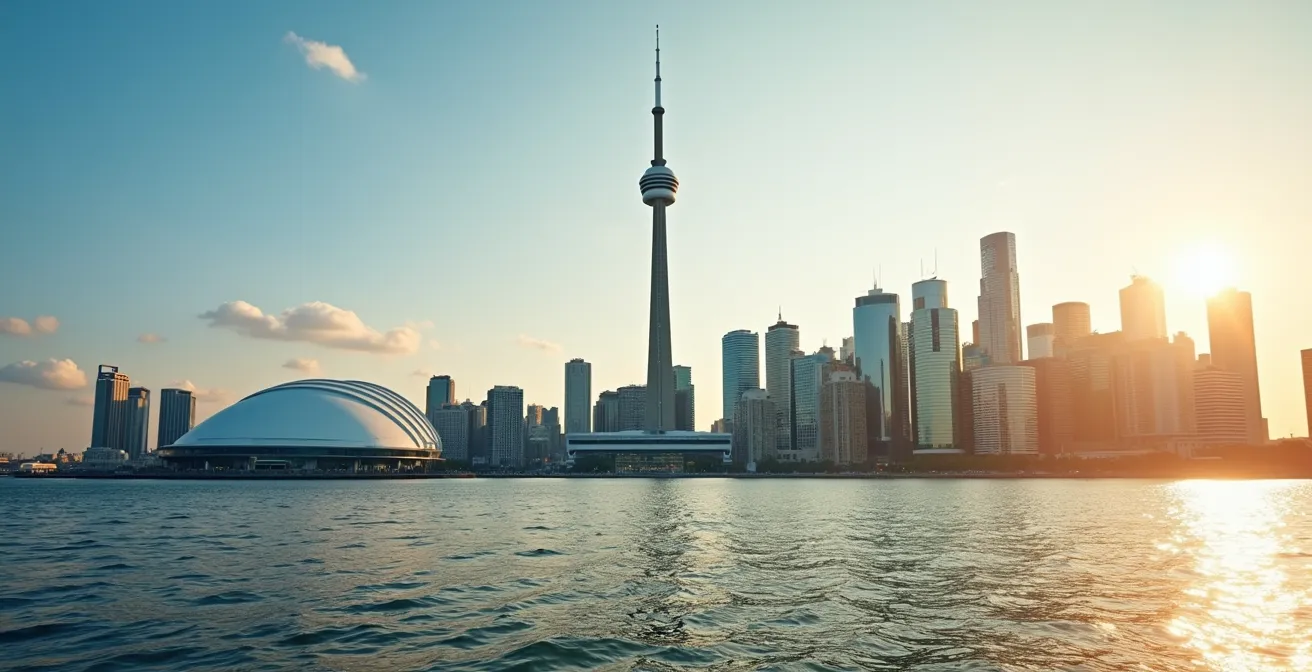
The secret to truly experiencing Toronto isn’t a better itinerary; it’s a complete shift in mindset from “seeing” to “feeling.”
- Authenticity is found in the city’s “Third Places”—the dynamic spaces where Torontonians actually live, work, and connect.
- Managing your energy with strategic rests and neighbourhood-focused exploration is more important than ticking off a long list of sights.
Recommendation: Ditch the tourist map and instead, learn to read the city’s neighbourhood pulse, using its own rhythm to guide your discovery.
You’ve got 48 hours in Toronto. The internet hands you a familiar script: CN Tower, Ripley’s Aquarium, a frantic dash through St. Lawrence Market. You follow the checklist, snap the photos, and end the day with sore feet and a nagging feeling you’ve only skimmed the surface. You saw the landmarks, but you never actually felt the city. This frantic, box-ticking approach is the fastest way to experience exhaustion, not Toronto.
The common advice is to just “wander,” but that often leads to circling the same tourist-heavy blocks. What if the real secret wasn’t about finding hidden gems, but about understanding the city’s underlying rhythm? What if, instead of chasing attractions, you tapped into the authentic “Third Places”—the lively communal spaces between home and work where the city’s true character unfolds? This isn’t just about seeing Toronto; it’s about learning its pulse.
This guide is designed for that exact purpose. It’s an anti-itinerary that swaps out exhausting tourist traps for immersive neighbourhood experiences. We’ll explore how to navigate the city’s unique infrastructure, master the art of the urban siesta, and discover how a simple streetcar ride can be a better architectural tour than any guided walk. Forget the checklist. It’s time to experience Toronto from the inside out.
To help you navigate this approach, this article is structured around the key mindset shifts and practical strategies that allow you to connect with the city’s authentic pulse. Below is a summary of the ground we’ll cover.
Summary: A Guide to Feeling Toronto’s Vibe
- Why Exploring “The Well” Offers a More Modern Toronto Vibe Than Tourist Traps?
- How to Navigate the Underground PATH System Without Getting Lost in a Food Court?
- Leslieville or Roncesvalles: Which Neighborhood Offers the Best Weekend Brunch Vibe?
- The Itinerary Mistake That Leaves You Too Exhausted to Enjoy the Nightlife
- When to Use the 504 King Streetcar for a Scenic Architecture Tour?
- How to Visit Downtown and the Waterfront in One Day Without Exhaustion?
- The Mistake of Skipping “Hole-in-the-Wall” Spots That Have Michelin Recognition
- Where to Find Authentic Global Cuisine in the GTA That Rivals the Home Country?
Why Exploring “The Well” Offers a More Modern Toronto Vibe Than Tourist Traps?
The typical Toronto guide points you toward Yonge-Dundas Square, a chaotic blitz of billboards and brand names that feels more like a generic global tourist zone than an authentic slice of the city. To feel the modern pulse of Toronto, you need to go where locals actually spend their time. Enter The Well, a sprawling development that represents the city’s shift towards true mixed-use communities. It’s not an attraction; it’s an ecosystem.
Unlike purely commercial zones, The Well is a prime example of a “Third Place,” integrating residential towers, offices, retail, and public spaces. Thousands of people live and work here, creating a vibrant urban village with a rhythm that changes throughout the day. It’s where office workers from the surrounding tech and media hubs grab lunch, where condo residents do their weekend shopping, and where everyone gathers under the stunning glass canopy on a rainy day. This is the real, lived-in Toronto in action.
Observing this flow is key. Visiting the Wellington Market during the weekday lunch rush reveals the neighbourhood’s professional pulse, while a Sunday morning stroll shows you its relaxed, residential side. By watching how Torontonians use this space—as a weather-proof town square, a community hub, and a daily convenience—you gain more insight into the city’s contemporary culture than a dozen trips up the CN Tower. It’s a masterclass in how Toronto is evolving, building authentic communities from the ground up.
How to Navigate the Underground PATH System Without Getting Lost in a Food Court?
Toronto’s 30-kilometre underground PATH system is a marvel of urban planning, but for the uninitiated, it can feel like a disorienting maze of food courts and identical corridors. Tourists often get lost trying to follow building names, ending up frustrated and overwhelmed. The local’s secret isn’t a better map; it’s a different mindset. You don’t “navigate” the PATH to get from A to B; you use it for intentional drifting.
The first rule is to ignore almost everything. Instead of focusing on store and building names, which change, rely on the four cardinal directions—N, E, S, W—which are posted at nearly every intersection and remain constant. This simple shift turns a confusing shopping mall into a logical grid. Another pro tip is the “Slope Strategy”: the entire system has a gentle, almost imperceptible downhill grade toward the lake. If you’re walking slightly downhill, you’re heading south. It’s a natural compass built into the city’s fabric.
To truly master it, reframe your journey. Treat it as a mission. As one local’s guide to a 48-hour Toronto trip suggests, try an “Art Hunter’s Route” by starting at Union Station and heading north to find the hidden public art in the Richmond-Adelaide Centre. This transforms a commute into a treasure hunt. By visiting during off-peak hours (10 AM – 3 PM), you avoid the commuter crush and can appreciate the architecture and hidden spaces, turning a potentially stressful experience into a unique urban exploration.
Leslieville or Roncesvalles: Which Neighborhood Offers the Best Weekend Brunch Vibe?
In Toronto, brunch isn’t just a meal; it’s a weekend ritual and a defining feature of a neighbourhood’s personality. Choosing where to go is less about the menu and more about the “neighbourhood pulse” you want to experience. Two perfect examples of this are Leslieville in the east and Roncesvalles in the west. Though both offer great food, they provide completely different social atmospheres.
Leslieville, often dubbed “Stroller-ville,” is the heart of Toronto’s east-end creative scene. The brunch spots here are buzzing, trendy, and filled with media professionals and young families. It’s a see-and-be-seen environment where line-ups are part of the experience. The vibe is energetic and fast-paced, and the post-brunch activity is typically browsing the chic independent design stores and galleries along Queen Street East. It’s the place to feel the city’s modern, upwardly mobile energy.
In contrast, Roncesvalles (“Roncy”) feels like a village that happens to be in a major city. Its strong Polish heritage and multi-generational community create a more relaxed, leisurely brunch experience. The pace is slower, patios are for lingering, and wait times are shorter. The post-brunch ritual here might involve grabbing pastries from a traditional Polish bakery and taking a slow walk through the neighbourhood’s beautiful Victorian homes on the way to High Park. It’s an escape from the downtown hustle, offering a taste of Toronto’s grounded, community-focused side.
As lifestyle bloggers note, this choice fundamentally shapes your weekend. Do you want a bustling social scene or a quiet, village-like retreat? Your answer determines which direction you head.
| Aspect | Leslieville | Roncesvalles |
|---|---|---|
| Demographics | Young families, creative professionals (‘Stroller-ville’) | Multi-generational families, Polish heritage community |
| Brunch Pace | Bustling, line-ups expected, see-and-be-seen atmosphere | Relaxed, village-like, leisurely patio lingering |
| Post-Brunch Activity | Browse independent design stores and galleries on Queen St. East | Polish bakery pastries, walk through Victorian homes to High Park |
| Wait Times | 30-45 minutes on weekends | 10-20 minutes or walk-in availability |
| Price Range | $18-25 per plate | $12-20 per plate |
The Itinerary Mistake That Leaves You Too Exhausted to Enjoy the Nightlife
The number one mistake visitors make is treating Toronto like a theme park, trying to cram five major activities into a single day. The result? Total exhaustion by 7 PM, with no energy left to experience the city’s incredible nightlife. The slow-travel secret is not about doing less, but about being smarter with your energy. It’s about embracing neighbourhood clustering and the strategic “Urban Siesta.”
Instead of crisscrossing the city, dedicate entire half-days to a single area. Spend a morning exploring the Distillery District, then plan your afternoon and evening in the adjacent St. Lawrence or Corktown neighbourhoods. This minimizes travel time and maximizes immersion. The most critical part of this strategy, however, is the scheduled downtime. Between 4 PM and 6 PM, head back to your accommodation for a 90-minute reset. Shower, lie down, change your clothes. This isn’t laziness; it’s a strategic retreat that recharges your batteries for the evening.
This approach also helps you avoid the dreaded 4-7 PM rush hour, when a 15-minute streetcar ride can turn into an hour-long ordeal. By planning for a late dinner reservation (8:30 PM or later), you give yourself a generous buffer to rest and emerge refreshed, ready to enjoy a late-night cocktail bar or live music venue like a local, not a tourist on their last legs. It’s about choosing quality over quantity—one memorable afternoon activity and one fantastic evening experience will always beat five rushed ones.
Your Action Plan: Energy Management for a 48-Hour Toronto Visit
- Practice ‘Neighbourhood Clustering’: Dedicate entire half-days to single neighbourhoods to minimize transit time and maximize immersion.
- Schedule the ‘Urban Siesta’: Return to your accommodation between 4-6 PM for a 90-minute strategic retreat to shower, rest, and recharge.
- Avoid Rush Hour Crossings: Never attempt to cross the city core between 4-7 PM. Plan your movements around this peak time.
- Choose Quality Over Quantity: As experienced backpackers advise for a weekend in Toronto, select one key afternoon activity and one evening experience rather than trying to check five boxes.
- Pre-book Late Dinners: Reserve restaurants for 8:30 PM or later to give yourself a proper buffer to recharge after daytime exploration.
When to Use the 504 King Streetcar for a Scenic Architecture Tour?
Many visitors see Toronto’s streetcars as just a way to get around. But locals know that certain routes are like mobile museums, offering a narrative of the city’s development. The 504 King streetcar is arguably the best example, acting as a living tour of Toronto’s architectural evolution. The key is knowing *when* and *how* to ride it for a scenic journey, not a crowded commute.
For the best experience, board the streetcar on a weekday between 10 AM and 2 PM, or on a Sunday morning. During these off-peak hours, you’re almost guaranteed a window seat and a relaxed pace, allowing you to actually look out the window. For a chronological tour, start at the eastern terminus near the Distillery District and head west. You’ll witness a stunning transformation: from the preserved 19th-century industrial brick warehouses, the route slides into the glass-and-steel canyons of the Financial District, then through the modern condo boom of the Entertainment District, and finally emerges into the gritty, artistic vibe and intact Victorian residential streets of Parkdale.
Using a PRESTO day pass allows for strategic hop-on/hop-off exploration. For example, jump off at John Street for a five-minute stop to contrast the historic Royal Alexandra Theatre with the modern, sweeping curves of Roy Thomson Hall right across the street. Then, hop back on to continue your journey west. This 45-minute ride provides more architectural diversity and context than most formal walking tours, all from the comfort of your seat. It’s a perfect example of using the city’s own infrastructure as your tour guide.
How to Visit Downtown and the Waterfront in One Day Without Exhaustion?
The idea of tackling both Downtown Toronto and the Waterfront in a single day sounds exhausting, and it usually is—if you fight the city’s geography. The local’s strategy is simple and elegant: use gravity. This “Gravity-Assisted Exploration” method involves starting “high” and working your way consistently “low” (south) towards Lake Ontario, following the natural, gentle downhill grade of the land.
A perfect itinerary using this method begins in the morning at a northern point like the Art Gallery of Ontario (AGO) or the adjacent Grange Park, when you have the most energy. From there, your entire day is a slow, southward drift. This approach turns a tiring trek into a pleasant, downhill stroll. Along the way, you build in stops at “urban oases” for strategic rests. Pause for ten minutes of quiet contemplation in the Bach-inspired Toronto Music Garden or find a peaceful lunch spot in the courtyard of Commerce Court, hidden away from the Bay Street crowds.
During the peak sun hours of 12 PM to 3 PM, you can dip into the PATH system to continue your southward journey in air-conditioned comfort. You’ll emerge near the lake, perfectly positioned to end your day. As recommended by local guides who highlight Toronto’s redefined waterfront, skip the crowded Harbourfront Centre and head for the whimsical pink umbrellas of Sugar Beach or the architectural wave decks. For the ultimate finale, a popular 48-hour Toronto itinerary suggests taking the 15-minute ferry to the Toronto Islands at golden hour. It’s a quick escape that offers the absolute best, most breathtaking views of the city skyline as the sun sets.
Key Takeaways
- True local experiences come from observing the “neighbourhood pulse” in authentic “Third Places,” not from visiting tourist landmarks.
- Strategic energy management, including the “Urban Siesta” and neighbourhood clustering, is crucial for enjoying both day and night activities without burnout.
- Use the city’s infrastructure as your guide: the PATH system for navigation, the 504 streetcar for an architectural tour, and the city’s natural slope for an effortless downtown walk.
The Mistake of Skipping “Hole-in-the-Wall” Spots That Have Michelin Recognition
When most people hear “Michelin Guide,” they picture white tablecloths, tiny portions, and astronomical prices. In many cities, they’d be right. But in Toronto, skipping a nondescript “hole-in-the-wall” restaurant could mean missing out on a world-class, Michelin-recognized meal. The biggest mistake a foodie traveller can make here is judging a restaurant by its facade.
Toronto’s Michelin Guide is uniquely democratic. As food experts have noted, it heavily favours the Bib Gourmand (recognizing good value) and Recommended categories over the more famous starred system. This reflects the city’s authentic dining culture, where excellence is found at all price points and in every type of setting. The result is a guide that validates the city’s true culinary landscape, where a beloved Chinatown pho spot or a family-run pizzeria in Little Italy can receive the same level of recognition as an upscale fine-dining establishment.
For the curious traveller, this is a golden opportunity. It means you can go on a Michelin-guided food tour without breaking the bank. It validates the idea that in Toronto, the most memorable meals are often served in the most unassuming places. Trusting the guide over your eyes can lead you to a tiny, cash-only spot with a line out the door and a flavour profile that will redefine your expectations of what a “top restaurant” can be. In this city, authenticity, not ambiance, is what truly earns culinary respect.
Where to Find Authentic Global Cuisine in the GTA That Rivals the Home Country?
Asking “what is Toronto’s signature dish?” misses the point entirely. Toronto’s signature *is* its diversity. The city’s true culinary identity isn’t found in a single dish, but in the sprawling, authentic global cuisines of the Greater Toronto Area (GTA). With over 140 languages spoken and 230 ethnic origins represented, the GTA is a mosaic of culinary traditions that often rival the quality of their home countries.
To experience this, you need to practice a form of “Culinary Cartography,” using the subway and bus lines to navigate a world of flavours. Forget downtown; the real magic happens in the neighbourhoods. You can start a food hop on the Bloor-Danforth subway line, grabbing authentic Greek souvlaki at Pape station before continuing to Broadview for hand-pulled noodles in East Chinatown. For a taste of Sri Lanka that rivals the street food of Colombo, take the bus route that replaced the Scarborough RT. For the best Hong Kong-style dim sum, an express bus to the Pacific Mall area in Markham is a required pilgrimage.

This culinary exploration is the ultimate Toronto experience. It’s a journey that takes you from the Punjabi sweet shops of Brampton, run by the same families since the 90s, to the Portuguese bakeries on Dundas West, which bake their pastéis de nata in ovens imported from Portugal. This is where you feel the city’s soul. It’s an adventure that proves that in Toronto, you can travel the world with a single PRESTO card.
By embracing this mindset of intentional, observant travel, your 48 hours in Toronto can be transformed from a rushed tour into a deep, meaningful connection with one of the world’s most dynamic cities. To put these ideas into practice, the next logical step is to start planning your exploration around a single neighbourhood’s pulse.