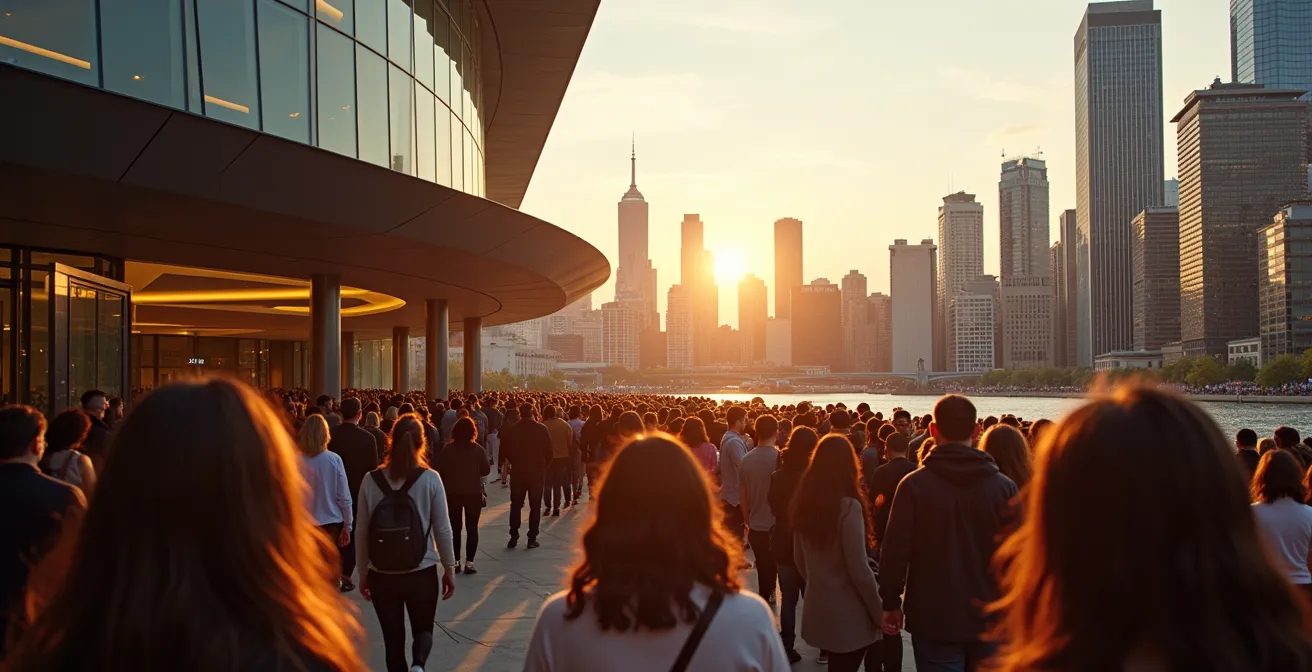
Getting into a sold-out TIFF premiere often feels like an impossible lottery reserved for those with connections. The reality is that success isn’t about who you know, but *what* you know about the festival’s hidden rhythms. This guide reframes the challenge as a strategic game, teaching you to master everything from the calculated patience of the rush line to the logistical loopholes in the festival’s downtown Toronto footprint. It’s an insider’s playbook for winning your spot in the theatre.
The dreaded “Off-Sale” message. For any film buff trying to navigate the Toronto International Film Festival, it’s a familiar sight that dashes hopes of catching a star-studded world premiere. With the festival’s massive scale, it’s easy to feel like you’re competing against an army of industry insiders with unlimited access. The festival’s growth has been staggering; from its inaugural year in 1976 with 35,000 filmgoers, it has exploded into a global powerhouse that now welcomes more than 700,000 attendees annually. This intense competition makes securing tickets feel like a game of chance.
Most advice you’ll find is disappointingly generic: become a member, be ready the second tickets go on sale, or hope for the best. But what if the key to getting in wasn’t just about speed or luck? What if it was about strategy? The true insider’s advantage lies in understanding the festival’s internal logic—its predictable patterns and logistical quirks. It’s about playing a smarter game by mastering the festival rhythms and leveraging what can only be described as logistical arbitrage.
This guide demystifies the process. We will move beyond the obvious and break down the actionable strategies that veteran festival-goers use. From mastering the art of the rush line to understanding the critical venue mistakes that can derail your schedule, you’ll learn to see the festival not as an impenetrable fortress, but as a complex system with rules you can learn to master.
To help you navigate this complex but rewarding experience, we’ve broken down the essential strategies. This guide will walk you through the insider tactics for securing tickets, making the most of the fan experience, and avoiding common rookie mistakes.
Summary: How to Get TIFF Tickets for Premieres Without Being an Industry Insider?
- Why Waiting in the Rush Line Can Get You Into Sold-Out Screenings?
- How to Position Yourself at the King Street Fan Zones for the Best Selfies?
- Premium vs Regular: Is the Red Carpet Experience Worth the Extra $40?
- The Venue Mistake That Causes You to Miss the First 15 Minutes of the Film
- When to Buy Ticket Packages to Ensure Selection Before Public Sale?
- Polson Pier Sunset or Graffiti Alley Portraits: Which Photo Tells a Better Story?
- Why Wearing Running Shoes Can Get You Denied Entry at Top King West Clubs?
- Raptors vs Maple Leafs: Which Game Offers Better Value for a Family of 4?
Why Waiting in the Rush Line Can Get You Into Sold-Out Screenings?
The “Rush Line” is the festival’s most misunderstood feature. Many see it as a desperate, last-ditch effort with low odds of success, but for the savvy festival-goer, it’s a calculated strategy known as the Patience Play. A screening being “Off-Sale” doesn’t mean every single seat is filled. A percentage of tickets are allocated to sponsors, press, and the film’s cast and crew, and not all of them are used. These unclaimed seats are released to the rush line just before the film starts.
The key is understanding the “venue calculus.” Not all rush lines are created equal. Your chances of getting into a sold-out screening are significantly higher at the festival’s largest venues. For instance, Princess of Wales, Royal Alexandra Theatre, and Roy Thomson Hall are easier to rush than the smaller, more intimate cinemas at the TIFF Bell Lightbox or the Scotiabank Theatre. Larger halls mean more seats, which translates to a higher number of potential no-shows. Choosing to rush a film at Roy Thomson Hall over one at the Lightbox isn’t luck; it’s a strategic decision based on probability.
This strategy is particularly effective because of the sheer volume of people at the festival. With more than 700,000 attendees and over 4,400 industry delegates, scheduling conflicts are inevitable, leading to empty seats that become your opportunity. The rush line isn’t just for those who failed to buy tickets; it’s a parallel access system for those who know how to play the long game.
Therefore, instead of viewing the rush line as a failure, reframe it as a strategic investment of time. Arrive early, choose your venue wisely, and you’ll often be rewarded for your patience.
How to Position Yourself at the King Street Fan Zones for the Best Selfies?
The TIFF experience extends far beyond the darkened movie theatre. During the opening weekend, a large section of King Street West transforms into “Festival Street,” a free, open-air celebration of film. This pedestrian-only zone from University Avenue to Peter Street is a hub of energy, with live music, food trucks, and partner activations. For fans, it’s the best place to soak in the atmosphere and, with the right strategy, get that coveted celebrity selfie. Positioning is everything here.
Simply wandering through the crowd is a rookie mistake. Insiders know the celebrity pathways. Stars often move between their vehicles, the red carpet entrance, and media tents. Positioning yourself along these routes, often near the barriers closest to the main premiere venues like Roy Thomson Hall or the Princess of Wales Theatre, dramatically increases your chances. Another key is to watch for the flow of security and publicists, as they often create a channel just before a star arrives. This is your cue to get your phone ready.

The energy is electric, especially during the golden hour when the light is perfect for photos. But capturing that perfect shot requires more than just being there; it requires a plan. Don’t just aim for the red carpet; consider spots near the food trucks or major sponsor pop-ups, as celebrities often do quick promotional stops. It’s about anticipating movement, not just camping in one spot.
Checklist: Your Fan Zone Domination Plan
- Points of Contact: Before heading out, map the key zones on your TIFF schedule. Pinpoint the main fan areas on King West (University to Peter) and the outdoor screening space at David Pecaut Square.
- Collecte: Inventory the free events happening that day. Check the official TIFF site for partner activations, musical performances, and the schedule for the Criterion Closet pop-up.
- Cohérence: Align your position with your primary goal. If you want a celebrity selfie, position yourself near the premiere entrance barriers. For atmosphere and freebies, stick closer to the partner activations.
- Mémorabilité/Emotion: Assess the energy of different spots. The area near the red carpet is high-intensity but crowded. A spot further down might be quieter but offer a better, less obstructed view of stars arriving or leaving.
- Plan d’Intégration: Arrive at least an hour before a major premiere. Secure a front-row spot along a barrier, stay hydrated, and have your phone or camera ready to go at a moment’s notice.
Ultimately, the fan zone is a game of strategic observation. By understanding the layout and flow, you can turn a chaotic crowd into a prime opportunity for an unforgettable encounter.
Premium vs Regular: Is the Red Carpet Experience Worth the Extra $40?
TIFF offers a tiered system of access, and one of the most common dilemmas for fans is whether to splurge on a “Premium” ticket for a gala or premiere. These tickets, which can cost $40 or more than a regular screening, promise better seats and the chance to be in the same room as the stars. But is the value proposition really there for the average film buff?
The answer depends entirely on your goal. If your primary objective is to see a film before anyone else and experience the buzz of a world premiere with the cast in attendance, then yes, the premium price can be worth it. You’re paying for the ambiance and the proximity to celebrity, not necessarily a better view of the screen. The Q&A sessions that often follow these screenings can also offer unique insights from the filmmakers and actors.
However, from a purely strategic and financial standpoint, the savvy veteran knows there are more efficient ways to see the same films. Many of the buzziest festival titles have second or third screenings at regular prices later in the festival. Furthermore, for those willing to play the odds, the Rush Pass offers incredible value. While premium tickets are a guaranteed seat, they are also a significant investment. Comparing the different access tiers reveals the strategic trade-offs every festival-goer must consider.
The following table breaks down the core options, showing how different price points relate to access and timing. It’s a clear look at the various “access tiers” available.
| Ticket Type | Price | Access Benefits | Availability |
|---|---|---|---|
| Rush Pass | $80 ($39 under 25) | Unlimited rush line access to off-sale screenings | Throughout festival |
| Member Bundle (10 tickets) | 20% discount | Early selection starting Aug 15 | Members only until Aug 24 |
| Single Tickets | Regular price | Standard seating | Public from Aug 25 |
| Premium/Gala | $40+ extra | Better venues, celebrity presence | Limited availability |
Ultimately, the “worth” of a premium ticket is subjective. If you’re looking for maximum film-watching for your dollar, your money is better spent on a regular ticket package or a Rush Pass. If you’re chasing the once-in-a-lifetime thrill of a premiere, the extra cost is part of the price of admission to that exclusive club.
The Venue Mistake That Causes You to Miss the First 15 Minutes of the Film
One of the biggest rookie mistakes at TIFF has nothing to do with tickets—it’s underestimating travel time between venues. Toronto’s downtown core is dense, and during the festival, it becomes a logistical gauntlet. The most critical error is failing to account for the King Street closure during the opening weekend. This single factor can turn a leisurely 10-minute walk into a frantic 30-minute scramble, causing you to miss the start of your film.
This is where logistical arbitrage comes into play. Insiders don’t just look at their film schedule; they map it. They know that getting from the Scotiabank Theatre to the Princess of Wales Theatre requires navigating crowds and street closures. During the first few days of the festival, this is especially challenging. According to news reports on the closures, King Street from Spadina to University avenues is completely closed to traffic, causing major streetcar diversions. Even as a pedestrian, the sheer density of the crowds on this stretch can slow you down significantly.
A smart festival plan involves “clustering” your screenings. Try to see consecutive films at the same venue or at venues that are very close to each other, like the TIFF Bell Lightbox and Roy Thomson Hall. If you must travel across the festival’s footprint, build in a buffer of at least 45 minutes, not the 20 minutes Google Maps might suggest. Other practical tips include wearing comfortable shoes—you’ll be walking and standing far more than you expect—and dressing in layers, as the powerful air conditioning in older venues like Roy Thomson Hall is legendary, even on a warm September day.
Failing to plan for these logistical hurdles is the fastest way to turn an exciting film festival experience into a stressful race against the clock. The real pros aren’t just cinephiles; they are expert urban navigators.
When to Buy Ticket Packages to Ensure Selection Before Public Sale?
In the strategic game of securing TIFF tickets, timing is your most powerful weapon. While single tickets are an option, the real advantage lies in purchasing ticket packages, and more importantly, knowing *when* to buy and redeem them. The entire ticketing process is a staggered release designed to reward loyalty and early commitment. Waiting for the public sale of single tickets is essentially choosing to pick from what’s left over after the most dedicated fans have made their selections.
The most significant advantage is reserved for TIFF Members. Membership provides access to an exclusive pre-sale window for both packages and single tickets. According to official TIFF ticketing information, members get to make their film selections starting as early as August 15, a full 10 days before the general public on August 25. This 10-day head start is the single most effective way to guarantee tickets to high-demand screenings. If there’s a premiere you absolutely cannot miss, becoming a member is a near-necessity.
For non-members, the strategy is to purchase a ticket package (like a 10-ticket bundle) as soon as they become available. While you’ll still select your films after the members, package holders get access before the single-ticket-buying public. This creates a clear hierarchy: Members first, then package holders, then the general public. Understanding this timeline is crucial. The key isn’t just to buy a package, but to be online and ready to redeem it the moment your selection window opens. The most popular films can sell out within hours, even within these tiered windows.
Think of it as an investment. You are paying for a better position in the queue. By buying a package and acting quickly, you are moving yourself significantly closer to the front of the line, ensuring you get to build your ideal festival schedule rather than just taking what you can get.
Polson Pier Sunset or Graffiti Alley Portraits: Which Photo Tells a Better Story?
Every visitor to Toronto wants that iconic photo, but what shot truly captures the spirit of the city during TIFF? The classic choice is a sunset photo from Polson Pier, with the CN Tower and the skyline reflecting on the water. It’s beautiful, universally recognizable, and completely generic. It says “I was in Toronto.” It doesn’t say “I experienced TIFF.”
An insider, however, knows that the real story of Toronto’s creative energy isn’t in its polished skyline but in its vibrant, gritty laneways. A portrait taken in Graffiti Alley (officially Rush Lane) tells a much more compelling story. This ever-changing canvas of street art, located in the heart of the Fashion District just a stone’s throw from the festival’s core, embodies the independent, artistic spirit that film festivals are meant to celebrate. A photo here isn’t just a backdrop; it’s a collaboration with the city’s creative pulse.
The Polson Pier photo is a postcard. It’s a passive observation of the city. The Graffiti Alley photo is an immersion. It connects you to the raw, expressive culture that thrives just beneath the surface of the corporate downtown. It speaks to a deeper understanding of Toronto’s character and aligns perfectly with the cinephile’s appreciation for visual storytelling and independent expression. While tourists are framing the skyline, festival veterans are finding art in unexpected places.
So, which photo tells a better story? The one that shows you saw the city, or the one that shows you understood it? For a film lover, the answer should be clear. Go where the art is.
Why Wearing Running Shoes Can Get You Denied Entry at Top King West Clubs?
The TIFF experience doesn’t end when the credits roll. For many, the night continues at the exclusive afterparties and packed bars of the King West entertainment district. This is where a critical piece of insider knowledge comes into play: your footwear can make or break your night. While comfort is key for a day of running between venues, wearing standard athletic running shoes to a top King West club in the evening is a guaranteed way to be turned away at the door.
This isn’t just a simple dress code; it’s about understanding the neighborhood’s culture. As one local guide puts it, “King West is TIFF’s unofficial runway.” The area operates on a currency of style and sophistication, especially during the festival. Venues enforce a “fashion-forward” attire policy, and basic athletic wear signals that you’re not part of the intended clientele. For example, the dress code for 44 Toronto, a popular club in the heart of the district, explicitly states it does not permit athletic wear such as jerseys, shorts, or track pants, and this unspoken rule almost always extends to running shoes.
King West is TIFF’s unofficial runway. It’s not just where the red carpets are: it’s where the afterparties turn into power breakfasts and where the line between industry and nightlife is so blurred, no one dares draw it again.
– Destination Toronto, Local’s Guide to TIFF 2025
The solution is a strategic wardrobe choice. Your daytime comfortable shoes are essential, but for the evening, you need an elevated option. This doesn’t necessarily mean formal dress shoes. A pair of stylish, clean, fashion-oriented sneakers (think minimalist leather or designer brands) will often pass, but standard gym shoes will not. The key is to look intentional and polished, not like you just came from a workout. It’s about respecting the environment you’re trying to enter.
Think of your evening outfit as another ticket. Without the right one, you simply won’t get in, no matter how great the film you just saw was.
Key Takeaways
- Treat Waiting as a Strategy: The rush line isn’t a lottery; it’s a “Patience Play” where choosing large venues and arriving early creates a reliable path into sold-out films.
- Master Festival Logistics: Success at TIFF is about logistical arbitrage. Understanding travel times, venue clusters, and street closures is as important as your film schedule.
- Your Access Tier is a Strategic Choice: Don’t just buy a ticket; choose an access tier. Membership offers the best advantage, but even ticket packages move you ahead of the general public.
Raptors vs Maple Leafs: Which Game Offers Better Value for a Family of 4?
On the surface, this question seems entirely out of place in a guide to a film festival. But reframed metaphorically, it cuts to the very heart of the strategic choices a festival-goer must make. The question isn’t about sports; it’s about two fundamentally different models of entertainment value, both of which exist within TIFF. Which “game” offers a better experience for your investment of time and money?
The “Maple Leafs Game” represents the high-stakes, high-cost, exclusive experience. It’s the equivalent of chasing a single, sold-out gala premiere. The tickets are expensive and hard to get. The atmosphere is electric but also tense. Success—getting in—delivers a massive payoff and bragging rights. Failure is crushing. For a family or a casual fan, the pressure and expense might outweigh the reward. It’s an all-or-nothing bet.
The “Raptors Game,” on the other hand, represents a more accessible, high-energy, community-focused experience. This is the spirit of Festival Street, the free outdoor screenings at David Pecaut Square, and the general buzz of the fan zones. The cost of entry is low or even zero. The value comes not from a single, exclusive moment, but from the collective energy and diverse array of activities. It’s less about seeing one specific thing and more about being part of a larger celebration. It offers more flexibility and less risk, which is often a better fit for a group.
Ultimately, there is no single right answer. The “better value” depends on your priorities. Do you want the thrill of the hunt for an exclusive premiere, or the guaranteed fun of immersing yourself in the festival’s vibrant street life? Now that you have the insider’s playbook, the next step is to design your personal TIFF strategy. Evaluate your must-see list against these access points and build your own winning festival experience.