In summary:
- Swap single cash fares for a PRESTO card or contactless payment to leverage the two-hour free transfer, the single biggest money-saver on the TTC.
- Plan your days using “geographic clustering,” focusing on one area at a time (like Downtown/Waterfront) to minimize travel and maximize sightseeing.
- For families, TTC Day Passes are almost always a more cost-effective and less stressful option than renting a car for in-city travel.
- Avoid the Yonge-Dundas Square “tourist tax” on dining by taking a short streetcar ride to explore neighbourhood restaurants with better value.
Welcome to Toronto! It’s a fantastic city, but for a first-time visitor, its sheer scale can feel overwhelming. You look at a map, see the sprawl of the Greater Toronto Area (GTA), and your budget-conscious mind starts to panic. The common advice you’ll hear is to “use public transport” or “buy a PRESTO card,” but this is like telling a chef to “use ingredients.” It’s not the what, but the *how* that matters. Many tourists end up exhausted, having crisscrossed the city inefficiently, or overspent on single-fare tickets, unaware of the strategic advantages they’ve missed.
The secret to conquering Toronto on a budget isn’t about pinching every penny or avoiding transit altogether. It’s about understanding the city’s unique flow and making smart, intentional choices that save you not just money, but precious time and energy. Think of it less like a vacation and more like a savvy strategic mission. The real key isn’t just in the card you use, but in the rhythm you adopt—knowing when to take the subway for distance, when a streetcar is better for neighbourhood hops, and when a bike is the perfect tool for the job.
This guide is your concierge-in-a-pocket, designed to transform you from a bewildered tourist into a savvy navigator. We’ll move beyond the basics to reveal the strategic thinking that lets you experience the best of the city efficiently. We’ll show you how to structure your days, beat the crowds, and make transit choices that feel like you’ve discovered a local’s secret, all while keeping your transport budget firmly in check.
In this guide, you will discover the fundamental strategies for navigating Toronto’s public transit system efficiently. We’ll explore how to structure your itinerary, make smart choices between transport modes, and uncover savings that go well beyond simple ticket prices.
Summary: A Savvy Traveler’s Guide to Toronto Transit
- Why Buying Single Fares Instead of a PRESTO Card Costs You 25% More?
- How to Visit Downtown and the Waterfront in One Day Without Exhaustion?
- Summer vs Winter: Which Season Offers the Best Value for Toronto Tourists?
- The Dining Mistake Near Yonge-Dundas Square That Costs Tourists $50 Extra
- In What Order Should You Visit Major Attractions to Beat the 11 AM Rush?
- How to Navigate the Underground PATH System Without Getting Lost in a Food Court?
- Rental Car or TTC Day Passes: Which Is Cheaper for a Family of Four?
- How to Plan a 5-Day Family Vacation in Toronto for Under $2,500 CAD?
Why Buying Single Fares Instead of a PRESTO Card Costs You 25% More?
The most common mistake first-time visitors make is treating Toronto’s transit like a vending machine: one ride, one payment. This approach feels simple, but it’s a significant budget leak. The title’s “25% more” isn’t just about the small discount per ride; it’s about the massive opportunity cost of missing out on the TTC’s most valuable feature: the two-hour free transfer. When you pay with a PRESTO card or a tapped credit/debit card, a single fare of about 3.20 CAD if you have a reloadable PRESTO card becomes an all-access pass for 120 minutes. You can take the subway, hop on a streetcar, and then jump on a bus, all on that one tap.
Imagine you’re visiting St. Lawrence Market. With a single cash fare, your trip there is one payment. Your trip back is another. But with PRESTO, you can travel to the market, spend an hour exploring, and then hop on a streetcar to your next destination within the two-hour window for free. That’s not a 1.5% saving; it’s a 100% saving on your second and third trips. This is the “transit arbitrage” savvy locals use every day. Over a three-day trip, those “free” connections add up to dozens of dollars saved, easily justifying the one-time 6 CAD cost of the PRESTO card itself.
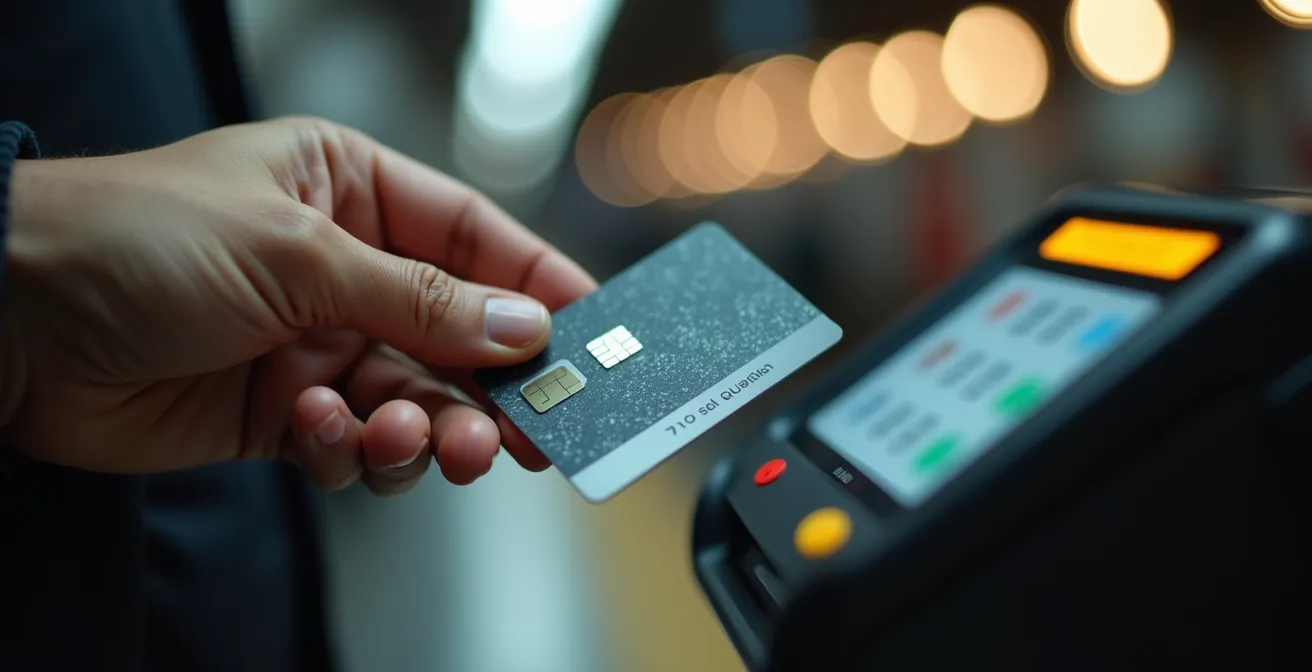
Furthermore, if your day involves extensive travel, a PRESTO card unlocks the 13.50 CAD Day Pass, offering unlimited travel. This is an incredible value if you plan on exploring multiple neighbourhoods in a single day. Without PRESTO, you’re stuck paying for each ride individually, a costly proposition. In essence, avoiding PRESTO or contactless payment isn’t saving you hassle; it’s actively costing you money and flexibility. The card is your key to moving with the flow of the city, not against it.
How to Visit Downtown and the Waterfront in One Day Without Exhaustion?
Toronto’s Downtown Core and its Waterfront are prime tourist zones, but they present a classic visitor’s dilemma. The attractions seem close on a map, but the distances are deceptively long, especially along the spread-out Harbourfront. Many tourists attempt to conquer it all on foot, leading to exhaustion by mid-afternoon. The key to an enjoyable and efficient day is “geographic clustering” and using the right mode of transport for the right distance, a strategy we call transit arbitrage.
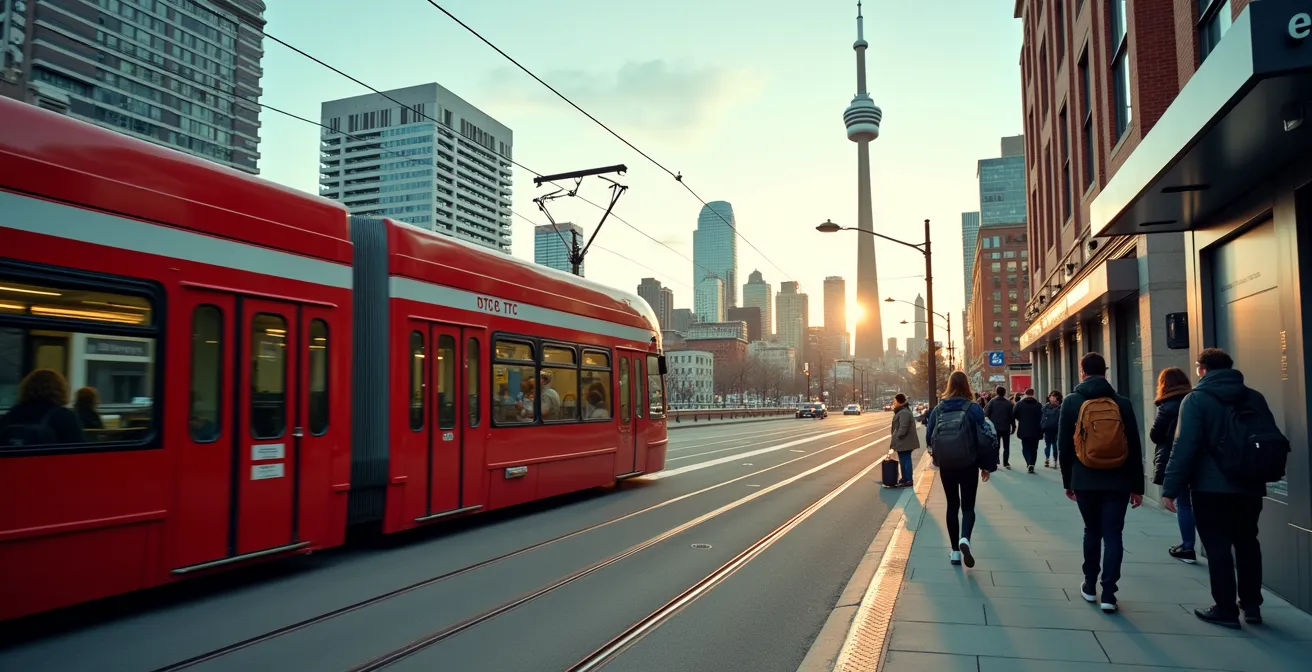
Start your day by using the TTC’s extensive streetcar network to navigate the downtown grid. The 504 King and 501 Queen streetcars are essentially east-west arteries that connect you to everything from the Entertainment District to the Distillery District. They are perfect for hopping between points of interest that are just a little too far to walk comfortably. Then, when you’re ready to tackle the waterfront, switch your mode of transport.
Case Study: Strategic Use of Bike Share Toronto for Waterfront Exploration
One traveler, knowing the waterfront trail stretches for several kilometers, downloaded the Bikeshare Toronto app before their trip. By activating a day pass for $7 CAD or a 3-day pass for $15 CAD, they were able to effortlessly cycle from the Harbourfront Centre to Sugar Beach and then over to the Toronto Music Garden. This turned a potentially exhausting 90-minute walk into a scenic 20-minute ride, saving time and energy for more sightseeing. It’s a perfect example of spending a small amount to gain a huge return in experience.
Combining these methods is the ultimate strategy. Use the streetcar for the dense city blocks and then switch to a bike for the long, linear path of the waterfront. This multi-modal approach allows you to cover significant ground without fatigue, turning a logistical challenge into a seamless and enjoyable part of your Toronto experience. You’ll see more, do more, and end your day with energy to spare.
Summer vs Winter: Which Season Offers the Best Value for Toronto Tourists?
Many travelers assume summer is the only time to visit Toronto, drawn by festivals and sunny days on the Toronto Islands. While July and August are vibrant, they also come with peak-season pricing for flights and accommodation, not to mention larger crowds. For the budget-savvy traveler, the “best value” isn’t found in the hottest months, but in the shoulder seasons and even in the crisp winter air.
Winter in Toronto offers a unique charm and significant savings. The city is less crowded, and you can often find better deals on hotels. Activities shift indoors to world-class museums, cozy cafes in the Distillery District, and navigating the vast underground PATH system. And don’t assume everything shuts down; the Toronto Island Ferry operates year-round, offering stunning, frosty views of the city skyline without the summer crowds. Skating at Nathan Phillips Square becomes a main attraction, and the cold weather makes a trip to a steamy St. Lawrence Market food stall all the more rewarding.
However, the absolute sweet spot for value strikes a balance between good weather and lower prices. As travel experts point out, the periods just before and after the summer rush are ideal.
There are generally fewer tourists and more reasonably priced hotels in May to early June, as well as September to October
– Imoova Travel Blog, How To Travel Canada on a Budget
During these months, you get the best of both worlds: pleasant weather for walking and exploring, but without the peak-season price tags. Attractions are less congested, allowing for a more relaxed experience. Ultimately, the best value depends on your priorities. If your goal is the lowest possible cost, embrace the winter. But for the perfect blend of good weather and manageable prices, aim for the shoulder seasons.
The Dining Mistake Near Yonge-Dundas Square That Costs Tourists $50 Extra
Yonge-Dundas Square, with its dazzling billboards, feels like the heart of Toronto. It’s an inevitable stop for most tourists, and the surrounding area is packed with restaurants. Herein lies the mistake: dining at the major chain restaurants immediately bordering the square. You’re not just paying for a meal; you’re paying a hefty “tourist tax” for the prime location. A generic burger and fries that might cost $18 elsewhere can easily be $25-$30 here. For a couple, that difference quickly adds up to an extra $30-50 on a single meal for an often-mediocre experience.
The savvy strategy is to use the square as a landmark, not a food court. The real Cost-Per-Experience (CPE) value lies just a short transit ride away. Instead of settling for an overpriced meal, invest one of your two-hour transit taps to explore a real Toronto neighbourhood. A 10-minute streetcar ride west on Queen Street or east on Dundas will transport you to a world of authentic, owner-operated restaurants, diverse food scenes, and much more reasonable prices. You’ll trade a crowded chain for a memorable meal that locals actually enjoy.

This doesn’t mean you can’t eat cheaply downtown. Toronto’s iconic street meat vendors offer delicious hot dogs and sausages for a few dollars. But for a sit-down meal, the rule is simple: walk ten minutes or ride the streetcar for five. Your wallet—and your taste buds—will thank you for escaping the gravitational pull of the big-name chains.
Your Smart Dining Playbook
- Explore Street Food: Don’t underestimate the classic Toronto hot dog. You can find cheap hot dogs for around 3-4 CAD all over the downtown core for a quick, budget-friendly lunch.
- Ride the Streetcar: Use your PRESTO tap to take a 10-minute ride away from Yonge-Dundas. Head west into Queen West for trendy spots or east to Leslieville for cozy bistros.
- Leverage Free Museum Nights: Plan your visit to the Art Gallery of Ontario (AGO) for Wednesday evening, when admission is free. The money you save on tickets can be put toward a fantastic dinner nearby.
- Check for Food Festivals: If your visit coincides with events like Winterlicious or Summerlicious, you’re in luck. Over 200 restaurants participate, offering multi-course prix-fixe menus that provide incredible value.
In What Order Should You Visit Major Attractions to Beat the 11 AM Rush?
The “11 AM Rush” is a predictable phenomenon in any major city. It’s the time when the majority of tourists have finished breakfast, figured out their plans, and descended upon the top attractions simultaneously. To beat it, you need a strategy that starts before everyone else. The key is not just to start early, but to start *smart* by using Toronto’s central transit hub as your launchpad.
Your strategic base of operations should be Union Station. Don’t think of it as just a train station; it’s the nerve center of the city. It provides direct, underground access to the subway, the PATH system, and the UP Express to the airport. By starting your day here before 9 AM, you gain a massive logistical advantage.
Strategic Timing: Starting at Union Station
Union Station is more than just a place to catch a train; it’s a national historic site and Canada’s largest transit hub, serving more than 300,000 travelers per day. An experienced traveler begins their day here. At 8:30 AM, they can walk underground directly to the base of the CN Tower, arriving just as it opens and long before the tour buses. After their visit, they can hop on the subway at Union—without even going outside—and be at the Royal Ontario Museum (ROM) or Casa Loma well before the 11 AM crowds build up there.
This “hub-and-spoke” approach is made possible by the TTC’s reliable and early-starting service. As a travel guide points out, the subway runs from approximately 6am to 2am from Monday to Saturday, giving you a huge window to execute your plan. The logical order is to tackle the most popular attraction on your list first (like the CN Tower) and then use the interconnected transit system from Union to move to your second and third choices. This reverses the typical tourist flow, keeping you one step ahead of the crowds all day long.
How to Navigate the Underground PATH System Without Getting Lost in a Food Court?
The PATH is Toronto’s secret weapon against bad weather. It’s a 30-kilometer underground pedestrian network linking major downtown buildings, subway stations, and attractions. For a first-timer, however, it can feel like a confusing labyrinth of corporate corridors and identical-looking food courts. Getting lost is a rite of passage for many, but it doesn’t have to be for you. The key is to ignore most of it and focus on a few simple rules.
First, understand the color-coded directional system. The signs are your best friends. Blue signs point North (towards Bloor Street and the Royal Ontario Museum). Red signs point South (towards the lake, CN Tower, and Union Station). Orange points West and Yellow points East. If you can remember “Blue for Bloor, Red for the rails,” you’ve already won half the battle. Don’t try to learn the whole map; it’s too complex. Instead, treat the main corridor from Union Station (South) to the Eaton Centre/Dundas Station (North) as your primary highway. Most key destinations are connected to this central spine.
Second, use major buildings as anchors. Instead of trying to remember which food court you passed, look for the logos of the major bank towers (like TD, CIBC, BMO). These towers are massive, visible landmarks both above and below ground. If you know you need to get to the “TD Centre,” you can follow signs for that specific complex, making navigation much simpler. The PATH is a tool, and like any tool, it requires a little knowledge to be used effectively. Stick to the main north-south route and use the colors and towers as your guide, and you’ll navigate it like a local.
Checklist for a Flawless PATH Journey
- Identify Your Anchors: Before you enter the PATH, identify the major building or subway station nearest your destination. Use this as your target, not a generic “food court.”
- Master the Colors: Commit the main directional colors to memory: Blue for North (uptown), Red for South (lake/Union). This is your primary navigation tool.
- Stick to the Main Artery: Focus on the well-trafficked corridor that runs north-south between Union Station and Dundas Station. Avoid straying into quieter, less-signed side corridors.
- Use Above-Ground Cues: If you get disoriented, find the nearest exit to the street. Re-orienting yourself with a quick look at the CN Tower or major street signs is often faster than wandering underground.
- Plan for an Exit: Know which subway station or building you’ll exit from. The PATH is for getting from A to B, not for aimless wandering.
Rental Car or TTC Day Passes: Which Is Cheaper for a Family of Four?
For a family visiting Toronto, the transportation dilemma can be acute. A rental car seems to offer freedom and convenience, while public transit can feel daunting with kids in tow. However, when you run the numbers, the choice for in-city travel becomes remarkably clear. A rental car is almost always the more expensive and more stressful option.
The sticker price of a car rental is just the beginning. The real cost comes from the “hidden” fees that accumulate rapidly in a city like Toronto. You have to account for daily hotel parking (which can be $30-50 per night), parking at every attraction (another $15-25 each time), gas, and insurance. These ancillary costs can easily add another $100 per day to your budget, turning a seemingly affordable rental into a major expense. This is before you even factor in the stress of navigating unfamiliar city traffic and the time wasted searching for parking.
In contrast, the TTC offers predictable, low-cost options designed for families. On weekends and holidays, a single $13.50 Family/Group Day Pass allows two adults and up to four youths (19 and under) to travel limitlessly. On a weekday, four individual day passes would achieve a similar result for a fixed cost. This approach not only saves a significant amount of money but also eliminates the anxiety of driving and parking.
This detailed cost comparison from a budget travel site illustrates the stark difference. While a car might seem appealing for a day trip out of the city, for exploring Toronto itself, the TTC is the clear winner for a family of four.
| Option | Weekend Cost | Weekday Cost (3 days) | Hidden Costs |
|---|---|---|---|
| TTC Family Pass | $13.50/day | $40.50 (3-day passes) | None |
| Car Rental | $150-200 | $225-300 | Hotel parking, attraction parking, gas, insurance can add $100+/day |
| Bike Share Family | $60 (4 passes) | $60 (4x 3-day) | Limited to good weather |
Key takeaways
- Strategic Transit is Key: Using a PRESTO card or contactless payment for the two-hour transfer window is the single most effective way to cut transit costs.
- Plan Geographically: Structure your days around specific neighbourhoods (e.g., Downtown, Waterfront) and use a mix of transit (streetcar, bike) to avoid backtracking and exhaustion.
- Escape the Tourist Traps: For better and more affordable food, take a short streetcar ride away from major hubs like Yonge-Dundas Square to explore local neighbourhood gems.
How to Plan a 5-Day Family Vacation in Toronto for Under $2,500 CAD?
Planning a family trip to a major city like Toronto on a budget of under $2,500 CAD requires strategic thinking, not sacrifice. The goal is to maximize experience while minimizing unnecessary costs. A large portion of this budget management comes down to smart choices in accommodation, activities, and, most importantly, transportation.
First, prioritize public transport for all in-city travel. As we’ve seen, renting a car for exploring downtown is a budget-killer. A family can save hundreds of dollars by relying on TTC passes and only renting a car for a specific, planned day trip to a destination like Niagara Falls, where public transit is less practical.
A Real Family’s Toronto Budget Breakdown
One travel blogger documented their family’s two-week vacation budget, tracking every receipt. A key takeaway was their approach to transport. They mainly travelled by public transport or on foot within the city. They rented a car on only two occasions for specific excursions: a trip to the Bruce Peninsula and a day trip to Niagara Falls using a car-sharing service. This hybrid approach allowed them the freedom for long-distance travel without incurring the daily cost and hassle of a car in the city, playing a huge role in keeping their overall budget manageable.
Second, bundle your attractions. Instead of paying individual entry fees, which can quickly add up for a family, look into bundled passes. This is a classic travel-hacking tip that is especially effective in Toronto.
Some cities also offer discount cards which may be worthwhile if you’re planning to visit multiple attractions – check out the Toronto City Pass for example
– Imoova Travel Blog, How To Travel Canada on a Budget
Finally, combine these strategies with budget-friendly food choices (like exploring neighbourhood spots instead of tourist-centric restaurants) and consider accommodation slightly outside the downtown core but close to a subway line. An overall budget analysis from BudgetYourTrip shows that a trip can get expensive quickly, but by focusing on high-value choices like transit passes and attraction bundles, keeping a 5-day family vacation under the $2,500 CAD mark is an achievable goal.
By integrating these strategies, you can confidently plan a memorable and affordable Toronto vacation, proving that a tight budget doesn’t have to mean a limited experience. Your next step is to start mapping out your own savvy itinerary.