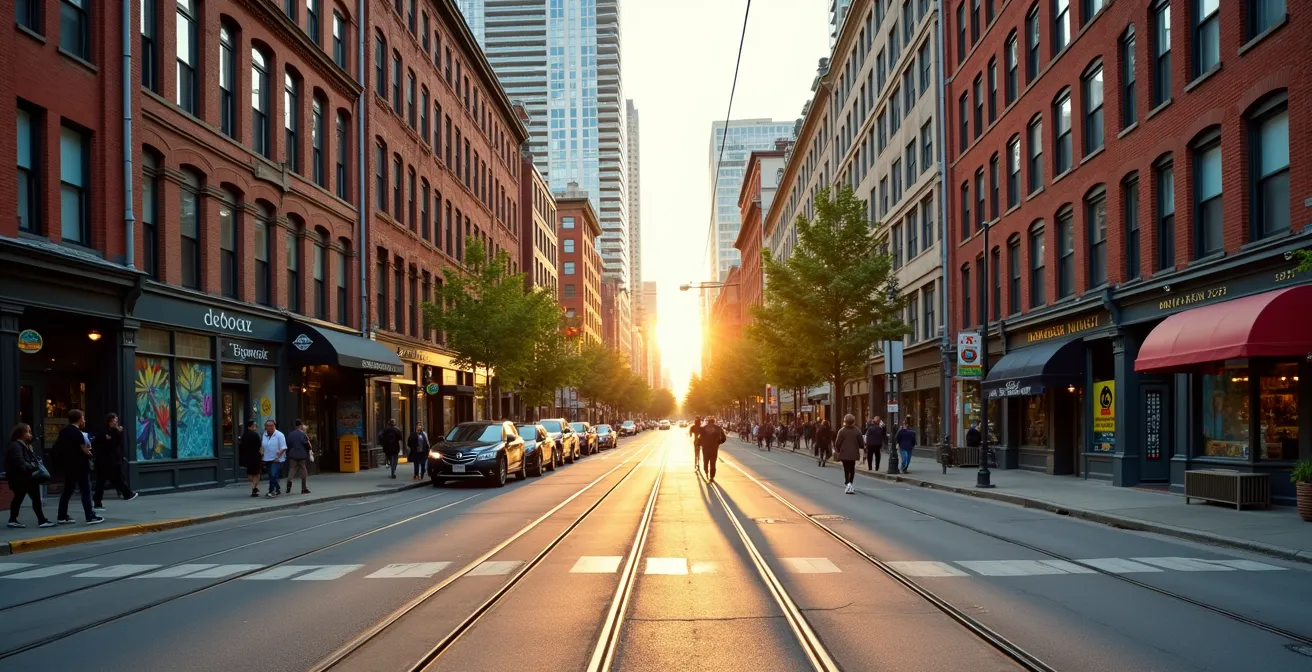
Experiencing the real West Queen West means navigating the line between its authentic creative soul and its booming popularity.
- The art scene is ephemeral; follow artists online to find the freshest murals before they’re gone.
- True local style is found in concept stores and indie boutiques that act as incubators for Toronto’s next wave of designers.
Recommendation: Skip the main strip’s obvious attractions and explore the side streets and laneways from Trinity Bellwoods to Gladstone to find the neighborhood’s authentic current.
So, you want to explore West Queen West. You’ve heard it’s the epicentre of cool in Toronto, a place where art, fashion, and culture collide. Most guides will give you a simple checklist: snap a photo in Graffiti Alley, grab a coffee, and do some shopping. It’s a start, but it barely scratches the surface. That approach treats the neighbourhood like a museum, a static collection of things to see. But WQW is a living, breathing organism, defined by a constant, fascinating friction between its gritty, independent spirit and the relentless gloss of gentrification.
To truly experience it like an insider, you need to understand this creative tension. It’s the force that drives the art off the sanctioned walls and into hidden corners, it’s what pushes small galleries out and pulls unique concept stores in, and it’s what separates the locals from the tourists. Forget the generic “Top 10” lists. The real West Queen West isn’t about ticking off spots; it’s about learning to read the cultural fault lines. It’s about knowing why a certain mural is significant today but might be gone tomorrow, and where to find the next generation of Canadian designers before they hit the mainstream.
This guide is your key to that deeper understanding. We’ll decode the neighbourhood’s DNA, from its most famous art corridor to the economic forces reshaping its storefronts. You’ll learn how to navigate its social geography, avoid common rookie mistakes, and connect with the authentic creative energy that still makes this the most dynamic strip in the city. Get ready to see West Queen West not just as a place to visit, but as a culture to plug into.
This article breaks down exactly how to navigate the neighbourhood’s unique landscape. We’ll cover everything from the ever-changing street art to the local designer scene, giving you the tools to craft a truly authentic experience.
Summary: Your Insider’s Map to West Queen West
- Graffiti Alley : how to find the newest murals before they’re painted over?
- Why have Queen West commercial rents doubled in 5 years?
- Queen West vs West Queen West : which ambiance corresponds to your style?
- The parking mistake that will get you a $150 CAD fine in 5 minutes
- Concept stores or big chains : where to find the emerging Canadian designers?
- How to enjoy the King West District without falling into the tourist traps?
- Why is Toronto considered the most multicultural city in the world?
- Who are the contemporary Toronto artists exhibited at the AGO to follow absolutely?
Graffiti Alley : how to find the newest murals before they’re painted over?
Graffiti Alley isn’t just a place; it’s a living canvas. The mistake most people make is treating it like a permanent exhibition. The truth is, its energy comes from its ephemeral nature. The masterpiece you see today could be painted over tomorrow, which is why “insider” knowledge is key. The entire laneway system, officially known as Rush Lane, is a dynamic zone where sanctioned projects and spontaneous expression coexist. The city’s StreetARToronto (StART) program has been instrumental in this, transforming what was once a vandalism issue into a celebrated cultural landmark spanning nearly 1 km of street art across three city blocks.
So, how do you find the freshest work? Forget random wandering. The secret is to go digital first. The most prolific and respected artists in the city, like Uber5000, Elicser Elliott, and Poser, often post their new pieces on Instagram the moment they’re finished. Following them is like having a real-time map to the newest art. They’ll often hint at the location, and you can be one of the first to see a piece before it becomes yesterday’s news. For an even better chance of seeing art in action, head there on a weekday morning when the crowds are thin and artists are sometimes at work.
The western end of the alley, closer to Portland Street, is often where you’ll find the most recent and less-photographed pieces. It’s a bit further from the main Queen/Spadina entry point, so it sees less foot traffic. This is where you can see the difference between the highly-curated, StART-managed permission walls and the more free-for-all sections where the turnover is rapid. Understanding this dynamic is key to appreciating the alley’s constant state of flux.
Your 5-Step Audit for Finding the Freshest Street Art
- Digital Reconnaissance: Before you go, spend 15 minutes on Instagram checking the feeds of key Toronto street artists (like @uber5000 or @elicserelliott) for any posts in the last 48 hours.
- Map Your Route: Start at the less-obvious McDougall Lane entrance (near Richmond St W) and plan to walk west towards Portland Street, where newer pieces often debut.
- Look for Layers: As you walk, look for walls with thick layers of paint. This indicates a high-turnover spot, which is more likely to feature fresh work.
- Identify Signatures: Pay attention to the artists’ tags or “handstyles.” Recognizing a few key artists’ signatures helps you spot their new work quickly across the city, not just in this alley.
- Check StART’s Presence: Look for small plaques or signs indicating a StreetARToronto project. These are often larger, more permanent murals, helping you distinguish them from the more temporary, spontaneous pieces.
Why have Queen West commercial rents doubled in 5 years?
The vibrant, creative energy you feel on the street is directly linked to an intense economic pressure felt by every independent business in the area. While the “doubled in 5 years” figure captures the feeling on the ground, the official numbers paint a stark picture of rapid gentrification. The core of the issue is a massive spike in commercial property values, which inevitably translates to higher rents for tenants. This isn’t a slow creep; it’s a dramatic shift that is actively reshaping the neighbourhood’s identity.
The very “coolness” that Vogue and other publications celebrated has become a double-edged sword. As the area’s profile soared, so did developer and investor interest. This has led to a major transformation of the streetscape, with many of the artist-run galleries and quirky, low-budget shops that defined WQW’s original character being priced out. They are often replaced by businesses with deeper pockets, like high-end boutiques and corporate chains that can absorb the rising costs. The result is a constant battle between preserving the neighbourhood’s authentic soul and catering to a more affluent clientele.
This phenomenon is so pronounced that even those tasked with promoting the area acknowledge the change. In a candid interview, the West Queen West BIA’s executive director, Robert Sysak, didn’t mince words about the exodus of art galleries from the strip. This frank admission highlights the central tension of West Queen West: it’s a victim of its own success. As he put it when discussing the soaring costs and changing face of the neighbourhood:
I don’t like to say it, but we got gentrified
– Robert Sysak, West Queen West BIA Executive Director
Queen West vs West Queen West : which ambiance corresponds to your style?
One of the biggest mistakes visitors make is treating all of “Queen West” as a single entity. The street undergoes a dramatic personality shift as you cross Bathurst Street, which acts as an unofficial cultural dividing line. East of Bathurst, you’re in Queen West, the more commercial, mainstream sibling. West of Bathurst, you enter West Queen West (WQW), the artistic, bohemian heartland. Knowing the difference is key to finding the vibe—and the shops—that match your style.
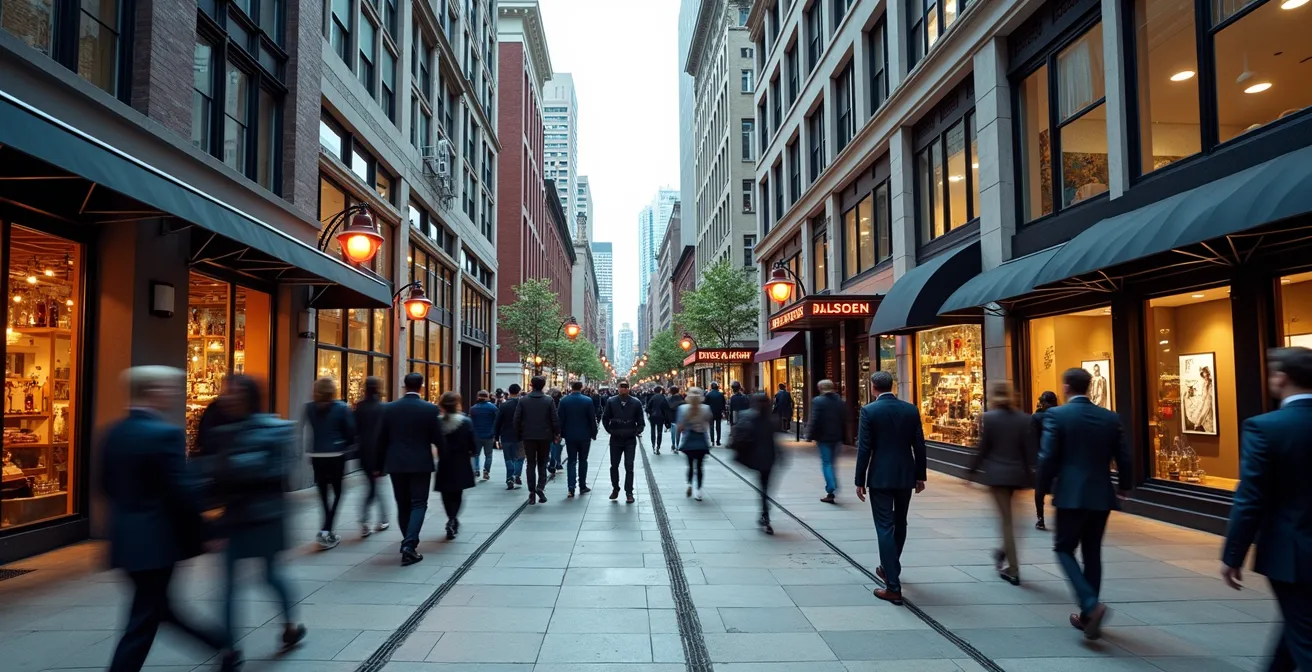
Queen West proper is where you’ll find the big-name global retailers: Zara, H&M, Urban Outfitters. It’s polished, bustling, and caters to a wider audience, including tourists and professionals from the nearby Financial District. The energy is faster, more commercial. West Queen West, on the other hand, is defined by its fiercely independent spirit. This is the realm of one-of-a-kind boutiques, curated vintage stores, artist studios, and iconic cultural hubs like The Drake Hotel and the Gladstone House. The pace is more leisurely, the style more individualistic.
This table breaks down the fundamental differences, helping you decide where to focus your time based on what you’re looking for. It’s not about one being better than the other; it’s about finding your tribe.
| Aspect | Queen West (East of Bathurst) | West Queen West (West of Bathurst) |
|---|---|---|
| Shopping | Chain retailers (H&M, Urban Outfitters, Zara) | Independent boutiques, vintage stores |
| Typical Visitor | Bay Street professionals, tourists | Creative agency workers, local artists |
| Dining Scene | Celebrity chef restaurants, chains | Drake Hotel, local cafes, indie spots |
| Art Presence | Commercial galleries | Artist studios, experimental spaces |
| Vibe | Polished, mainstream | Bohemian, artistic |
The parking mistake that will get you a $150 CAD fine in 5 minutes
Here’s a piece of insider advice that can literally save you hundreds of dollars: do not mess with parking on Queen Street West. The city’s parking enforcement is notoriously aggressive here, and for a very good reason: the 501 Queen streetcar. This route is one of the busiest surface routes in North America, and keeping it moving is a top priority for the Toronto Transit Commission (TTC). If your car is even slightly infringing on the tracks during restricted hours, you won’t just get a ticket; you’ll get towed. And it happens fast.
The mistake many visitors make is misreading the signs or underestimating how quickly enforcement acts. The signs can be complex, with different rules for different times of day. A spot that’s legal at 1 p.m. can become a tow-away zone at 3:30 p.m. to make way for rush hour traffic. The base fine might be advertised as $150, but that’s just the beginning. The towing fees and the cost of retrieving your car from an impound lot can easily push the total bill over $300-$400 CAD. It’s an expensive and stressful way to end a day of exploring.
The local wisdom is simple: avoid parking on Queen Street itself whenever possible. Instead, hunt for paid parking on the quieter residential side streets running north and south of Queen. Better yet, embrace the local way of getting around. The 501 streetcar itself is the most authentic way to travel the length of the neighbourhood. As many frustrated visitors have learned and shared, taking transit is far better than the alternative.
Visitors consistently report aggressive parking enforcement along Queen Street West. The 501 streetcar route is critical for transit, and blocking it results in immediate towing. Multiple reviewers recommend using side street parking or public transit to avoid expensive fines and towing fees that can exceed $300 CAD total.
– Visitor warning on TripAdvisor
Concept stores or big chains : where to find the emerging Canadian designers?
While the big chains are creeping west of Bathurst, the soul of West Queen West’s fashion scene still resides in its independent concept stores. These aren’t just shops; they are curated spaces that act as cultural hubs and, most importantly, as incubators for Toronto’s emerging design talent. This is where you go to find pieces you won’t see anywhere else and to get a read on the future of Canadian fashion. Forget the fast fashion of Queen West proper; WQW is about conscious, creative consumerism.
A perfect example of this model is the Drake General Store. It’s more than a hotel gift shop; it’s a brilliantly curated collection of Canadiana, quirky housewares, and apparel that champions local makers. It serves as a crucial launchpad for designers, many of whom are recent graduates from Toronto Metropolitan University’s acclaimed School of Fashion. By placing their products alongside established brands, the store provides a vital bridge from the classroom to a discerning retail audience. It’s a pipeline that can eventually lead these designers to national recognition at major retailers like Simons or Holt Renfrew.
This ecosystem is what makes shopping here a discovery process. Stores like Likely General or Crywolf operate on a similar principle, prioritizing small-batch, locally made goods. When you buy something from one of these boutiques, you’re not just acquiring an item; you’re investing in the local creative economy. You’re supporting the very artists and designers who give the neighbourhood its unique identity. So, the answer to finding emerging talent is clear: dive into the concept stores and independent boutiques that line the street between Trinity Bellwoods Park and the Gladstone Hotel. That’s where the real style conversation is happening.
How to enjoy the King West District without falling into the tourist traps?
Just south of Queen lies King West, a neighbourhood with a completely different but equally magnetic energy. Known for its high-end restaurants, slick condo towers, and bustling nightlife, it can easily feel like a tourist-and-bridge-and-tunnel trap, especially on a weekend night. The key to enjoying it like a local is to sidestep the obvious and embrace its more subtle, sophisticated side. The real King West isn’t about waiting in line for a celebrity chef’s restaurant or paying a premium for a generic rooftop view.
The insider move is to explore the periphery. The side streets, like Wellington and Portland, are where you’ll find the hidden gems and local haunts. Instead of the massive, sceney rooftop at Kōst, try the more intimate and chic rooftop bar at The Bisha Hotel for incredible city views without the chaos. The area is also the heart of Toronto’s creative and tech agency scene, housed in beautifully converted brick-and-beam warehouses. During the week, the lunch spots tucked away in these laneways are buzzing with the local crowd, offering a much more authentic taste of the area’s day-to-day life.
Avoiding the traps is about making strategic swaps. It’s about choosing character over hype. This approach allows you to experience the stunning industrial architecture and genuine professional buzz of the neighbourhood without getting caught in the tourist churn. It’s a mindset that applies perfectly to WQW as well: the best experiences are almost always found just off the main path.
Local’s Guide to King West: The Smart Swaps
- For Rooftop Drinks: Skip the long lines and cover charge at Kōst. Instead, opt for the sophisticated and often more accessible rooftop at The Bisha Hotel.
- For Dinner: Avoid the celebrity chef hotspots with two-week waits. Instead, explore the innovative menus at local favourites on Wellington Street or Portland Street.
- For Atmosphere: Don’t just stick to the main King Street strip. Wander through the brick-and-beam warehouse district to see the heart of Toronto’s creative agency world.
- For Lunch: Bypass the tourist-focused chains and find the weekday lunch spots packed with the local tech and media crowd for a real taste of the district’s daytime vibe.
- For Coffee: Instead of a chain, find a hidden cafe in a laneway, often attached to a creative agency or co-working space.
Why is Toronto considered the most multicultural city in the world?
To understand the unique cultural fabric of a neighbourhood like West Queen West, you have to zoom out and look at the city itself. Toronto is frequently cited as the most multicultural city on the planet, and this isn’t just a marketing slogan; it’s a demographic reality. Unlike the “melting pot” model of other cities, Toronto is more of a “cultural mosaic,” where different cultures coexist and retain their distinct identities. This is the bedrock upon which neighbourhoods like WQW are built, creating a density of global influences you’d be hard-pressed to find anywhere else.
West Queen West itself is a perfect microcosm of this evolution. Historically a working-class area for Irish and Polish immigrants, it has since become a magnet for creative people from every corner of the globe. This is reflected not just in the people but in the businesses. Within a short walk, you can find authentic Tibetan momos, traditional Japanese ramen, modern Indigenous cuisine, and innovative Canadian fare. This diversity is a lived experience, not a curated food court. A 2021 profile highlighted that this reflects Toronto’s broader identity, where statistics show the majority of West Queen West residents identify as visible minorities.
This multiculturalism is also deeply woven into the area’s art scene. Galleries like the MJG Gallery prominently feature contemporary Indigenous artists, bringing their cultural heritage and modern perspectives directly onto the streetscape. The art isn’t just decorative; it’s a dialogue between the city’s past, its diverse present, and its future. So when you’re walking down WQW, you’re not just in a trendy Toronto neighbourhood; you’re experiencing a concentrated dose of the global diversity that defines the entire city.
Key Takeaways
- West Queen West’s identity is shaped by the tension between its artistic roots and ongoing gentrification.
- The most rewarding experiences are found by looking beyond the obvious—following artists directly, exploring side streets, and understanding the local ecosystem.
- Practical knowledge (like parking rules and neighborhood divides) is key to a smooth, authentic visit.
Who are the contemporary Toronto artists exhibited at the AGO to follow absolutely?
The creative energy of West Queen West doesn’t exist in a vacuum. It’s directly connected to Toronto’s wider art ecosystem, from the street level all the way up to major institutions like the Art Gallery of Ontario (AGO). For a truly deep appreciation of the local scene, an insider move is to bridge this gap. By seeing which Toronto-based contemporary artists are being exhibited at the AGO, you gain a new lens through which to view the art you see on the street.
Artists like Shary Boyle, known for her intricate and often surreal porcelain figures and drawings, or Rajni Perera, whose work explores themes of migration, identity, and futurism through a vibrant, sci-fi lens, are great examples. Their work, though shown in a formal gallery setting, often tackles the very themes of urban change, cultural hybridity, and identity that play out daily on the sidewalks of WQW. Seeing their work at the AGO provides a conceptual anchor for the more raw, immediate art you’ll find in the neighbourhood’s laneways and independent galleries.
You can create your own “art circuit” to connect these dots. Start at the AGO to immerse yourself in the polished works of established Toronto artists. Then, head west on the 501 streetcar. Make a stop at a space like the John B. Aird Gallery or Artscape Youngplace to see socially-engaged work from the next generation. Finally, end your tour in the galleries around WQW and the adjacent Ossington strip. This journey allows you to trace themes and ideas from the city’s biggest institution right down to its creative grassroots. It transforms a simple gallery hop into a cohesive narrative about Toronto’s art scene.
Ultimately, experiencing West Queen West like an insider isn’t about what you buy or where you eat. It’s about seeing the neighbourhood as a living narrative of creative resilience. It’s about appreciating the tension between the grit and the gloss, and knowing how to find the authentic pulse that still beats strong beneath the hype. The next time you walk west of Bathurst, you’ll be equipped not just with a map, but with a new perspective. Go explore the side streets, follow the artists, and become part of the conversation.