
A Leafs or Raptors game is a Toronto rite of passage, but the true cost for a family goes far beyond the shocking ticket prices.
- The price gap is massive: A Leafs game can cost a family over $850, while a Blue Jays outing can be done for under $150 by leveraging smart strategies.
- Key savings are found outside the arena: Bringing your own food to Rogers Centre and mastering the transit system (like the PATH) drastically reduces the “Total Experience Cost.”
Recommendation: For pure budget value and a relaxed atmosphere, the Blue Jays are the clear winner. For a high-energy, iconic Toronto experience, be prepared to strategically plan every dollar.
For any family visiting Toronto, the idea of catching a live professional sports game is a quintessential Canadian experience. You look up tickets, ready to create a core memory, and are hit with immediate sticker shock. Seats for the Maple Leafs or Raptors seem to start at the price of a weekend getaway, forcing a difficult question: is this even worth it? The common wisdom is that hockey is expensive and baseball is cheap, but this oversimplifies the decision. The real answer lies not in the ticket price alone, but in the Total Experience Cost (TEC)—a metric that includes tickets, food, transportation, time, and even logistical stress.
This guide moves beyond the surface-level debate. We will dissect the entire cost and experience ecosystem of Toronto’s major league sports. We’ll analyze why Leafs tickets command such a premium, but also reveal how a seemingly ‘cheaper’ Blue Jays game can offer superior value-per-hour for a family. The goal is to equip you with a strategic mindset. By understanding the hidden costs and savings opportunities—from leveraging the city’s unique PATH system to knowing exactly what you can pack for the stadium—you can make an informed choice that aligns with your budget and your family’s definition of a great night out. This isn’t just about saving money; it’s about maximizing the return on your entertainment investment.
This article breaks down the key factors that influence the real cost and value of attending a professional sports game in Toronto. Follow along as we explore ticket pricing, stadium policies, transportation hacks, and even post-game fun to help you plan the perfect family outing.
Summary: Raptors vs. Maple Leafs: A Family Value Showdown
- Why Demand for Leafs Tickets Keeps Resale Prices Above $200?
- How to Enjoy a Blue Jays Game from the $20 Flight Deck Zone?
- Stadium Hot Dog or Bring Your Own: What Does the Rogers Centre Allow?
- The Scalper Mistake That Leaves Fans Stranded Outside Scotiabank Arena
- How to Escape the Union Station Crush After a Sold-Out Game?
- How to Save Money Using the Long-Stay Family Fare on the UP Express?
- Where to Find the Best Late-Night Eats After 2 AM in the Entertainment District?
- How to Get TIFF Tickets for Premieres Without Being an Industry Insider?
Why Demand for Leafs Tickets Keeps Resale Prices Above $200?
The first thing any prospective spectator discovers is the harsh reality of the Toronto Maple Leafs’ ticket market. It isn’t just popular; it’s a cultural institution with a demand curve that defies gravity. This phenomenon is driven by a massive, multi-generational fanbase and a corporate season-ticket base that holds a stranglehold on primary inventory. Consequently, most families are pushed into the resale market, where prices are dictated by fierce competition. The baseline cost is already high and climbing, as recent data shows season ticket holders facing a 22% price increase for the upcoming season.
This creates a staggering Total Experience Cost. For a family of four, the numbers are sobering. An analysis of a typical regular season game reveals an average cost of $859.68 for a family of four, which includes mid-range tickets, a few hot dogs, and drinks. This figure is a staggering 39% higher than the NHL average. A crucial factor amplifying this cost is Scotiabank Arena’s strict no-outside-food-or-drink policy. Unlike at a Blue Jays game, you cannot bring your own snacks or water, forcing you to pay premium concession prices for the entire family. This policy alone can add over $100 to your evening, turning an expensive outing into an exorbitant one and significantly impacting the overall value proposition.
How to Enjoy a Blue Jays Game from the $20 Flight Deck Zone?
In stark contrast to the financial fortress of a Leafs game, a Toronto Blue Jays game at the Rogers Centre presents a world of accessible family fun. The franchise has invested heavily in creating budget-friendly social spaces, with the $20 Outfield District ticket being the crown jewel for value-seekers. This general admission ticket grants access to multiple standing-room areas and social zones, including the popular Schneiders Porch and the family-oriented Park Social in the 500 level. While you don’t get a dedicated seat, you get something arguably more valuable for a family with kids: freedom.
The flagship of this experience is the Corona Rooftop Patio (formerly the Flight Deck), offering a spectacular view from centre field. For the price of a movie ticket, you get a world-class baseball experience in a relaxed, open-air environment. This setup is ideal for families whose children may not have the attention span for nine innings in a fixed seat. It allows them to move around, grab a snack, and watch the game from different vantage points. This flexibility dramatically increases the “Value-Per-Hour,” as the experience is less about being confined to a seat and more about enjoying a summer day at the ballpark.

As you can see, the atmosphere is geared towards social interaction and enjoyment, not just passive viewing. When you factor in the stadium’s lenient food policy, the $20 ticket becomes the cornerstone of a fantastic family outing that can easily come in under $150 for four people, a fraction of the cost of its hockey or basketball counterparts. It proves that a memorable Toronto sports experience doesn’t have to drain your wallet.
Stadium Hot Dog or Bring Your Own: What Does the Rogers Centre Allow?
One of the most significant factors in the Total Experience Cost equation is food and beverage. Here, the difference between Scotiabank Arena and the Rogers Centre is night and day, and it represents the single biggest money-saving hack for families. While a Leafs or Raptors game requires you to purchase all concessions in-house at inflated prices, the Blue Jays have a famously liberal outside food policy. This policy is a game-changer, allowing you to effectively eliminate the high cost of feeding a family at the ballpark.
According to the official Rogers Centre policy, fans are permitted to bring their own food as long as it is wrapped or bagged. You can also bring sealed plastic water bottles up to 600ml or empty reusable bottles to fill at water fountains inside. This means you can pack sandwiches, fruit, granola bars, and other snacks for the entire family, saving upwards of $100 compared to standard stadium food prices. This simple act transforms the economics of the outing, making it dramatically more accessible.
To avoid any issues at the gate, it’s crucial to know the specific rules. Hard-sided coolers and alcoholic beverages are strictly forbidden, but almost anything else you can fit into a soft-sided bag is fair game.
| Allowed | Not Allowed |
|---|---|
| Sandwiches in Ziploc bags | Glass bottles or containers |
| Sealed plastic water bottles (up to 600ml) | Alcohol of any kind |
| Wrapped or bagged food items | Bottles larger than 600ml |
| Soft-sided containers that fit under seats | Hard-sided coolers |
| Empty reusable water bottles | Cannabis edibles or liquids |
The Scalper Mistake That Leaves Fans Stranded Outside Scotiabank Arena
For high-demand events like Leafs and Raptors games, the allure of a street-side deal from a scalper can be tempting, especially when official resale sites show exorbitant prices. However, this is a high-risk gamble that frequently ends in disappointment and financial loss. The most common “scalper mistake” that leaves fans stranded is tied to the nature of modern digital ticketing. In the era of mobile-only entry, the physical ticket is extinct, and the currency is a QR code on a smartphone.
Unscrupulous sellers exploit this system in several ways. A frequent scam involves selling a legitimate ticket (or a screenshot of its QR code) to multiple buyers. The system works on a first-scan basis; once the code is used for entry, it is invalidated. The first person to arrive gets in, while everyone else who bought the same code is left with a useless digital file and no recourse. Another risk is the sale of completely counterfeit tickets—convincing-looking PDFs or emails that were never valid in the first place. Scotiabank Arena staff are trained to spot these, and once you’re denied entry, the scalper is long gone.
For a family, the consequences are more than just financial. It can ruin a highly anticipated evening and leave children devastated. The only way to guarantee entry is to purchase tickets through official and verified resale platforms like Ticketmaster’s Fan-to-Fan Resale. While the prices are high, they come with a guarantee of authenticity. The peace of mind knowing your tickets are legitimate is a crucial, if unquantifiable, part of the event’s value.
How to Escape the Union Station Crush After a Sold-Out Game?
A factor often overlooked in the Total Experience Cost is “logistical friction”—the stress and time spent navigating to and from the venue. After a sold-out game at Scotiabank Arena, the adjacent Union Station, Toronto’s primary transit hub, transforms into a bottleneck of tens of thousands of fans. For a family with tired children, this crush of humanity can be the most challenging part of the entire evening. However, savvy locals know the secret to bypassing this chaos entirely: the underground PATH system.
The PATH is a sprawling network of climate-controlled underground walkways connecting much of downtown Toronto, and it links directly to Scotiabank Arena. Instead of funnelling into the main Union Station concourse with the masses, you can use the PATH to walk directly to alternative subway stations. A 10-15 minute underground walk will take you to St. Andrew or King stations on the Yonge-University line. This strategy allows you to board the subway before the main wave of fans arrives from Union, securing a seat and a much more pleasant journey home.
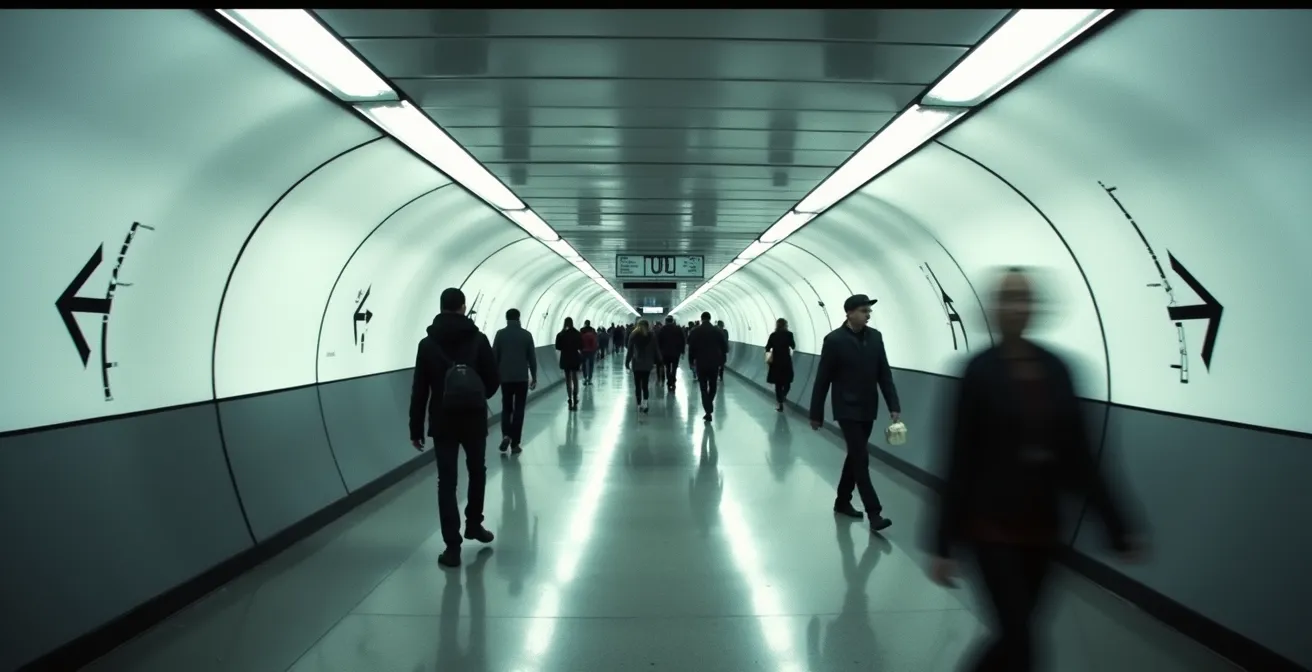
This simple navigational trick significantly reduces post-game stress and time. It turns a potentially chaotic exit into a calm and efficient one. The PATH is well-signed but can be confusing for first-timers, so it’s wise to review a map on your phone before leaving the arena. Mastering this route is a pro-level move that enhances the overall quality of your night out, proving that a little bit of local knowledge can provide immense value.
How to Save Money Using the Long-Stay Family Fare on the UP Express?
Efficient and affordable transportation is fundamental to managing your family’s entertainment budget in Toronto. While the UP Express is best known for connecting Pearson Airport to Union Station, its fare structure contains value for families, especially those planning a longer stay. But the real savings come from embracing the city’s integrated transit system with a PRESTO card. This reloadable card is your key to unlocking seamless and cost-effective travel across the TTC (subway, streetcars, buses), GO Transit, and the UP Express.
One of the biggest benefits for families is that children aged 12 and under ride for free on the TTC and GO Transit, drastically cutting down your group’s travel costs. Furthermore, the PRESTO system incorporates the “One Fare Program,” which eliminates double fares when transferring between the TTC and regional transit like GO. This means a trip from a suburb into downtown for a game only requires one payment per adult. The power of PRESTO extends beyond daily transit; cardholders can also access discounts on attractions. For example, PRESTO cardholders can access up to 47% savings on advance tickets to the Canadian National Exhibition (CNE), showcasing the card’s value as a city-wide savings tool.
Action Plan: Maximizing Toronto Transit Savings
- Get a PRESTO Card: Purchase a card for each adult at a subway station or Shoppers Drug Mart upon arrival. This is your gateway to savings.
- Leverage Free Rides for Kids: Always travel with your children 12 and under to take advantage of the free TTC and GO Transit policy.
- Understand the One Fare Program: Plan trips that involve transfers between TTC and GO Transit to benefit from a single, integrated fare.
- Consider Walking or Biking: For shorter distances in the downtown core, use Toronto’s expanded bike lane network or simply walk to save money and see the city.
- Buy Return Tickets: When using regional transit like GO, buying a return ticket upfront can sometimes offer savings over two one-way fares.
Where to Find the Best Late-Night Eats After 2 AM in the Entertainment District?
The experience of a game doesn’t have to end with the final buzzer. Extending the evening with a late-night snack can be a memorable part of the adventure, but finding quality, affordable food after 11 PM can be a challenge. The immediate vicinity of Scotiabank Arena is dominated by expensive chain restaurants and bars. However, a short walk or streetcar ride opens up a world of fantastic and budget-friendly late-night dining options, adding significant “ancillary value” to your outing.
For the most diverse and authentic options, head west to Chinatown on Spadina Avenue. Many restaurants here are open until 4 AM, serving up steaming bowls of noodles, flavourful congee, and, most famously, delicious dumplings. It’s a vibrant, bustling area where you can feed a family of four a veritable feast for the price of two stadium hot dogs. It provides not just a meal, but a cultural experience that enriches your Toronto visit.

If you’re looking for something different, the St. Lawrence Market area and the Distillery Historic District, while quieter late at night, often have pubs and eateries serving food later than the core Entertainment District. These areas offer a more relaxed atmosphere for a post-game debrief. By planning your post-game meal strategically, you can avoid overpriced tourist traps and cap off a great night with an authentic taste of Toronto’s culinary scene, all while keeping your budget intact.
Key Takeaways
- The True Cost: A Leafs or Raptors game can cost a family over $850, while a Blue Jays game with smart planning can be under $150.
- The Food Factor: The ability to bring your own food to Rogers Centre is the single biggest money-saver and a crucial advantage for the Blue Jays.
- Logistics are Key: Mastering the PRESTO transit system and using the underground PATH to avoid post-game crowds significantly reduces cost and stress.
How to Get TIFF Tickets for Premieres Without Being an Industry Insider?
While sports dominate Toronto’s year-round entertainment, the city transforms every September for the Toronto International Film Festival (TIFF). For visiting families, the dream of seeing a Hollywood star at a world premiere seems like an exclusive, unattainable event. Getting tickets to a major premiere is indeed difficult and expensive without industry connections. However, the true value of TIFF for a family lies not in getting *into* the theatre, but in immersing yourselves in the festival’s electric atmosphere for free.
The secret is Festival Street. For the opening weekend of the festival, a large portion of King Street West—the heart of the action—is closed to traffic and becomes a massive, open-air pedestrian promenade. This area is the hub of TIFF’s public-facing activities. You’ll find free open-air screenings of classic films, live music performances, interactive brand activations with free swag, and, most importantly, the red carpets. You can stand alongside fellow fans and watch the stars arrive for their premieres, capturing all the glamour and excitement without spending a dime on a ticket.
This approach shifts the goal from a pricey, exclusive event to an accessible, communal celebration of film. It’s a perfect strategy for a family, as it allows for flexibility and doesn’t require children to sit silently through a long movie. By embracing the free public events, you can give your family an authentic and memorable TIFF experience, tapping into the city’s biggest cultural event on a shoestring budget. It’s the ultimate lesson in finding value where others only see an expensive ticket.
Ultimately, whether you choose the intense thrill of a Leafs game or the relaxed vibe of a summer Jays outing, the key is to think like a strategist. By planning your Total Experience Cost—from transit and tickets to food and post-game fun—you can craft a memorable Toronto outing that delivers maximum value for your family’s budget and time.