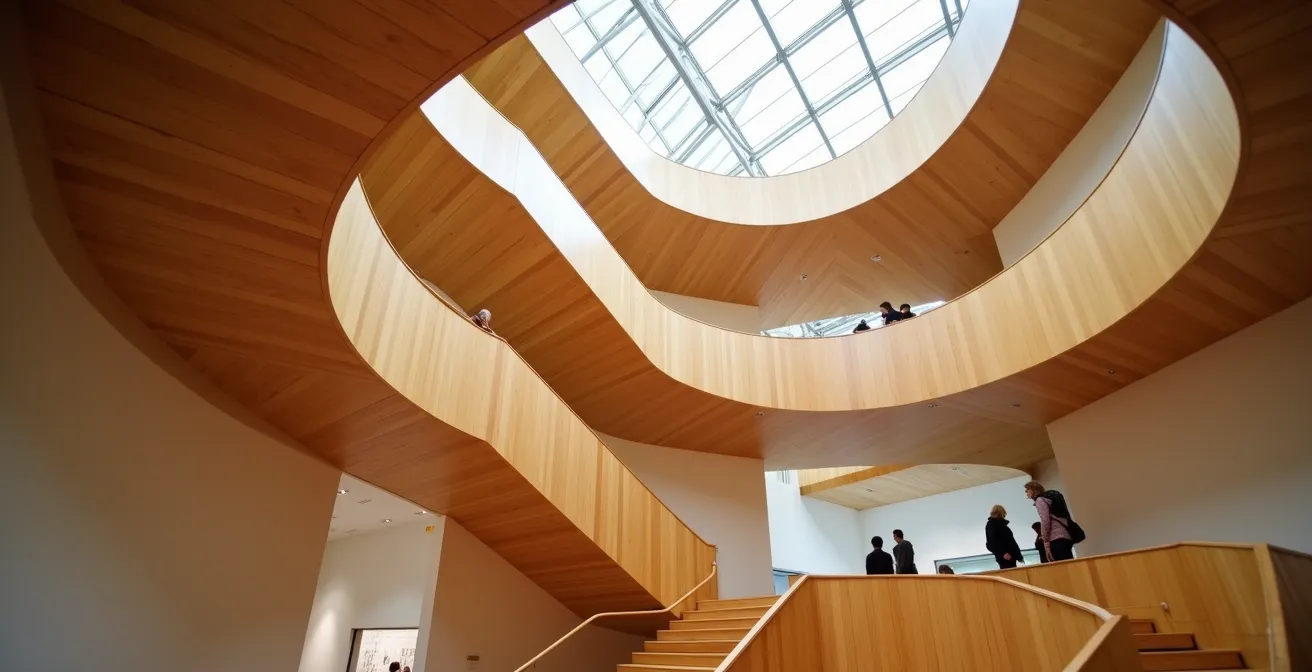
The AGO Annual Pass pays for itself in two visits, but its real value lies in transforming the gallery from a destination into a spontaneous part of your Toronto life.
- It eliminates the pressure to “see everything” on a single $30 ticket, enabling short, focused visits.
- It grants access to all special exhibitions, like those featuring international loans, without extra surcharges.
Recommendation: For any GTA resident who values art and spontaneity, the $40 pass is an essential cultural subscription, not just a one-off purchase.
If you live in the Greater Toronto Area, you’ve likely faced the classic Art Gallery of Ontario dilemma. You appreciate the idea of soaking in world-class art, but the standard $30 admission fee makes each visit feel like a high-stakes, meticulously planned event. To “get your money’s worth,” you might attempt a marathon session to see everything, leaving you more exhausted than inspired. Or perhaps you brave the legendary queues for AGO Free Wednesday Nights, only to find yourself navigating dense crowds that make quiet contemplation nearly impossible. The simple math is often repeated: the $40 Annual Pass pays for itself on your second visit. While true, this calculation misses the entire point.
What if the real return on investment isn’t measured in dollars saved, but in a fundamental shift in your relationship with art and the city itself? The AGO’s pass isn’t just a discount card; it’s a cultural subscription. It’s a key that unlocks a more spontaneous, relaxed, and personal way of engaging with one of Toronto’s most vital institutions. This model has resonated deeply, with data showing that over 72,940 young people aged 14-25 now hold passes. This article moves beyond the basic cost analysis to explore the experiential ROI—the return on investment for your quality of life. We’ll examine how the pass changes your behaviour, from beating the crowds to discovering architectural secrets you’d otherwise miss, and how it can even inspire your own creative pursuits.
This guide breaks down every angle of the Annual Pass, providing a clear path to determine its true value for your specific lifestyle. Below, the table of contents outlines the key questions we will address to help you make an informed decision.
Contents: The AGO Annual Pass, Fully Explored
- Why Some Exhibits Are Not Included in the General Admission Price?
- How to Beat the Crowds During AGO Free Wednesday Nights?
- Guided Tour or Solo Exploration: Which Best Unlocks the Canadian Collection?
- The Mistake of Ignoring the Frank Gehry Staircase During Your Visit
- When to Visit the AGO to Have the Henry Moore Sculpture Centre to Yourself?
- Why Buying Local Art at the One of a Kind Show Beats Airport Souvenirs?
- Family Membership or Single Tickets: Which Pays Off After Two Visits?
- Pottery or Glass Blowing: Which Toronto Workshop Fits Your Creative Vibe?
Why Some Exhibits Are Not Included in the General Admission Price?
One of the most common points of confusion for a casual visitor is arriving at the AGO only to discover that a highly anticipated blockbuster exhibition carries an additional surcharge on top of the general admission. This isn’t an arbitrary fee; it’s a direct reflection of the enormous costs associated with bringing major international works to Toronto. These “special exhibitions” often involve fragile, high-value pieces on loan from museums around the world, incurring significant expenses for insurance, specialized transportation, and curatorial collaboration.
The AGO’s permanent collection, which is vast and impressive on its own, is what your general admission ticket covers. However, the surcharged exhibitions are often the institution’s main draws for the season. This is where the Annual Pass fundamentally changes the value equation. For a one-time fee of $40, the pass includes admission to all special exhibitions for the entire year. Suddenly, the question is no longer “Is this specific exhibit worth an extra $10 or $15?” but rather “Do I plan to see more than one major show this year?” If the answer is yes, the pass becomes the most logical and cost-effective option, removing the friction and decision fatigue from every visit.
This all-inclusive model simplifies access and encourages exploration. You no longer have to weigh the cost of each individual temporary exhibit. The pass empowers you to see everything the gallery has to offer, from the permanent Canadian Collection to the most talked-about international shows, under one simple and affordable price point. It transforms the gallery from a menu of à la carte options into a full buffet of artistic experiences.
How to Beat the Crowds During AGO Free Wednesday Nights?
AGO Free Wednesday Nights are a fantastic initiative for accessibility, but they come with a well-known trade-off: crowds. The desire for free access is strong; a census-based study highlighted that while only 49% of Toronto residents had visited a gallery in a given year, the lineups for free events demonstrate how critical cost is as a barrier. This creates a challenging environment for anyone hoping for a quiet, reflective art experience. The peak congestion right after 6 PM can make it difficult to get close to popular works or appreciate the serene atmosphere of the galleries.
The most effective way to “beat the crowds” is to sidestep the event entirely. This is a prime example of the Annual Pass’s lifestyle value. As a passholder, you are liberated from the need to visit during peak free hours. Instead, you can experience the gallery at its most tranquil: a Tuesday morning at 11 AM, a quiet Friday afternoon, or the last hour before closing on a Thursday. These off-peak times offer an entirely different, more intimate experience with the art. You have the space to linger, to see works from different angles, and to feel the intended power of the gallery’s architecture without the constant buzz of a full house.
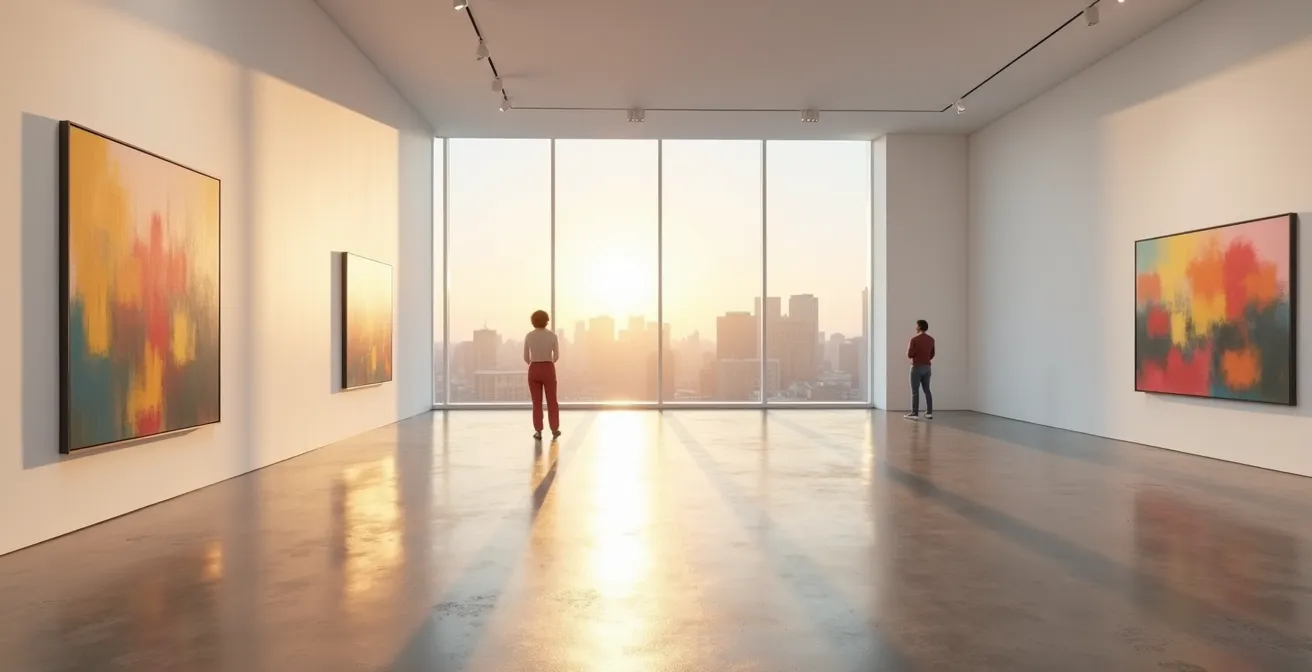
This is the concept of low-stakes viewing in action. You can pop in for 45 minutes on your way home from work to see a single collection without feeling the pressure to “see everything.” The pass buys you not just access, but freedom and flexibility. It replaces the frantic energy of a crowded free-for-all with the priceless commodity of peace and personal space, allowing the art—and your response to it—to take centre stage.
Guided Tour or Solo Exploration: Which Best Unlocks the Canadian Collection?
The AGO’s extensive Canadian Collection is a cornerstone of the museum, and deciding how to approach it can shape your entire visit. Do you opt for the structured narrative of a guided tour or the personal freedom of a solo journey? The Annual Pass makes this less of a one-time choice and more of a flexible strategy. With the ability to return whenever you like, you can—and should—try both.
For a first-time visitor or someone new to Canadian art, the guided tour is an invaluable primer. Docents are experts who can contextualize key pieces, share compelling artist backstories, and draw thematic connections you might otherwise miss. They provide a curated “highlight reel” that ensures you see the collection’s most significant works. However, these tours operate on a fixed schedule and follow a set path, which may not align with your personal interests or available time. Conversely, solo exploration, perhaps aided by the AGO’s app, grants you complete curatorial agency. You can spend thirty minutes with a single Tom Thomson painting or bypass entire wings to focus on Inuit art. This self-paced approach is ideal for repeat visitors who want to build a deeper, more personal connection with specific works or artists.
The following table breaks down the practical differences, making it clear that the “best” method is entirely dependent on your goal for that specific visit. An Annual Pass holder has the luxury of choosing the right tool for the right day.
| Aspect | Guided Tour (60 min) | Solo with AGO App | Docent Engagement |
|---|---|---|---|
| Cost | Included with admission | Free with admission | Free (informal) |
| Schedule | 11am, 12pm, 1pm, 3pm daily | Any time | During gallery hours |
| Coverage | Highlights only | Full collection available | Specific artworks |
| Expertise Level | Professional guide | Recorded commentary | Stationed experts |
| Flexibility | Fixed route | Self-paced | Semi-flexible |
| Best For | First-time visitors | Repeat visitors | Specific interests |
The Mistake of Ignoring the Frank Gehry Staircase During Your Visit
With a collection of over 90,000 works spread across 45,000 square metres, the AGO is one of North America’s largest art museums. In the rush to see masterpieces by the Group of Seven or a blockbuster traveling exhibit, it’s easy to treat the building’s architecture as mere background—a functional container for the art. This is a significant mistake. The 2008 redesign by Toronto-born architect Frank Gehry is a work of art in its own right, and the dramatic, spiraling staircase is its heart.
This sculptural element is more than just a way to get from one floor to another; it’s a destination. The flowing lines of Douglas fir wood create a sense of movement and warmth that contrasts beautifully with the clean, white gallery walls. As you ascend, the staircase frames unique and ever-changing views of both the city outside and the gallery spaces within. Ignoring it is like visiting a cathedral and never looking up. An Annual Pass affords you the time for this kind of unhurried appreciation. On a “low-stakes” visit, you can dedicate an entire 20 minutes just to experiencing this architectural marvel, observing how the light plays on its curves at different times of day.
Many visitors feel this powerful connection between the art and the space itself. As one reviewer eloquently stated, the building sets the entire tone for the experience:
The AGO was beyond my expectations! From the minute you walk in, the stunning architecture sets the tone—the airy galleries, flowing wooden staircases, and the beautiful Galleria Italia make the entire space feel like a work of art.
– TripAdvisor Reviewer, TripAdvisor Review of Art Gallery of Ontario
The pass allows the AGO to become a ‘third place’ for Torontonians—a refuge for quiet contemplation where the building itself is as much a draw as the collection it holds.
When to Visit the AGO to Have the Henry Moore Sculpture Centre to Yourself?
The Henry Moore Sculpture Centre at the AGO is the largest public collection of the artist’s work in the world. Its powerful, biomorphic forms are best appreciated in an atmosphere of quiet contemplation, a condition that can be hard to find during peak hours. For those seeking a near-private audience with these modernist masterpieces, strategic timing is everything. An Annual Pass is your golden ticket to this kind of exclusive-feeling experience, as it gives you the flexibility to choose the quietest possible times to visit.
The most reliable windows for solitude are during weekday mornings, especially between 10:30 AM and 11:30 AM, right after the doors open but before school groups or lunchtime visitors arrive. Seasonality also plays a major role; the post-holiday lull in January and February, or the period in September after summer tourism has waned, see significantly lower foot traffic. A pro-tip for passholders is to monitor the weather. On a beautiful, sunny day, many potential visitors are drawn to nearby Grange Park, leaving the indoor galleries surprisingly sparse.
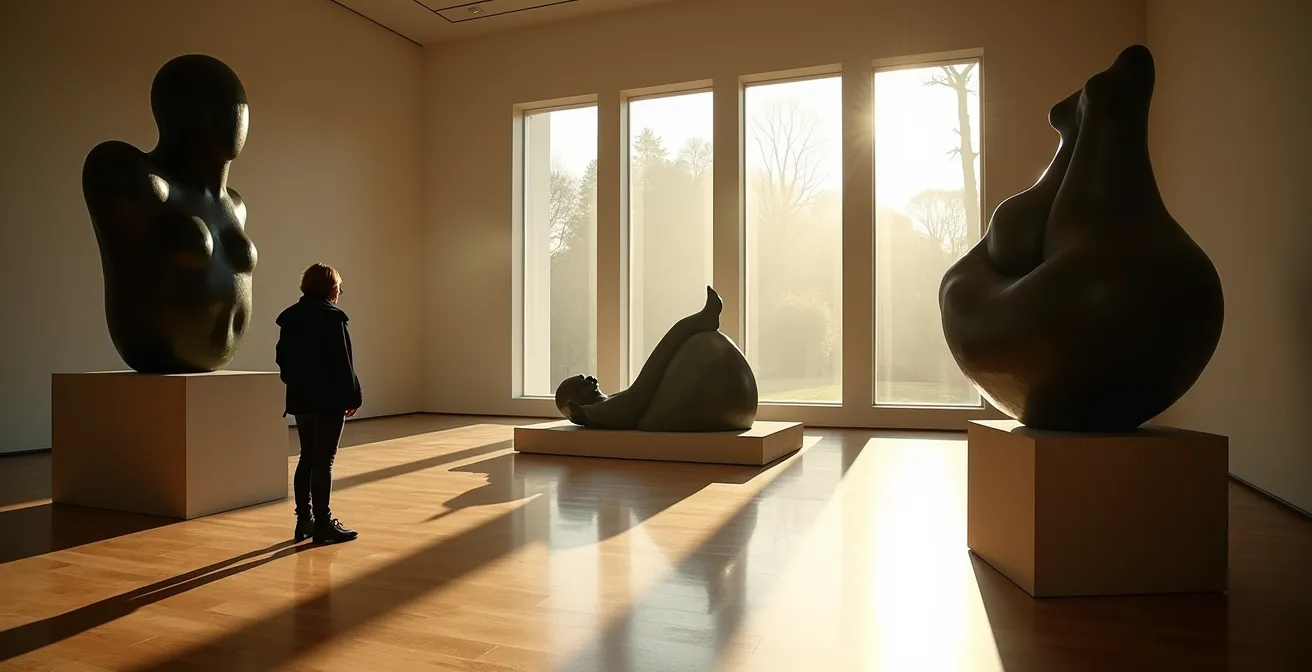
For the most dedicated art lover, the pass offers the ultimate opportunity for a serene visit. By planning ahead, you can curate an experience that feels personal and profound. Here are some key strategies for timing your visit:
- Visit during weekday mornings (10:30-11:30 AM) when tourist traffic is minimal.
- Target the January-February post-holiday period or September after summer tourism ends.
- Book tickets for the first hour on a Tuesday, Wednesday, or Thursday for guaranteed low density.
- Check weather forecasts—sunny days often lead to quieter galleries.
- Consider Friday evenings after 7 PM when the initial after-work rush subsides.
Why Buying Local Art at the One of a Kind Show Beats Airport Souvenirs?
At first glance, a craft fair like the One of a Kind Show seems unrelated to the high-art world of the AGO. However, for a Torontonian with an Annual Pass, the two are deeply connected. Regular, low-stakes visits to the gallery do more than entertain; they educate your eye. You begin to understand composition, colour theory, and form on a more intuitive level. This cultivated aesthetic sense is what transforms you from a casual consumer into a discerning collector, even on a small scale. You no longer see a handmade ceramic bowl just as a functional object, but as a piece of sculpture with its own unique texture and glaze.
This is why investing in a piece from a local artist at an event like the One of a Kind Show offers a far greater return than a generic airport souvenir. You are not just buying an object; you are buying a story, supporting Toronto’s creative economy, and acquiring something that reflects your own developed taste—a taste sharpened by your experiences at the AGO. The pass democratizes art education, making it an ongoing part of your life. As one Instagram user noted about the pass, “Life is so expensive in Toronto… Now if I want to go in and look at only a couple of my favourite paintings, I can.” This constant, easy access nurtures artistic appreciation that extends beyond the gallery walls.
This idea elevates the role of a museum beyond being a simple repository of objects. It becomes an active agent in the cultural life of the city. Toronto-based museum planner Gail Lord captured this sentiment perfectly:
Museums should be public services like libraries
– Gail Lord, Toronto-based museum planner and consultant, NOW Magazine interview
By making the AGO a regular part of your life, the Annual Pass empowers you to engage more meaningfully with the entire creative ecosystem of your city, turning a simple purchase into a culturally resonant act.
Family Membership or Single Tickets: Which Pays Off After Two Visits?
For individuals, the math is simple: the $40 Annual Pass pays for itself on the second visit compared to two $30 single tickets. But for families or those considering the next tier up, the calculation becomes more nuanced. The AGO offers a spectrum of options, and the “best” one depends entirely on your projected frequency of visits and the value you place on additional perks. It’s important to note that children under 14 are always free, and a free Annual Pass is available for anyone aged 14-24, significantly lowering the cost barrier for families with teenagers.
The full AGO Membership, starting at $110, is a different proposition. While its financial break-even point against single tickets is higher (around four visits), it comes with a suite of valuable benefits: members-only viewing hours, discounts at the shop and bistro, and reciprocal admission to other galleries. Crucially for Canadian residents, a portion of the membership fee is tax-deductible, reducing the net cost. The decision hinges on your identity as a visitor. Are you a “visitor” or a “supporter”? The Annual Pass is for the frequent visitor; the Membership is for the dedicated supporter who wants a deeper connection and is willing to invest more for it. The strong community of 100,000 AGO Members maintained over five years shows the appeal of this higher tier.
To make the right choice, a clear-eyed analysis of your own habits is essential. The table below lays out the core financial trade-offs.
| Option | Cost Structure | Annual Value | Break-Even Point |
|---|---|---|---|
| Single Adult Ticket | $30 per visit | $60 for 2 visits | N/A |
| Annual Pass (Adult) | $40 one-time | Unlimited visits | 2 visits |
| Youth 14-24 (Ontario) | Free Annual Pass | Unlimited free | Immediate |
| Children under 14 | Always free | Always free | N/A |
| AGO Membership | From $110 | Unlimited + perks | 4 visits with benefits |
| Tax Benefit (Members) | Partial deduction | ~20-30% savings | Reduces net cost |
Your AGO Pass Value Audit: A 5-Step Plan
- Visit Frequency Projection: Honestly list all potential visit scenarios for the next 12 months (e.g., seeing 2 special exhibits, 3 solo lunch-break visits, 1 visit with a friend).
- Cost Calculation: Inventory the total cost of these projected visits using the standard single-ticket price of $30 per adult.
- Break-Even Analysis: Compare your projected total cost against the Annual Pass ($40) and Membership ($110) prices to identify your personal break-even point.
- Qualitative Value Assessment: On a scale of 1-5, score the intangible benefits that matter most to you (e.g., spontaneity, avoiding crowds, shop discounts, supporting the arts).
- Decision and Integration: Based on your financial and qualitative audit, choose the best option and immediately schedule your first ‘low-stakes’ visit to celebrate.
Key Takeaways
- The Annual Pass’s primary value is not cost savings but lifestyle integration, turning the AGO into a spontaneous and regular part of your life.
- It provides freedom from crowds and the pressure to “see everything” at once, allowing for more relaxed and personal experiences with art.
- The pass acts as a gateway to deeper cultural engagement, sharpening your artistic eye and connecting you to Toronto’s broader creative scene.
Pottery or Glass Blowing: Which Toronto Workshop Fits Your Creative Vibe?
The ultimate experiential ROI of an AGO Annual Pass might just be the moment it inspires you to move from observer to creator. After countless visits spent absorbing colour, form, and texture, it’s a natural next step to want to get your own hands dirty. The gallery’s efforts in this area are notable, with a reviewer from WhichMuseum highlighting that “The gallery’s efforts to engage younger visitors through workshops and family-friendly activities are often highlighted as a strong point.” For adults, this inspiration often leads outside the gallery walls to one of Toronto’s many creative workshops. Two popular choices, pottery and glass blowing, offer vastly different experiences tailored to different creative personalities.
Your choice depends on the “creative vibe” you’ve cultivated during your gallery visits. Were you drawn to the earthy, tactile sculptures or the vibrant, ethereal quality of glass art? Pottery is a meditative, grounding practice. It’s a slower process that allows for correction and refinement, making it ideal for those who enjoy methodical work and don’t mind a delayed-gratification process (pieces need to be fired and glazed). Studios like Gardners Ceramic offer group classes perfect for a social, relaxed creative outlet.
Glass blowing, in contrast, is an intense, fast-paced dance with heat and gravity. It demands focus, teamwork, and an acceptance of imperfection. The results are immediate and often unpredictable, making it a thrilling experience for adrenaline seekers and those who thrive under pressure. If you’re considering taking the plunge, here’s a quick guide to choosing your path:
- Identify Your Aesthetic: Are you drawn to the abstract and figurative forms of pottery or the luminous colours of glass?
- Consider Your Social Preference: Pottery studios often have a more communal, leisurely feel, while glass blowing requires focused partnership.
- Assess Your Focus Level: Glass blowing demands intense, in-the-moment concentration, whereas pottery allows for a more contemplative pace.
- Factor in Costs: Pottery often has separate kiln firing fees, while glass pieces are typically complete at the end of a session.
- Book a Trial Class: Most Toronto studios offer single-session workshops, allowing you to test the waters before committing.
Stop treating the AGO like a special occasion and start making it a part of your life. The real value of the pass is the freedom it gives you to experience art on your own terms. To begin your journey from casual visitor to cultural insider, get your Annual Pass today and plan your first spontaneous visit.