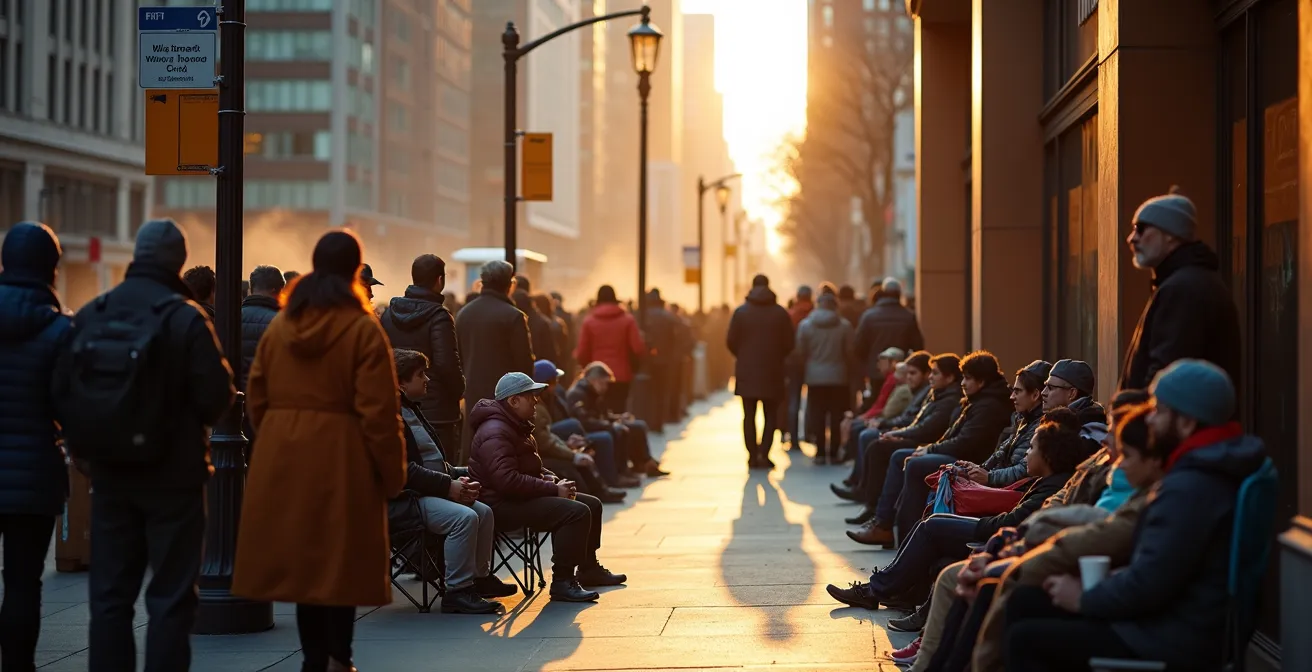
The secret to experiencing the Toronto International Film Festival isn’t a VIP pass; it’s mastering the city’s vibrant, unofficial festival ecosystem.
- Sold-out shows are not a dead end. Strategic patience in “Rush Lines” at specific venues and times can get you in.
- The real festival experience often lies beyond TIFF, in Toronto’s other world-class film festivals that offer better access and value.
Recommendation: Shift your focus from buying tickets to navigating the festival’s ‘second layer’—the fan zones, community hubs, and alternative events where the city’s true cinematic energy thrives.
For any true cinephile, September in Toronto is a kind of Mecca. The Toronto International Film Festival (TIFF) descends, and with it, the promise of world premieres, magnetic movie stars, and the electric buzz of cinematic discovery. But for those of us without an industry badge dangling from our necks, that buzz can quickly be drowned out by the frustrating drone of “Sold Out” notifications. The common advice feels tired and obvious: get in line early, refresh the ticketing page endlessly, or have a friend who knows a guy. You’re told to buy packages or become a member, advice that’s useless when the festival is just days away.
This approach treats the festival like a locked door requiring a golden key. But what if the key isn’t the point? What if the most authentic, thrilling version of the festival experience isn’t found through the main entrance at all? The real art of navigating TIFF lies in understanding its sprawling, unofficial festival ecosystem. It’s a network of back-alley entrances, digital communities, alternative events, and local knowledge that provides a richer, more genuine experience than many gala ticket-holders will ever have. It’s about trading the transactional quest for a ticket for the strategic pursuit of the moment.
This guide isn’t about simply getting a seat. It’s about a paradigm shift. We will explore how to turn the infamous “Rush Line” from a game of chance into a calculated strategy. We’ll map out the celebrity blind spots on King Street the paparazzi already know. We will dissect the economics of the festival, from the true cost of a week in the fray to the undeniable value of Toronto’s other, more accessible film festivals. This is your playbook for conquering TIFF from the outside in, and discovering a side of the festival—and the city—that no VIP pass can unlock.
To help you navigate this cinematic adventure, this guide is structured to give you the insider track on every aspect of the festival. From mastering last-minute tickets to experiencing the best of Toronto’s culture beyond the screen, here’s what we’ll cover.
Summary: A Cinephile’s Playbook for the Toronto International Film Festival
- The “Rush” line: how to see a sold-out film with patience and strategy?
- King Street West: where to position yourself to see celebrities without an invitation?
- Secondary market tickets: how to spot fake TIFF passes?
- Hot Docs or Inside Out: why do smaller festivals offer a better experience?
- How much does an intensive festival week in Toronto really cost?
- How to enjoy the King West District without falling into tourist traps?
- How to experience a Raptors or Leafs game without breaking the bank on tickets?
- Extending your stay: how to turn a business trip into a personal weekend at a lower cost?
The “Rush” line: how to see a sold-out film with patience and strategy?
The “Rush Line” is a hallowed TIFF tradition, the last bastion of hope for the ticketless. But most people approach it with blind optimism. Success isn’t about luck; it’s about strategic patience. Instead of just showing up and hoping, the veteran festival-goer plays the odds. The first rule is to understand that not all lines are created equal. Your chances of getting into a blockbuster premiere at a small venue are slim to none.
Instead, focus your energy on the larger venues. The Princess of Wales, Royal Alexandra, and Roy Thomson Hall have significantly more seats, meaning more potential no-shows and a higher probability of rush tickets becoming available. Timing is also critical. While arriving an hour or two early is a good baseline, weekday morning and afternoon screenings are your secret weapon. With industry folks in meetings and locals at work, the competition drops dramatically. The crucial moment comes about 15 minutes before showtime when TIFF staff do a final count of empty seats. This is when the line starts moving, and you’ll know if your strategic wait has paid off.
Case Study: The Power of Digital Rush Line Communities
The unofficial festival ecosystem thrives online. Savvy attendees don’t just stand in line; they leverage community-built tools. A cult-favourite website, TIFFR (pronounced ‘TIFF-er’), created by a cinephile, distills the overwhelming official schedule into a user-friendly calendar, helping rush strategists identify screenings with better odds. When combined with real-time updates from fellow fans on social media using the #TIFFRush hashtag, these digital tools transform a lonely wait into a coordinated, information-driven mission, proving that the smartest festival-goers are the most connected.
Embrace the possibility of less-than-perfect seating. A front-row neck-craner or a distant balcony view is a small price to pay for witnessing a film you thought was inaccessible. The victory is simply getting in the door, a shared triumph among the dedicated few in the rush line.
King Street West: where to position yourself to see celebrities without an invitation?
During TIFF, King Street West transforms into a runway, but the main red carpets are chaotic, crowded, and often disappointing. The real art of celebrity spotting is about geospatial arbitrage—knowing the less obvious spots where talent is more relaxed and accessible. The key is to think about their schedule beyond the red carpet itself.
Forget the main entrance. The true hotspots are the back-alley entrances and side doors of the major theatres, particularly the Princess of Wales. Arrive about an hour before a major screening ends, and you’ll catch stars leaving before the crowds descend. Another pro-tip is to follow the professionals: the clusters of paparazzi are your best guide. They know the routes talent takes between their hotel, car, and the theatre’s discreet entry points. Early mornings are also a golden opportunity. Between 8 and 11 AM, positioning yourself near The Hazelton Hotel in upscale Yorkville can yield surprisingly casual sightings of stars on a pre-press-junket coffee run.

As the image above captures, the most electric moments often happen away from the main crush, in the pockets of anticipation where dedicated fans and photographers gather. The final piece of the puzzle is the after-party. While the parties themselves are exclusive, scouting the patios of specific King West restaurants known for hosting post-premiere events late at night can lead to a glimpse of celebrating casts and directors. It requires patience, but the payoff is a far more personal and memorable encounter than fighting for a view behind a barricade.
Secondary market tickets: how to spot fake TIFF passes?
When desperation for a sold-out show sinks in, the secondary market can seem tempting. Platforms like Kijiji, Facebook Marketplace, and even street-side sellers suddenly appear, offering a glimmer of hope. However, this territory is fraught with peril. The cardinal rule is to be deeply skeptical. A legitimate seller is rare; a scam artist is common. Recognizing the difference is your only protection.
The first red flag is the price. While some markup is expected, be wary of anything that seems too good to be true or, conversely, exorbitantly priced. In the days leading up to the festival, it’s not uncommon for resale prices to reach 5x the face value for a hot-ticket premiere. Anything significantly below market rate for a popular film is highly suspicious. Physically, TIFF tickets have specific security features, but counterfeiters get better every year. The safest bet is to insist on a digital transfer through the official TIFF Account Manager, which is the only way to verify a ticket’s authenticity. If a seller resists or makes excuses, walk away.
Ultimately, the risk often outweighs the reward. You’re not just in danger of losing money; you’re also enabling a predatory market that hurts the festival and its true fans. As one TIFF veteran wisely advised in an interview with CBC News Toronto:
Just don’t let yourself be exploited. Don’t fall for the scam artists or the scalpers because not only are you being ripped off, but you’re also enabling these people.
– TIFF veteran attendee, CBC News Toronto
Your best defense is knowledge and a willingness to accept that some films may simply be out of reach through this channel. Your time and money are better invested in the sure-thing strategies of the rush line or exploring alternative festival experiences.
Hot Docs or Inside Out: why do smaller festivals offer a better experience?
The allure of TIFF’s glamour is powerful, but for a pure cinephile, the greatest joy is the film itself and the conversation around it. This is where the concept of cinephile authenticity comes into play. Often, the most rewarding festival experiences in Toronto happen outside of TIFF’s 11-day window. The city’s vibrant, year-round film culture boasts several world-class festivals that offer what TIFF, due to its sheer scale, cannot: intimacy, affordability, and genuine access to filmmakers.
Festivals like Hot Docs (North America’s largest documentary festival), Inside Out (Toronto’s LGBTQ+ Film Festival), and Toronto After Dark (a genre film festival) deliver incredible value. Tickets are a fraction of the price, screenings rarely sell out completely, and the atmosphere is more relaxed and community-focused. The real magic lies in the post-screening Q&As. At a smaller festival, it’s common to have lengthy, in-depth discussions with directors and creative teams who are thrilled to engage directly with an appreciative audience—a stark contrast to the fleeting, 5-minute Q&As of a massive TIFF premiere.
This table clearly illustrates the trade-offs. While TIFF offers unparalleled star power, the alternative festivals provide a richer, more substantive experience for the dedicated film lover. As an official guide from Destination Toronto highlights, this ecosystem makes the city a year-round film destination.
| Festival | Average Ticket Price | Ticket Availability | Audience Size | Celebrity Access |
|---|---|---|---|---|
| TIFF | $28-$95 | Very Limited | 700,000+ total | Red carpet only |
| Hot Docs | $18-$25 | Good availability | 200,000 total | Director Q&As common |
| Inside Out | $15-$20 | Excellent | 35,000 total | Intimate filmmaker talks |
| Toronto After Dark | $13-$18 | Rarely sells out | 15,000 total | Direct audience interaction |
Choosing to attend these festivals isn’t a compromise; it’s a strategic decision to prioritize substance over spectacle. It’s an embrace of Toronto’s deep love for cinema, which extends far beyond the chaos of September.
How much does an intensive festival week in Toronto really cost?
The glamour of TIFF can obscure a harsh reality: it can be an incredibly expensive endeavour. Understanding the real cost is the first step to planning a trip that is both thrilling and financially sustainable. The ticket price is just the tip of the iceberg. Officially, TIFF 2025 ticket prices range from $28-$350, with regular screenings at the low end and gala premieres at the high end. A festival-goer seeing two films a day could easily spend over $500 on tickets alone.
Beyond tickets, you must budget for food, transit, and accommodation, all of which see a “festival tax” in the downtown core. However, with smart planning, you can tailor the experience to your budget. Here’s a realistic breakdown of potential daily costs:
- The Starving Artist ($75/day): This budget relies exclusively on rush tickets for screenings. You’ll be using the TTC (public transit) to get around, eating at the fantastic and affordable food courts in Chinatown or Kensington Market, and staying in a hostel or with friends.
- The Comfortable Cinephile ($200/day): This allows for a mix of pre-purchased regular screening tickets and a few strategic rush line attempts. You might take an Uber for a late-night show and enjoy meals at mid-range restaurants on Queen West. Accommodation would be a budget-friendly hotel outside the immediate festival zone.
- The Premium Seeker ($500+/day): This is the gala experience. You’re buying tickets to premieres, taking taxis everywhere, dining at the upscale King Street restaurants, and staying at a boutique hotel in Yorkville.
Don’t forget the hidden costs. Many venues have a mandatory $20 bag check fee, and ride-sharing apps implement surge pricing during peak festival hours. The key to financial survival is to also leverage the “Second Festival”—the wealth of free activities. Festival Street events, outdoor screenings at Maple Leaf Square, and simply soaking in the atmosphere are all part of the experience and cost nothing.
How to enjoy the King West District without falling into tourist traps?
The King West “Entertainment District” is the epicentre of TIFF, and during the festival, it becomes a concentrated zone of overpriced menus and crowded patios. The savvy festival-goer knows how to navigate this area to find quality and value, experiencing the district like a local, not a tourist. The first step is to venture one or two blocks north or south of King Street itself, where restaurant quality increases and prices normalize.
A prime example of geospatial arbitrage in action is accommodation. During TIFF, Airbnb prices in the Entertainment District can triple, with standard condos soaring to $450-$500 per night. A local, however, would look to adjacent neighbourhoods like Liberty Village or Queen West. Just a 10-minute streetcar ride away, these areas offer a more authentic Toronto experience with a vibrant local restaurant scene where prices see only a marginal festival increase. This simple location shift can save hundreds of dollars that are better spent on films.
When it comes to dining and post-screening debriefs, follow the lead of the local film community. Instead of the celebrity-mobbed hotspots, seek out places known for their atmosphere and quality. As Destination Toronto points out in its local’s guide, some of the best spots are those that offer a unique vibe:
Piloted by a rising star in Toronto’s food scene—Filipino-Canadian chef Marvin Palomo—Vela is one of the most cinematic spaces to have post-movie debriefs after a premiere.
– Destination Toronto, Toronto International Film Festival 2025: Local’s Guide
Seeking out places like Vela, or exploring the culinary scenes in nearby Chinatown or Kensington Market, allows you to enjoy world-class food without the festival markup. It’s about engaging with the city’s real culture, which is often just around the corner from the tourist trail.
How to experience a Raptors or Leafs game without breaking the bank on tickets?
A trip to Toronto, even for TIFF, is an opportunity to immerse yourself in the city’s passionate sports culture. The Maple Leafs (NHL) and Raptors (NBA) are institutions, but tickets to their games can be as elusive and expensive as a gala premiere. However, just like with the film festival, the most electric atmosphere is often found for free, right outside the arena.
The phenomenon is known as “Jurassic Park.” What began as an informal fan gathering in Maple Leaf Square during the Raptors’ 2014 playoff run has evolved into a massive, officially sanctioned Toronto sports tradition. For major games, up to 5,000 fans pack the square to watch the action on a giant outdoor screen, creating an atmosphere of communal energy that rivals the inside of the Scotiabank Arena. During the Raptors’ 2019 championship run, the phenomenon went viral, with satellite “Jurassic Parks” popping up across the Greater Toronto Area. Mississauga’s version, for instance, drew up to 40,000 fans for a single finals game.
Access to these viewing parties is typically free, though you may need to register for a mobile pass via the teams’ official apps. For those wanting an indoor experience without the arena price tag, Toronto is home to some of the best sports bars in the country. Real Sports Bar & Grill, located right next to the arena, is a 25,000-square-foot behemoth with a two-storey television screen. For a more authentic, neighbourhood vibe, scouting sports bars in areas like The Annex or Leslieville will place you among die-hard local fans. This approach allows you to experience the city’s sporting pulse without the high cost, embracing the communal joy that defines Toronto fandom.
Key takeaways
- Mastering TIFF is less about buying tickets and more about understanding the festival’s unofficial ecosystem and rhythms.
- Strategic patience is your greatest asset; leverage rush lines at large venues during off-peak hours for the best chance at sold-out shows.
- The most authentic and affordable cinephile experiences in Toronto are often found at smaller festivals like Hot Docs or Inside Out, which offer unparalleled access to filmmakers.
- Embrace “geospatial arbitrage” by staying and dining in adjacent neighbourhoods like Queen West to save significantly and experience the real city.
Extending your stay: how to turn a business trip into a personal weekend at a lower cost?
After the exhilarating chaos of TIFF, the city of Toronto offers a wealth of opportunities to decompress and explore on a budget. Transforming the end of your festival trip into a mini-vacation is a brilliant way to maximize your travel, and it doesn’t have to be expensive. The key is to trade the downtown festival intensity for the city’s more tranquil and authentic offerings.
One of the best and cheapest escapes is a ferry ride to the Toronto Islands. For less than $10 round-trip, you can leave the city bustle behind for peaceful walking trails, beaches, and the single most iconic, breathtaking view of the Toronto skyline. For a culture fix without a price tag, head to the Fashion District’s “Graffiti Alley,” a vibrant, ever-changing outdoor art gallery that is completely free to explore. To get around, a Bike Share Toronto rental offers a cheap and efficient way to cruise the scenic waterfront trail.
If you’re looking to venture further, the GO Transit system is your gateway to affordable day trips. A short train ride to Hamilton, the “City of Waterfalls,” unlocks access to over 100 waterfalls and stunning hiking trails. Alternatively, a trip to historic Unionville Main Street offers the charm of a 19th-century village, providing a complete contrast to downtown’s modern energy. These car-free escapes often cost less than a single premium TIFF ticket and provide a much-needed reset. Managing logistics is also easy; luggage storage is available at Union Station, and the UP Express train offers the fastest and most affordable route to Pearson Airport, far cheaper than a taxi.
Action Plan: Crafting Your Perfect Post-TIFF Weekend
- Logistical Touchpoints: First, list your travel constraints. Where can you store your luggage (e.g., Union Station)? What is your airport transfer plan (e.g., UP Express)? What is your final accommodation?
- Activity Inventory: Collect a list of potential low-cost activities. Examples: Toronto Islands ferry, exploring Graffiti Alley, renting a Bike Share, a day trip to Hamilton via GO Train.
- Coherence Check: Compare your activity list with your personal post-festival needs. Are you seeking relaxation (Islands) or more urban exploration (Kensington Market)? Ensure your plan aligns with your energy level.
- Memorability & Emotion: From your list, prioritize the one or two experiences that will create the most lasting memory. Is it the epic skyline photo from the Islands, or the small-town charm of Unionville?
- Integration Plan: Build your final 1-2 day itinerary. Slot in your prioritized activities and map out the necessary transport (TTC day pass, GO Train ticket) to connect them seamlessly.
Now that you’re armed with the strategies to navigate the festival like an insider, the next step is to embrace this mindset. Start planning not just which films you want to see, but how you’ll engage with the entire, vibrant festival ecosystem that Toronto has to offer.