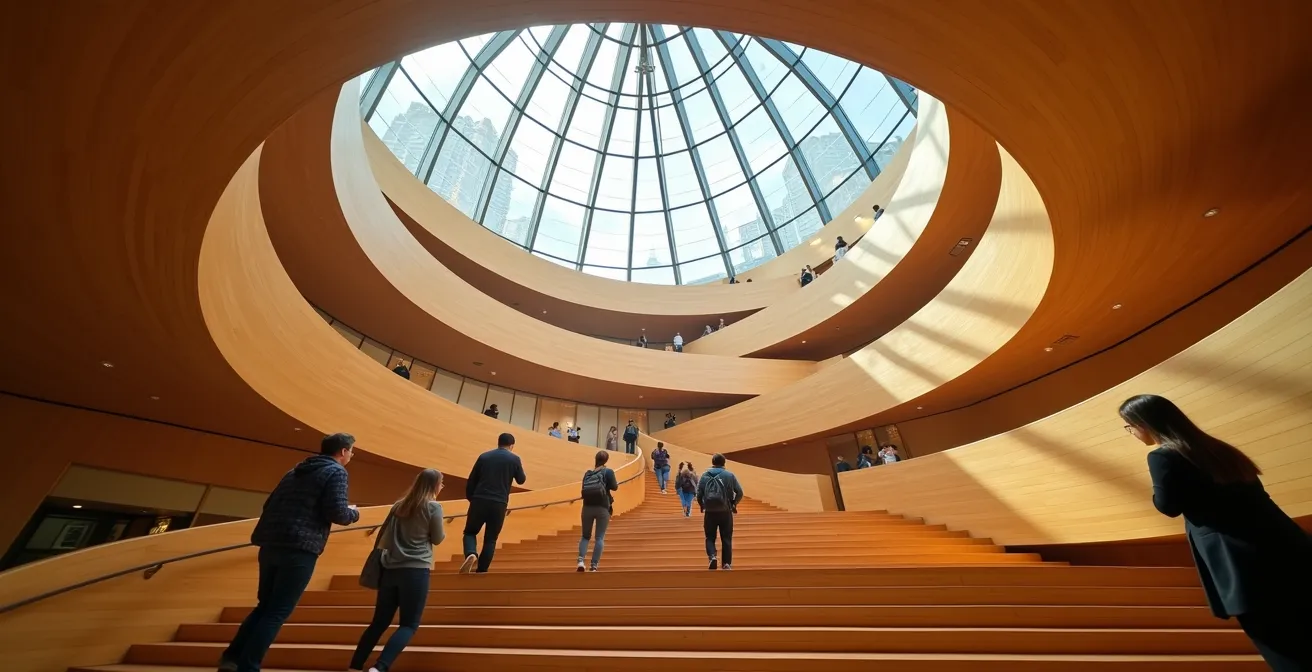
Most visitors think the Art Gallery of Ontario (AGO) is primarily about the Group of Seven. This is a profound misunderstanding. The key to grasping Canadian identity here isn’t just seeing famous landscapes, but undertaking a narrative journey. By starting with Indigenous art, understanding Frank Gehry’s architecture, and engaging with contemporary Toronto artists, your visit transforms from a simple checklist into a deep, layered dialogue about what it means to be Canadian today.
For any international art lover visiting Toronto, the Art Gallery of Ontario (AGO) often has one primary draw: the iconic, windswept landscapes of the Group of Seven. It’s a worthy pilgrimage, a chance to stand before the very canvases that forged a visual identity for a young nation. Many guides will provide a checklist: see Tom Thomson’s “The West Wind,” snap a picture of the dramatic spiral staircase, and perhaps browse the gift shop. This approach offers a glimpse, but it misses the forest for the trees—quite literally.
But what if the true, vibrant, and complex story of Canadian identity at the AGO isn’t found by simply ticking off masterpieces? What if the real experience lies not just in *what* you see, but in the *order* and *context* in which you see it? The conventional tour often treats the museum’s collections as separate, static displays. The real magic, however, emerges from seeing them as a living conversation, a dialogue between past and present, settler and Indigenous, art and architecture.
This guide abandons the checklist. Instead, it proposes a curated, narrative path through the AGO. We will explore why your visit should begin not with the Group of Seven, but in the heart of the Indigenous collection. We’ll decode how Frank Gehry’s architecture isn’t just a beautiful container but an active participant in telling Canada’s story. By the end, you won’t just have “seen” the AGO; you’ll have engaged in a profound conversation about an identity that is constantly evolving, far beyond the northern pines and rocky shores.
This article provides a strategic itinerary designed for the curious art enthusiast. It unpacks the layers of the AGO to reveal a more complete and compelling vision of Canadian culture, from its deepest roots to its contemporary branches.
Summary: Your Narrative Journey Through the AGO
- The importance of the Indigenous Art Gallery: why start your visit there?
- Architecture and the baroque staircase: how has Gehry’s renovation transformed the experience?
- Who are the contemporary Toronto artists featured at the AGO to follow absolutely?
- How to spend a ‘West Queen West’ day like a true trendy local?
- How to visit the ROM in 3 hours without missing the masterpieces?
- How to enjoy Free Wednesday Nights without being overwhelmed by the crowd?
- Posters or art books: which AGO souvenir will gain value?
- Why paying $100 CAD for a workshop is worth more than buying the object finished?
The importance of the Indigenous Art Gallery: why start your visit there?
The most profound mistake a visitor can make at the AGO is to treat the Indigenous art collection as a prelude or an anthropological aside to the “main event” of Canadian painting. To truly understand the nation’s artistic soul, you must begin here. This is not history; this is the living, breathing foundation upon which every other piece of Canadian art in the building rests. For decades, these works were often presented as historical artifacts. Today, the AGO showcases them as what they are: powerful, contemporary art that speaks to the most urgent issues of our time.
Contemporary Indigenous artists like the internationally acclaimed Kent Monkman and Rebecca Belmore, both featured prominently at the AGO, use their work to directly confront Canada’s colonial history, challenge notions of sovereignty, and address critical environmental questions. Their art isn’t a retrospective; it is arguably the most ‘current’ and vital work in the museum, reframing everything that follows. When you later encounter a landscape by the Group of Seven, you will see it not as an “empty” wilderness, but as an ancestral land, imbued with stories and meaning that were previously invisible. As Wikipedia contributors note in their analysis of the museum’s evolution, the AGO’s shift from presenting Indigenous works as ethnographic artifacts to showcasing them as contemporary art mirrors Canada’s own difficult but evolving relationship with Indigenous peoples.
Starting your visit here fundamentally changes your perspective. It moves the narrative from one of “discovery” by European settlers to one of deep time, resilience, and continuous cultural presence. It’s the critical first chapter that gives meaning to all the others.
Architecture and the baroque staircase: how has Gehry’s renovation transformed the experience?
After grounding your visit in Indigenous heritage, your next “text” to read is the building itself. Frank Gehry’s 2008 transformation of the AGO, his first project in Canada, was far more than a facelift. The architecture is an active storyteller, choreographing your journey and shaping your relationship with both the art and the city of Toronto. The total investment for Frank Gehry’s first Canadian project required CA$276 million and was completed in 2008, fundamentally altering the visitor experience.
The most visible element, the stunning glass and wood façade of the Galleria Italia, functions as what Gehry called an “urban porch.” It’s a public, non-ticketed space that blurs the line between the museum and the life of Dundas Street, inviting the city in. The soaring ribs of Douglas fir wood evoke not only the great forests of Canada but also the structure of traditional canoes, creating a uniquely Canadian frame through which to view the world. This is not neutral design; it’s a statement about place and material.
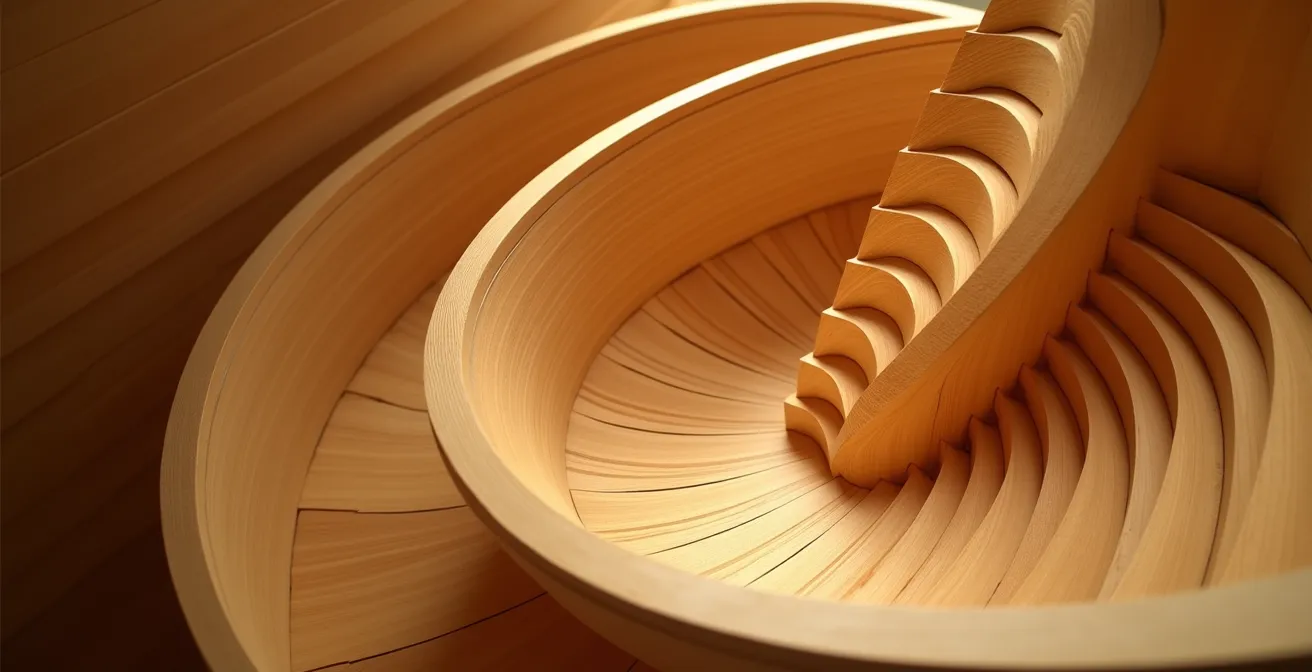
Inside, the famous spiral staircase is not just for vertical transit; it’s a narrative device. As you ascend, it deliberately controls your perspective, revealing moments of awe and offering curated glimpses of the city and the galleries. Gehry designed it to guide your journey, creating a physical experience that mirrors the intellectual one of moving through layers of art history. The building encourages you to look out as much as you look in, connecting the art on the walls to the vibrant, multicultural city right outside the window.
Who are the contemporary Toronto artists featured at the AGO to follow absolutely?
With the foundational context of Indigenous art and the architectural narrative in mind, it’s time to engage with the city’s present. The AGO is not a mausoleum for dead artists; it’s a dynamic institution with a finger on the pulse of Toronto’s thriving contemporary scene. The museum’s collection now includes over 120,000 artworks as of 2021, with a significant and growing focus on living Canadian artists who are defining the country’s modern identity.
A perfect example is Esmaa Mohamoud, a London-Ontario based artist whose work is prominently featured. She masterfully explores the complexities of Black identity by creating powerful sculptures from sports equipment. Her pieces directly engage with Toronto’s multicultural identity and its passion for teams like the Raptors and Maple Leafs, using athletic gear to dissect power dynamics, commercialism, and representation in Canadian society. This is the new face of Canadian art—one that reflects the urban, diverse, and globally-connected reality of the country today.
Beyond established names, the AGO is a fantastic place to discover the next generation. Keep an eye out for works by recent graduates from the nearby OCAD University, Canada’s premier art and design institution. Their art, often found in the contemporary sections, provides a raw and immediate look at the concerns of young Torontonians. Visiting the AGO is your chance to see these artists before they become household names, and to understand that the conversation about Canadian identity is happening right now, on these very walls.
How to spend a ‘West Queen West’ day like a true trendy local?
The artistic conversation that begins inside the AGO spills out onto the streets of Toronto, most notably into the vibrant West Queen West neighborhood. Voted one of the coolest neighborhoods in the world, it’s the natural extension of your museum visit. This is where the emerging artists you just discovered might have their studios, and where the next generation is currently exhibiting. A local art guide correctly notes that “West Queen West’s evolution from a gritty artist hub to a trendy commercial district adds a layer of critical understanding for the culturally-aware visitor.” To experience it like a local, you need an itinerary.
Start your journey at The Drake Hotel (1150 Queen St W), an institution that’s part boutique hotel, part restaurant, and part revolving art gallery. Their artsy brunch is the perfect fuel for a day of gallery hopping. From there, wander down to Ossington Avenue. This strip is packed with independent galleries showcasing artists who are not yet in the AGO’s collection, giving you a preview of the future of Canadian art. Don’t miss a detour into the famous Graffiti Alley (Rush Lane), a riot of color and social commentary that represents Toronto’s authentic street art scene.
For a unique souvenir, skip the typical tourist shops and explore the boutiques run by OCAD U graduates, where you can find locally designed fashion and objects. As evening approaches, cap off your day at the Gladstone Hotel (1214 Queen St W), another historic building transformed into a cultural hub, known for its lively art events and cocktails. This art crawl connects the institutional prestige of the AGO with the raw, creative energy of the city.
How to visit the ROM in 3 hours without missing the masterpieces?
To fully appreciate the unique role of the AGO, it’s useful to understand it in relation to its monumental neighbor, the Royal Ontario Museum (ROM). While both are world-class institutions, they offer fundamentally different perspectives on Canadian identity. A visit to both provides a “stereoscopic view” of the country’s culture. If you only have a few hours for the ROM, a focused approach is key to grasping its distinct contribution.
The core difference lies in their focus. The AGO explores the nation’s identity through artistic expression and soul—it’s about how Canadians see and represent themselves. The ROM, on the other hand, tells the story through natural history and artifacts—it’s about the land itself and the peoples who have inhabited it over millennia. The following table breaks down this essential distinction for the culturally curious visitor.
| Museum | Focus | Canadian Identity Perspective | Must-See for Identity |
|---|---|---|---|
| AGO | Artistic expression & soul | How Canadians see themselves | Group of Seven, Indigenous contemporary art |
| ROM | Natural history & artifacts | The land and its peoples | First Peoples Gallery, biodiversity exhibits |
| Combined Visit | Stereoscopic view | Complete cultural understanding | Both perspectives essential |
For a hyper-focused 3-hour ROM tour centered on Canadian identity, start at the First Peoples Gallery to understand the deep Indigenous foundations of the land. Then, move to the Canadian History Collection to see the material culture of colonial and contemporary life. Finally, spend your last hour in the Schad Gallery of Biodiversity to connect with Ontario’s specific natural heritage. By contrasting this experience with your AGO visit, you gain a much richer, more complete understanding of the multifaceted Canadian story.
How to enjoy Free Wednesday Nights without being overwhelmed by the crowd?
The AGO’s offer of free admission every Wednesday from 6 PM to 9 PM is a fantastic initiative that makes art accessible to everyone. However, for a visitor, it can be a double-edged sword: the galleries, especially popular ones, can become incredibly crowded, turning a contemplative experience into a stressful shuffle. The key is not to arrive right at 6 PM with everyone else, but to employ a strategic, reverse itinerary.

To beat the crowds, plan to arrive around 7:30 PM. The initial rush will have subsided, and you’ll have a solid 90 minutes of quality viewing time. Instead of heading straight for the popular Canadian and Indigenous collections on the main levels, start your visit on the upper floors (Level 2). The quieter galleries of European masters are often much less congested at this time. Mid-visit, descend to the lower level to see the magnificent Thomson Collection of ship models, a hidden gem that many people miss. Finally, save the main Canadian and Indigenous galleries for around 8:30 PM. By then, many families and early visitors will have departed, leaving you more space to truly engage with the art.
To make it a complete cultural evening like a Torontonian, pre-eat in nearby Chinatown on Spadina Avenue for a delicious and affordable meal. After the museum closes, head over to Baldwin Street, a charming, pedestrian-friendly lane filled with cozy bars and restaurants, for a post-visit drink to discuss the art you’ve just seen.
Key Takeaways
- Start with Indigenous Art: To understand any Canadian art, you must first engage with the foundational Indigenous context. It reframes the entire museum.
- Read the Architecture: Frank Gehry’s design is not a neutral container; it’s a narrative device that connects art, nature, and the city of Toronto.
- Connect to the Present: The story of Canadian identity is being written now. Engage with contemporary Toronto artists inside the AGO and in the West Queen West neighborhood.
Posters or art books: which AGO souvenir will gain value?
As your visit concludes, the gift shop presents a final choice: how to commemorate this narrative journey? The decision between a decorative poster and a substantial art book is more than a matter of budget; it’s a reflection of your engagement with the art. While a poster of a beloved painting has personal value, it rarely appreciates in monetary terms. For the visitor seeking a souvenir with lasting significance and potential investment value, the choice requires a bit more strategy.
Hardcover books from major Canadian artist retrospectives are often the smartest buy. They are not just collections of images but scholarly documents that provide context, essays, and historical significance. Over time, these books, especially from landmark exhibitions, can become collectible items. An even better investment, though more costly, are the limited-edition prints often available in the shop, especially if they are signed by local Toronto artists. These bridge the gap between a mass-produced souvenir and a unique piece of gallery-quality art for your home.
However, the most valuable souvenir might be one that holds the memory of your personal experience. As one savvy strategy suggests, “Choose items that moved you personally – personal value often exceeds monetary appreciation.” The true measure of a souvenir’s worth is its ability to transport you back to the moment of discovery you had in the gallery.
Action Plan: Choosing a Meaningful Art Souvenir
- Identify Your Connection: Before entering the shop, list the top 3 artworks or artists that resonated most with you during your visit.
- Research the Context: Look for books or prints related to those specific artists. Prioritize major retrospective catalogues or limited-edition items.
- Assess the Craft: Examine the quality of the item. Is it a well-produced book with scholarly text? Is the print on high-quality paper?
- Consider the Story: Does this object tell a story beyond just the image? Does it capture the essence of the exhibition or the artist’s career?
- Prioritize Personal Value: Ultimately, select the object that you will treasure the most, the one that best encapsulates your personal journey through the AGO.
Why paying $100 CAD for a workshop is worth more than buying the object finished?
The ultimate souvenir from the AGO might not be an object you can buy, but an experience you can create. The museum offers a range of workshops, often taught by Toronto-based artists, that provide a profound and lasting connection to the creative process. While the AGO workshops typically cost around $100 CAD, the value derived far exceeds that of purchasing a finished product from the gift shop. It’s the difference between being a spectator and a participant.
These workshops provide what is known as “embodied knowledge.” By engaging in a hands-on technique like printmaking or pottery, you are transformed from a passive viewer into an active creator. You gain an intimate appreciation for the skill, intention, and labor that goes into the art you’ve just admired. You learn to see the world through an artist’s eyes, even for a few hours. The experience directly fulfills the desire to be “inspired” while simultaneously supporting the local creative community.
The slightly flawed, handmade pot you create in a pottery workshop becomes an infinitely more powerful souvenir than a perfect one bought off a shelf. Why? Because it holds a story. It contains the memory of your struggle, your learning, and your personal moment of creation in Toronto. It’s a tangible piece of your journey, a testament to the idea that the deepest understanding of art comes not from passive consumption, but from active engagement. It is the perfect conclusion to a visit focused on narrative and experience.
Now that you understand the layers of the AGO, your next visit can be a deliberate, narrative journey. Plan your route, engage with the context, and transform your experience from a simple tour into a deep and personal dialogue with Canadian identity.