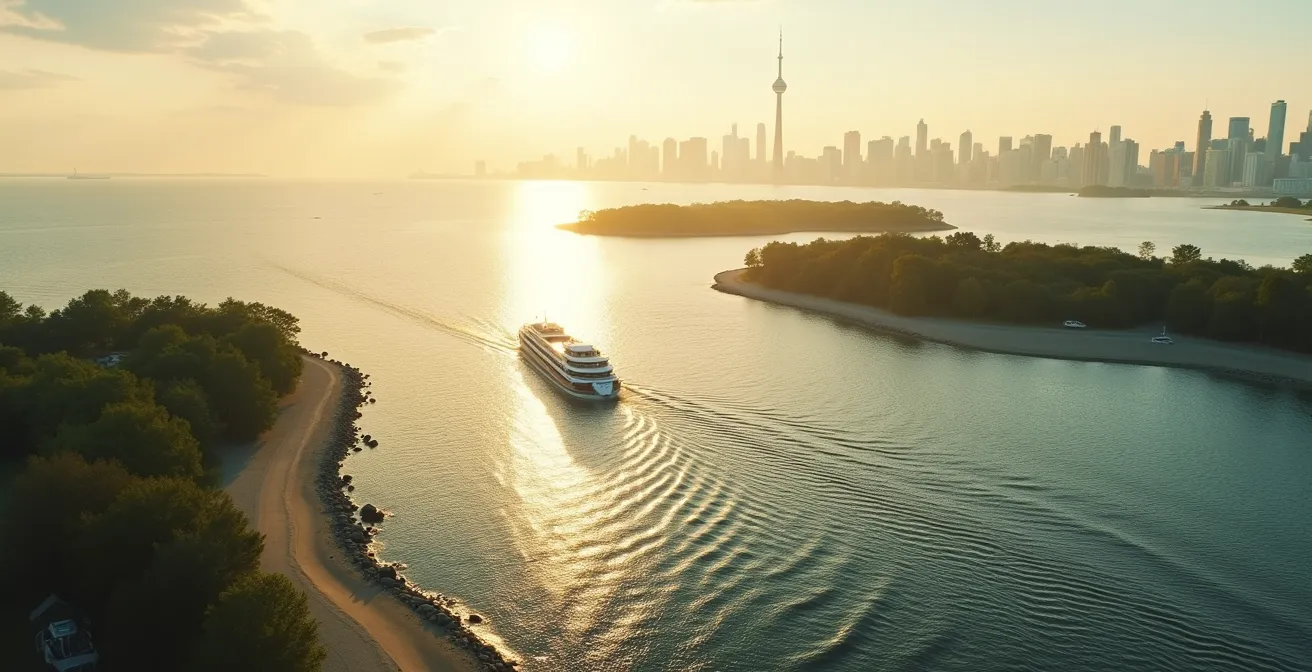
The secret to a perfect Toronto Islands trip isn’t just what you see, but mastering the day’s flow to avoid stress, crowds, and that dreaded last-ferry panic.
- Strategic transport choices (ferry vs. water taxi) are your first and most important decision, dictating the pace of your entire day.
- Planning your activities around one of three “micro-itineraries” (Family Fun, Tranquil Escape, or Active Beach Day) saves hours of wasted travel time.
Recommendation: Start your day with a counter-intuitive “reverse flow” by visiting Ward’s or Hanlan’s first, moving towards Centre Island in the afternoon when crowds are leaving.
There comes a moment for every Torontonian when the city’s hum becomes a roar, and the concrete jungle feels a little too real. The cure, as we locals know, is just a short boat ride away. The Toronto Islands are our collective backyard, an oasis of green just off the downtown core. You’ve probably heard the standard advice: take the ferry, rent a bike, see the skyline. And while that’s all true, it misses the most crucial part of the island experience: the a-to-b of it all. A truly perfect day isn’t just about the destination; it’s about navigating the journey without the logistical traps that can turn a peaceful escape into a stressful ordeal.
The real difference between a frazzled tourist and a relaxed island-goer lies in what I call flow mastery. It’s the art of sidestepping the hour-long ferry queues, avoiding overpriced and mediocre food, and never, ever having to sprint for that last boat home. It’s about understanding the rhythm of the islands and making it work for you, not against you. Forget a checklist of sights to see; this guide is about crafting an experience. It’s about embracing the islander’s pace, where the journey between the beaches, cafes, and quiet spots is as much a part of the pleasure as the spots themselves. This is how you have a day that feels like a real vacation, not a logistical challenge.
This guide is structured to help you master that flow. We’ll break down the key decisions you’ll face, from how you get there to how you eat and explore, all with the goal of maximizing your enjoyment and minimizing the hassle. By the end, you’ll be able to build your own perfect day, tailored to your vibe.
Table of Contents: An Islander’s Guide to a Perfect Day
- Ferry public ou taxi nautique : quel moyen choisir selon votre budget et votre patience ?
- Hanlan’s Point vs Centre Island : quelle plage correspond à votre niveau de confort ?
- Louer sur l’île ou apporter son vélo : le calcul de rentabilité et de confort
- L’erreur de ne pas apporter son pique-nique : prix et qualité sur l’île
- Peut-on visiter les maisons des îles : respect de la vie privée et curiosité
- Comment organiser une traversée ou une croisière sur le Lac Ontario sans le mal de mer ?
- Comment pratiquer le kayak sur le Lac Ontario en toute sécurité pour les débutants ?
- Comment grouper vos visites par quartier pour économiser 2 heures de transport par jour ?
Public Ferry or Water Taxi: Choosing Based on Your Budget and Patience
Your island day begins before you even set foot on a boat. The choice between the public city ferry and a private water taxi is your first and most critical decision, setting the tone for your entire trip. It’s a classic trade-off between time and money. While the Jack Layton Ferry Terminal is the official gateway, the experience can vary dramatically. There is no fee to enter the islands themselves, but you must pay for your transport across the harbour.
The public ferry is the budget-friendly option, but it demands patience, especially on a sunny weekend when wait times can stretch from 30 to 60 minutes. The water taxis, on the other hand, are the key to maximizing your time on the islands. They are zippy, direct, and operate with minimal waiting, becoming an increasingly popular choice; waterfront research shows there were over 500,000 water taxi trips in 2023 alone. They are your best bet if you’re running late or simply value your time more than the cost difference.
To help you decide, consider this simple breakdown. The math often favours the taxi, especially if you consider the value of your time on a limited day trip. A little extra cash can buy you a lot more relaxation.
| Option | Cost (Adult Return) | Wait Time (Peak) | Journey Time | Accessibility |
|---|---|---|---|---|
| City Ferry | $9.11 | 30-60 minutes | 15 minutes | Fully accessible (wheelchairs, strollers) |
| Water Taxi | $26 ($13 each way) | 0-10 minutes | 5-10 minutes | Not wheelchair accessible |
| Time Value | If your time is worth more than $17/hour, the water taxi saves you money during peak times. | |||
But what about the end of the day? The fear of missing the last public ferry is real. Having a backup plan is essential for a stress-free exit.
Your Last Ferry Contingency Plan
- Save water taxi phone numbers before you go. Tdot Water Taxi (647-370-8368) often runs until 11 p.m. on weekends.
- Know the mainland departure points. If you miss the ferry, head to the docks between York and Spadina on Queens Quay West.
- Have cash or card ready. Expect to pay around $13-$14 per person one-way. Remember that paying with a card often adds 13% HST.
- Inquire about after-hours service. Some taxis offer late-night pickups with an advance reservation and an extra fee, a true lifesaver.
- Plan your return TTC route. Ask for a drop-off at the Spadina dock for better connections to the 510 streetcar line.
Hanlan’s Point vs. Centre Island: Matching the Beach to Your Comfort Level
The Toronto Islands are not a monolith; each major area has a distinct personality, and choosing the right beach is key to your enjoyment. The two most famous destinations, Hanlan’s Point and Centre Island, represent opposite ends of the social spectrum. Your choice between them will define the vibe of your day.
Centre Island, and its main beach, Manitou Beach, is the family-friendly heart of the islands. It’s where you’ll find the Centreville Amusement Park, splash pads, and formal gardens. It’s bustling, energetic, and perfect if you have kids in tow or want access to the most amenities. On the other hand, Hanlan’s Point is known for its free-spirited atmosphere and, most famously, its clothing-optional beach. It draws a younger, more party-oriented crowd and is the go-to spot for beach volleyball and sun-worshipping with fewer tan lines.
But there’s a third, often overlooked option that truly captures the islander’s pace: Ward’s Island Beach. This is the local’s escape. Located on the eastern end, amidst the charming residential community, this beach offers a quiet, contemplative environment. It’s far from the tourist crowds of Centre Island and the party scene of Hanlan’s, making it perfect for reading, quiet picnics, or simply enjoying the sound of the waves. It’s the best place to feel like you’ve truly gotten away from it all.

As the aerial view suggests, the three main beach areas offer vastly different experiences. The vibrant energy of Hanlan’s, the family-focused fun of Centre Island’s Manitou Beach, and the serene emptiness of Ward’s Island cater to completely different moods. Don’t just go to the beach the ferry drops you at; choose the one that matches the day you want to have.
Rent on the Island or Bring Your Own Bike: The Comfort and Cost Calculation
Exploring the islands on two wheels is non-negotiable; it’s the only way to truly appreciate their scale and beauty. The islands are connected by paths and bridges, and you can easily walk from one end to the other in about an hour, but a bike transforms the experience from a long walk into a breezy adventure. The big question is whether to bring your own bike or rent one there.
Bringing your own bike is the most cost-effective option. The Toronto Island ferries transport over 1.4 million passengers annually, and thankfully, they allow you to bring your bike aboard at no extra charge. The main challenge is the “first and last mile” logistics on the mainland. If you’re not cycling directly to the terminal via the Martin Goodman Trail, you’ll need to navigate the TTC, which has restrictions: bikes are generally allowed on subways only during off-peak hours and weekends, and they aren’t permitted on the 509/510 streetcars that service the ferry docks. Using a Bike Share Toronto bike is another great option, with a convenient dock right at the ferry terminal, but you cannot take these bikes to the islands.
Renting on the island, primarily from the station near Centre Island pier, offers pure convenience. You step off the ferry and onto a bike. However, this convenience comes at a premium price, and on busy days, you might face a line or find they’ve run out of your preferred size. There are also island-exclusive Bike Share stations, but be aware: you cannot dock a mainland Bike Share bike at an island station, or vice-versa. For a full day of exploring, a rental can add up, especially for a family or group. The best choice depends on your starting point, your budget, and how much hassle you’re willing to endure for the freedom of your own two wheels.
The Rookie Mistake of Not Packing a Picnic: Food Prices and Quality on the Island
The single biggest mistake a first-time visitor can make is arriving on the islands with an empty stomach and a full wallet. While there are food options available, relying on them entirely is a recipe for disappointment and a surprisingly light bank account. On-island food is generally priced at a 30-40% premium compared to the mainland, and the quality can be inconsistent.
A much better approach is to adopt the pre-ferry food shopping strategy. Instead of just grabbing snacks, make it part of the adventure. The St. Lawrence Market, a short 10-minute streetcar ride from the ferry terminal, is a foodie paradise where you can assemble a gourmet picnic of artisanal cheeses, fresh bread, and local produce. For a quicker but still high-quality option, the Loblaws and Farm Boy on Queens Quay offer excellent prepared foods and sandwiches. This turns a logistical necessity into a memorable part of your Toronto experience.
If you do decide to eat on the island, choose wisely. The Island Café and Toronto Island BBQ & Beer Co. are decent but reflect the high prices. The Carousel Cafe at Centre Island offers basic family fare, while The Riviera on Ward’s Island generally provides the best quality for the price. The smartest move is a hybrid approach: pack your main meal and snacks, then treat yourself to an ice cream or a drink from an island vendor. To make your picnic special, seek out a spot with a view, away from the main crowds.
- Olympic Island eastern shore: A quieter alternative to Centre Island with stunning, unobstructed city views.
- Ward’s Island beach eastern end: A peaceful spot far from the ferry traffic, perfect for watching the boats go by.
- Snake Island bridge area: A hidden gem between Centre and Ward’s with plenty of shade trees.
- Gibraltar Point south side: Near the historic lighthouse, this area has fewer crowds and dramatic open-lake views.
- Hanlan’s Point northern tip: Go past the main beach area for a perfect sunset viewing location over the water.
Can You Visit the Island Homes? Curiosity and Respect for Private Life
As you wander through the eastern side of the islands, you’ll inevitably be charmed by the unique and picturesque cottages that line the paths. It’s natural to be curious about who lives in these idyllic homes and what life is like in North America’s largest urban car-free community. However, it’s crucial to remember that this is a real, living neighbourhood, not a tourist exhibit.
The Toronto Islands residential community is home to about 262 households, and getting to be one of them is famously difficult. The community operates under a unique land trust model, and there is a 500-person waiting list to purchase a home, a process that can take anywhere from 10 to 30 years. These homes are not on the open market, so private tours or viewings are not possible. The best way to experience the community is by being a respectful observer. Stick to the public paths, admire the architecture from a distance, and appreciate the quiet atmosphere the residents cherish.
While you can’t knock on doors, you can get a taste of the community spirit at publicly accessible venues. Visit the Artscape Gibraltar Point, an artist residency that often has open studios or events. You can also check for public events at the Ward’s Island Association Clubhouse, which serves as the community’s social hub. The true magic of the island homes is not in seeing their interiors, but in observing the unique, peaceful way of life they represent—a life based on walking, cycling, and pulling wagons instead of driving cars.

The beauty of the Ward’s Island and Algonquin Island communities lies in their quiet, car-free charm. Enjoy the view from the public pathways, appreciate the gardens, and listen to the sound of bicycle bells instead of car horns. It’s a rare glimpse into a different way of living within a major city.
How to Organize a Lake Ontario Crossing or Cruise Without Seasickness
For some, the thought of any boat ride, no matter how short, brings a wave of anxiety about motion sickness. If that’s you, let me put your mind at ease. The trip to the Toronto Islands is one of the calmest and quickest urban ferry rides you’ll ever take. The journey across the Inner Harbour is very protected from the open lake’s swell.
According to official island sources, the standard ferry trip is just a 10-15 minute crossing. This short duration is typically not long enough to induce seasickness in most people. If you are particularly sensitive, there are simple steps you can take. Opt for the larger, more stable city ferry over a smaller, bouncier water taxi, especially on a windy day. Once aboard, stay on the upper deck in the fresh air and keep your eyes fixed on the horizon—the spectacular Toronto skyline provides a perfect, stable reference point.
If you love being on the water and want to extend your day, consider booking a separate lake cruise for after your island visit. This separates the “transport” function from the “leisure” function. Companies like Mariposa Cruises or the Kajama Tall Ship offer sunset cruises and themed sails that depart from the mainland’s Harbourfront. This allows you to enjoy the beauty of Lake Ontario on a vessel designed for sightseeing, without the pressure of it being your only way home. Chartering a private boat can also serve as your ferry, completely eliminating any “last boat” anxiety while giving you a personalized tour of the harbour.
How to Kayak on Lake Ontario Safely as a Beginner
Seeing the islands from the water level offers a perspective you just can’t get from the ferry or a bicycle. Kayaking through the calm, protected lagoons is a magical experience, but it’s important to understand the two very different ways you can do it, especially as a beginner.
The first option is the “destination” experience, which is perfect for true beginners and families. You take the ferry to Centre Island and rent a kayak or canoe from the boat rental located there. You can then spend a peaceful hour or two exploring the interconnected, car-free waterways that weave between the islands. These lagoons are sheltered from the wind and waves of the open lake, creating a safe and serene environment to paddle. You’ll get up close with the local birdlife and see the island’s cottages from a unique vantage point.
The second option is the “journey” experience: kayaking *to* the islands from the mainland. This is a more adventurous undertaking best suited for those with some previous paddling experience. You can rent from a provider like the Harbourfront Canoe & Kayak Centre on Queens Quay. They will provide you with a safe route that follows the Eastern Gap to avoid the busy ferry channels. This requires more stamina and confidence, as you’ll be navigating a larger body of water. This option is only available once water temperatures reach a safe level (around 12°C), typically in late May. Always check the marine weather forecast before heading out, and avoid days with winds over 20 km/h.
Key Takeaways
- Mastering your day’s flow by choosing the right transport and itinerary is more important than trying to see everything.
- Packing a picnic is a non-negotiable strategy to save money and eat better.
- The “Reverse Flow Strategy”—starting at Ward’s or Hanlan’s and moving to Centre Island later—is the best way to beat the crowds.
How to Group Your Visits by Zone to Save 2 Hours of Travel a Day
The biggest time-waster on an island trip is zig-zagging back and forth. The key to an efficient and relaxing day—the essence of flow mastery—is to think of the islands not as one place, but as three distinct zones. By picking a zone that matches your group’s interests and sticking to it, you can save hours of walking or cycling time and have a much more focused experience.
The most effective way to plan your day is to use the Reverse Flow Strategy. Most visitors, especially families, take the ferry to Centre Island and stay there. To beat the crowds, do the opposite. Take the first ferry of the day (the 6:30 a.m. to Ward’s is a photographer’s dream) to either Ward’s Island or Hanlan’s Point. Enjoy the peaceful morning hours, have the beaches to yourself, and get your bike rental without a line. As the day progresses and those areas get busier, make your way towards Centre Island in the mid-to-late afternoon (after 3 p.m.), just as the family crowds are beginning to pack up and head for the ferry. This counter-intuitive approach gives you the best of all worlds: a quiet start and a less crowded departure.
To implement this, choose one of these three micro-itineraries as the foundation for your day. This simple choice will give your visit structure and purpose, ensuring you spend more time enjoying and less time travelling.
| Zone | Key Attractions | Time Needed | Best For |
|---|---|---|---|
| Family Fun Zone | Centreville, Franklin Garden, Manitou Beach | 4-5 hours | Families with young children |
| Tranquil Escape | Ward’s Island Beach, Boardwalk, Olympic Island | 3-4 hours | Couples, solo travelers |
| Active Beach Day | Hanlan’s Point Beach, Gibraltar Lighthouse, Sports facilities | 5-6 hours | Young adults, sports enthusiasts |
Now that you have the insider’s strategy, you’re ready to build your own perfect island adventure. Use these frameworks not as rigid rules, but as tools to create a day that flows effortlessly, leaving you with nothing but good memories and a great view of the skyline on your calm ride home.