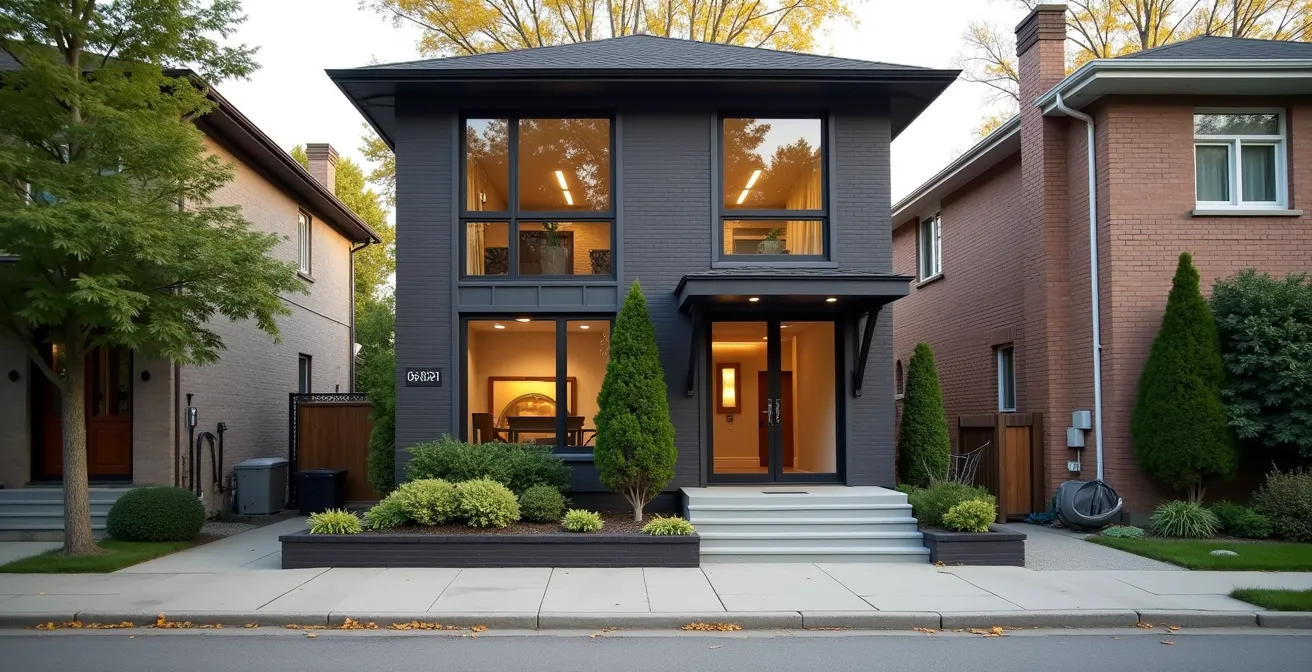
Successfully creating a legal basement suite in Toronto requires treating it not as a renovation, but as the launch of a regulated small business.
- Legal compliance, including zoning and building codes, is the non-negotiable first phase that dictates the entire project’s viability.
- Every investment, from underpinning to adding a separate entrance, must be analyzed for its direct impact on rental income, property value, and tax efficiency.
Recommendation: Begin with a preliminary zoning review and a detailed cash-on-cash return calculation before committing to any construction.
For many Toronto homeowners, the pressure of a substantial mortgage is a daily reality, while the basement remains an underutilized asset. The idea of converting this space into a rental unit is appealing, often seen as a straightforward renovation project. Most advice focuses on the basics: check the building code, hire a contractor, and find a tenant. However, this approach overlooks a critical truth that separates profitable ventures from costly liabilities.
The common path of focusing solely on construction misses the bigger picture. True success in this endeavour doesn’t come from just building walls or installing kitchens. It comes from rigorous financial and regulatory planning from the absolute beginning. What if the key to unlocking your property’s potential wasn’t just in the renovation itself, but in the strategic, business-minded decisions you make before a single hammer is swung? This is not a home improvement project; it is the launch of a small, regulated business operating directly beneath your feet.
This guide is structured to walk you through this business launch. We will dissect the process from the initial legal viability assessment to the final calculation of your true return on investment. Each step is framed as a calculated business decision, designed to maximize revenue, ensure compliance, and mitigate the inherent risks of becoming a landlord in Toronto. By adopting a mindset of financial scrutiny from day one, you can transform your basement from a storage space into a robust, legally sound income stream.
To navigate this complex but rewarding process, this article breaks down the essential components of creating a legal and profitable basement apartment in Toronto. The following sections provide a detailed roadmap for your project.
Summary: A Guide to Converting Your Toronto Basement into a Legal Rental Unit
- Zonage et permis : votre sous-sol est-il éligible pour devenir une seconde suite ?
- Revenus locatifs et déductions : comment ne pas payer trop d’impôts sur votre loyer ?
- Enquête de crédit et références : les étapes cruciales pour éviter les loyers impayés
- Entrée séparée ou insonorisation : quel investissement permet d’augmenter le loyer ?
- Gestion autonome ou gestionnaire : à partir de combien de portes déléguer ?
- Comment moderniser une maison victorienne à Toronto sans détruire son âme historique ?
- Pourquoi l’abaissement du sous-sol (underpinning) est l’investissement le plus rentable à Toronto ?
- Comment calculer le “Cash-on-Cash Return” réel d’un condo torontois après impôts ?
Zonage et permis : votre sous-sol est-il éligible pour devenir une seconde suite ?
Before any financial projections or design plans, the first step is a pass/fail test of regulatory compliance. In Toronto, a “second suite” is a heavily regulated entity. Your project’s viability hinges entirely on meeting the specific criteria laid out in municipal bylaws. This is not a step where assumptions can be made; it requires direct verification with official city resources. Key requirements include minimum ceiling heights, window sizes for egress, fire separation between units, and dedicated parking, which can vary by neighbourhood.
The process can feel daunting, but it’s a structured investigation. As the Assured Basements Construction Team highlights in their Legal Basement Apartments in Ontario Guide, “Each municipality in Ontario has its own rules for legal basement apartments. In Toronto, bylaws dictate specific requirements for fire safety and parking.” This underscores the need for localized due diligence rather than relying on general provincial guidelines.
Each municipality in Ontario has its own rules for legal basement apartments. In Toronto, bylaws dictate specific requirements for fire safety and parking. North York and Vaughan have additional zoning considerations that must be respected.
– Assured Basements Construction Team, Legal Basement Apartments in Ontario Guide
This planning phase is critical, as shown in the meticulous review of building plans. According to Toronto Building department data, homeowners should budget for a 6-8 week initial building permit review, with the knowledge that a significant portion of applications face further delays. Understanding these timelines is essential for realistic project management.

As you can see, the process involves careful study of complex documents. Navigating Chapter 150 of Zoning By-law 569-2013 is a foundational task. The city offers resources like interactive zoning maps and preliminary reviews to help homeowners determine eligibility before committing significant capital. Treating this stage with the rigour of a business compliance audit is the first step toward a successful investment.
Revenus locatifs et déductions : comment ne pas payer trop d’impôts sur votre loyer ?
Once you’ve confirmed legal viability, the focus shifts to financial structure. Rental income is not pure profit; it is taxable income. However, the Canada Revenue Agency (CRA) allows you to deduct a wide range of expenses incurred to earn that income, a concept central to achieving tax efficiency. The key is to run your rental unit like a business, meticulously tracking every eligible cost. This transforms portions of your regular homeownership expenses into legitimate business deductions.
The most significant deductions are typically a pro-rated share of your property’s common expenses. The portion you can deduct is based on the square footage of the rental unit relative to the total size of your home. For instance, if your basement apartment occupies 40% of the total square footage, you can generally deduct 40% of your property taxes, mortgage interest, home insurance, and utility bills (heat, hydro, water). According to CRA guidelines, a 40% average deduction rate is common for a basement apartment of that size.
Let’s consider a practical example. A Toronto basement apartment generating $2,200 per month brings in $26,400 in gross annual income. Without deductions, this entire amount would be added to your taxable income. However, by claiming eligible portions of your mortgage interest, property taxes, insurance, and maintenance, the net taxable rental income can be significantly reduced. An analysis of a typical scenario shows this net income often falls to approximately $10,720. This demonstrates how diligent expense tracking can slash your tax burden by nearly 60%, maximizing your actual cash flow.
Other deductible expenses include advertising costs to find a tenant, fees for credit checks, and the full cost of any repairs or maintenance exclusive to the rental unit. It is imperative to keep detailed records and all receipts, using the T776 Statement of Real Estate Rentals form when filing your taxes. Thinking like a business owner about every dollar spent on the property is crucial.
Enquête de crédit et références : les étapes cruciales pour éviter les loyers impayés
A high-quality tenant is the most critical component of a successful rental business. A vacant unit generates no income, but a bad tenant can cost you thousands in unpaid rent, legal fees, and property damage. Therefore, a rigorous, standardized, and Ontario-compliant tenant screening process is not optional; it is your primary tool for risk management. This process must be fair and non-discriminatory, adhering to the Ontario Human Rights Code, while still providing the information you need to make a sound business decision.
Your screening should be a multi-step verification process. Start by requesting a formal rental application. This document should collect information on employment, income, rental history, and references. Crucially, you must obtain explicit written consent from the applicant to conduct credit and reference checks. For the Toronto market, a minimum credit score of 650 is a common benchmark, but many landlords look for scores of 680 or higher. A 2024 analysis of the Toronto rental market found that requiring an average credit score of 680+ and verifying income can reduce non-payment risk by 73%.
Verifying income is equally important. Ask for recent pay stubs or a letter of employment. A standard industry rule of thumb is that the applicant’s gross monthly income should be at least three times the monthly rent. Contacting previous landlords is also a vital step. Be specific with your questions: Did they pay rent on time? How did they maintain the property? Were there any issues with neighbours? Always use the official Ontario Standard Lease Agreement, as it is mandatory and protects both you and the tenant by outlining all legal rights and responsibilities. Requiring proof of tenant insurance with a minimum of $1 million in liability coverage is also a standard and wise practice.
This thorough vetting process minimizes your risk and sets the foundation for a professional landlord-tenant relationship. It shifts the dynamic from a casual arrangement to a formal business agreement, protecting your significant financial investment.
Entrée séparée ou insonorisation : quel investissement permet d’augmenter le loyer ?
Not all renovation investments are created equal. While basic finishes and code compliance are necessary, certain strategic upgrades can directly increase the rental value of your suite, generating a higher return. When considering where to allocate your budget beyond the essentials, you must apply financial scrutiny to each decision. The two upgrades that consistently offer the highest impact on tenant appeal and rental price in Toronto are a separate entrance and effective soundproofing.
A separate entrance is the single most valuable feature for a basement apartment. It provides privacy and autonomy for the tenant, making the unit feel less like a basement and more like a distinct home. This psychological separation is highly valued and directly translates to higher rent. A recent Toronto real estate investment analysis indicates that a dedicated entrance not only makes the unit far more desirable but adds $250-400/month to Toronto basement rent. With a typical investment of around $10,000, this upgrade can pay for itself in as little as three years, while a full renovation can add up to $150,000 in total property value.
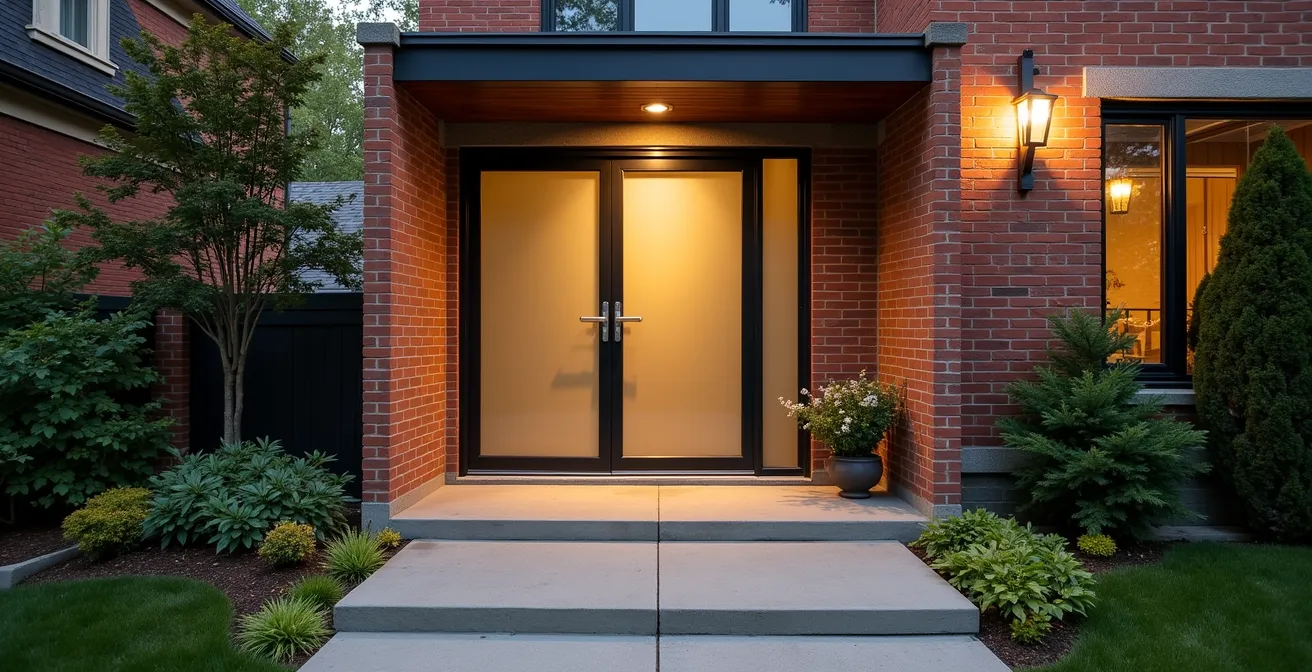
As the image shows, a well-designed separate entrance enhances the property’s curb appeal and reinforces the unit’s independence. The second high-impact investment is soundproofing. Shared living noise is a major source of friction between landlords and tenants. Investing in sound-dampening materials like resilient channels, double layers of drywall with green glue, and solid-core doors significantly improves the quality of life for both parties. While the direct monthly rent increase from soundproofing is harder to quantify than a separate entrance, it dramatically reduces tenant turnover and potential conflicts, providing a substantial long-term financial benefit.
When planning your budget, prioritizing these two elements over purely cosmetic upgrades (like high-end countertops or fixtures) is a smarter business decision. They address the core desires of a basement tenant: privacy and peace. This focus on functional value is what allows you to command a premium rent and attract higher-quality, long-term tenants.
Gestion autonome ou gestionnaire : à partir de combien de portes déléguer ?
The final operational decision is whether to manage the property yourself or hire a professional property manager. This isn’t a question of capability but of opportunity cost and business efficiency. For a homeowner with a single basement suite, self-management seems like the default choice to save money. However, a thorough analysis of the “operational drag“—the time, stress, and administrative burden—is necessary to make a sound financial decision.
Managing a rental property, even just one unit, involves more than collecting rent. It includes marketing the vacancy, screening applicants, handling maintenance requests at all hours, conducting inspections, and staying current with the ever-changing regulations of Ontario’s Landlord and Tenant Board (LTB). A study of Toronto landlords found that those managing a single basement unit spend an average of 5 to 10 hours per month on these tasks. Now, calculate your own professional or personal hourly worth. If you earn $75 per hour, those 10 hours represent a $750 monthly opportunity cost.
Compare this to the cost of a property manager. In Toronto, management fees typically range from 8% to 10% of the monthly rent. For a unit renting at $2,200 per month, this equates to $176 to $220. From a purely financial standpoint, if your time is worth more than this, delegating becomes a cost-effective decision. This is especially true for busy professionals or those who value the stress reduction of not having to deal with late-night emergency calls or difficult tenant situations, particularly when living in the same building.
For those not ready to fully delegate, a hybrid model can be effective. You can self-manage day-to-day communications while hiring a real estate agent or a placement service for the specialized task of tenant screening and lease preparation for a one-time fee (typically $500-$800). This allows you to retain control while outsourcing the most time-consuming and high-risk part of the process. The decision to delegate should not be based on the number of doors, but on a clear-eyed calculation of your time’s value versus the cost of professional service.
Comment moderniser une maison victorienne à Toronto sans détruire son âme historique ?
Converting a basement in one of Toronto’s historic Victorian homes presents a unique challenge: a delicate balance between modern building codes and the preservation of historical character. This is a prime example of where regulatory arbitrage—understanding and creatively navigating specific rules—becomes crucial. Properties in Heritage Conservation Districts (HCDs) like Cabbagetown or The Annex face an extra layer of scrutiny, and standard conversion plans may be rejected if they compromise the building’s historic facade.
The primary conflict often arises with the requirement for a separate entrance. A front-facing entrance, while practical, is almost always forbidden on a heritage property. The solution often lies in a discreet side or rear entrance that is not visible from the street. Similarly, enlarging windows for egress must be done with sensitivity, often requiring custom-made windows that match the building’s original style. The goal is to integrate modern safety and legal requirements so seamlessly that they appear to be part of the original design.
Inside, the opportunity is to celebrate, not hide, the home’s history. Instead of covering old fieldstone or brick foundation walls with drywall, expose and feature them as accent walls. This not only saves on finishing costs but adds immense character that is highly desirable in the rental market. Old-growth timber joists, if structurally sound, can be left exposed or reclaimed as decorative beams, telling the story of the home’s 100+ year history.
Case Study: Victorian Basement Conversion in Cabbagetown
The owner of an 1890s Cabbagetown Victorian home successfully navigated HCD restrictions to create a legal basement suite. The project hinged on placing the separate entrance on the side of the property, preserving the historic front facade. Inside, the original rubble foundation was stabilized and repointed to become a feature wall. Century-old floor joists were reclaimed as decorative ceiling beams, and the design incorporated period-appropriate doors sourced from a local architectural salvage yard. The project not only achieved full legal compliance but also added an estimated $280,000 to the property’s value, proving that heritage and profit can coexist.
This approach transforms constraints into features. By working with the home’s inherent character, you create a unique, premium rental product that stands out from generic, modern basements. This often commands a higher rent and attracts tenants who appreciate historic architecture, making it a sound business strategy.
Pourquoi l’abaissement du sous-sol (underpinning) est l’investissement le plus rentable à Toronto ?
For many older Toronto homes, the biggest physical barrier to a legal basement suite is ceiling height. The Ontario Building Code requires a minimum clear height of 1.95 meters (6 feet 5 inches) in most areas of the suite. If your basement falls short, you have two primary options: benching or underpinning. While benching is cheaper, underpinning is often the single most profitable investment you can make in the property, as it fundamentally transforms the usability and value of the space.
Underpinning is the process of excavating beneath the existing foundation walls in sections and pouring new concrete footings at a lower depth. This allows you to lower the entire basement floor, creating a full-height space (often 8 feet or more) with no loss of square footage. This is in stark contrast to benching, which involves pouring a new concrete ledge (the “bench”) against the inside of the foundation walls, resulting in a significant loss of usable floor space. A standard 900 sq ft basement can lose 80-120 sq ft with benching, a critical loss in a rental unit.
The upfront cost of underpinning is substantial; a full conversion project starting from an unfinished basement can cost between $85,000 to $100,000. However, the return on this investment is multifaceted. Firstly, it allows you to create a legal, high-quality rental unit that was previously impossible, generating a consistent income stream. Secondly, it dramatically increases the total livable square footage of your property, leading to a significant rise in its overall market value. The high ceilings and open feel make the unit far more appealing, allowing you to charge premium rent.
The following table provides a clear comparison of the two methods, illustrating why underpinning, despite its higher cost, is the superior financial choice for maximizing long-term value in the competitive Toronto market.
| Method | Cost Range | Floor Space Loss | Time Required | Final Ceiling Height |
|---|---|---|---|---|
| Underpinning | $350-450/linear foot | 0 sq ft | 6-10 weeks | 8+ feet possible |
| Benching | $250-350/linear foot | 80-120 sq ft | 4-6 weeks | 7-7.5 feet typical |
Your Action Plan: Toronto Underpinning Contractor Vetting Checklist
- Licensing and Insurance: Verify the contractor’s structural engineering license with Professional Engineers Ontario and demand proof of a minimum $5 million liability insurance policy specific to underpinning.
- Relevant Experience: Request at least three references for similar underpinning projects on Toronto clay soil completed within the last two years, and confirm their experience with party wall agreements for semi-detached homes.
- Detailed Scope: Review a detailed project timeline that includes contingencies for unforeseen soil conditions or weather delays.
- Contractual Guarantees: Ensure the contract includes a written warranty covering foundation settling and structural integrity for a minimum of 10 years.
- Compliance and Permits: Confirm the contractor will handle all engineering reports, city permits, and required inspections as part of their fee.
Key Takeaways
- Zoning and permits are non-negotiable business start-up costs, not just administrative hurdles. Their approval dictates all subsequent investment decisions.
- Tax efficiency is a core component of profitability. Proactively tracking pro-rated expenses (mortgage interest, property tax, insurance) is essential to maximize your net return.
- Strategic investments like underpinning and a separate entrance provide the highest ROI by fundamentally increasing the unit’s value and rental potential, far more than cosmetic upgrades.
Comment calculer le “Cash-on-Cash Return” réel d’un condo torontois après impôts ?
After navigating the complexities of permits, construction, and tenanting, the final measure of success is your financial return. Metrics like “property value increase” are important, but they are unrealized gains. The most critical metric for a rental property investor is the Cash-on-Cash (CoC) Return. This calculation tells you the annual cash profit you are making relative to the total cash you invested. It is the ultimate measure of your investment’s performance, and it must be calculated *after* taxes for a true picture of profitability.
The calculation is straightforward. You divide your annual net cash flow (after all expenses and taxes) by your total cash investment. The total cash investment includes everything you paid out-of-pocket: renovation costs, permit fees, new appliances, and any furnishings. Costs in Toronto can vary widely, from $45,000 to $75,000 for a basic, code-compliant conversion to over $120,000 for a premium renovation. For a realistic analysis, let’s assume a total cash investment of $80,000.
Next, calculate your annual net cash flow. Start with your gross annual rent (e.g., $2,200/month x 12 = $26,400). From this, subtract all your cash operating expenses: your pro-rated share of property tax and insurance, a maintenance contingency (a standard 5-10% of rent), and any property management fees. Then, from that pre-tax profit, you must subtract the actual income tax you will pay on your net rental income (as calculated in the tax section). It is this final, post-tax number that represents your true cash flow. For a typical Toronto basement conversion, a $75,000 investment generating $2,200/month in rent can yield a 15-18% annual cash-on-cash return after all expenses and taxes are accounted for.
This disciplined calculation cuts through the noise. It forces you to account for every dollar in and every dollar out, providing an unambiguous verdict on your success as a real estate investor. A positive CoC return means your basement is not just paying for itself; it’s actively generating profit and helping you build wealth.
By approaching your basement conversion with this level of financial rigour from start to finish, you transform a simple renovation into a predictable and profitable business venture. To begin your own project, the first logical step is to conduct a detailed financial analysis and preliminary zoning check for your specific property.