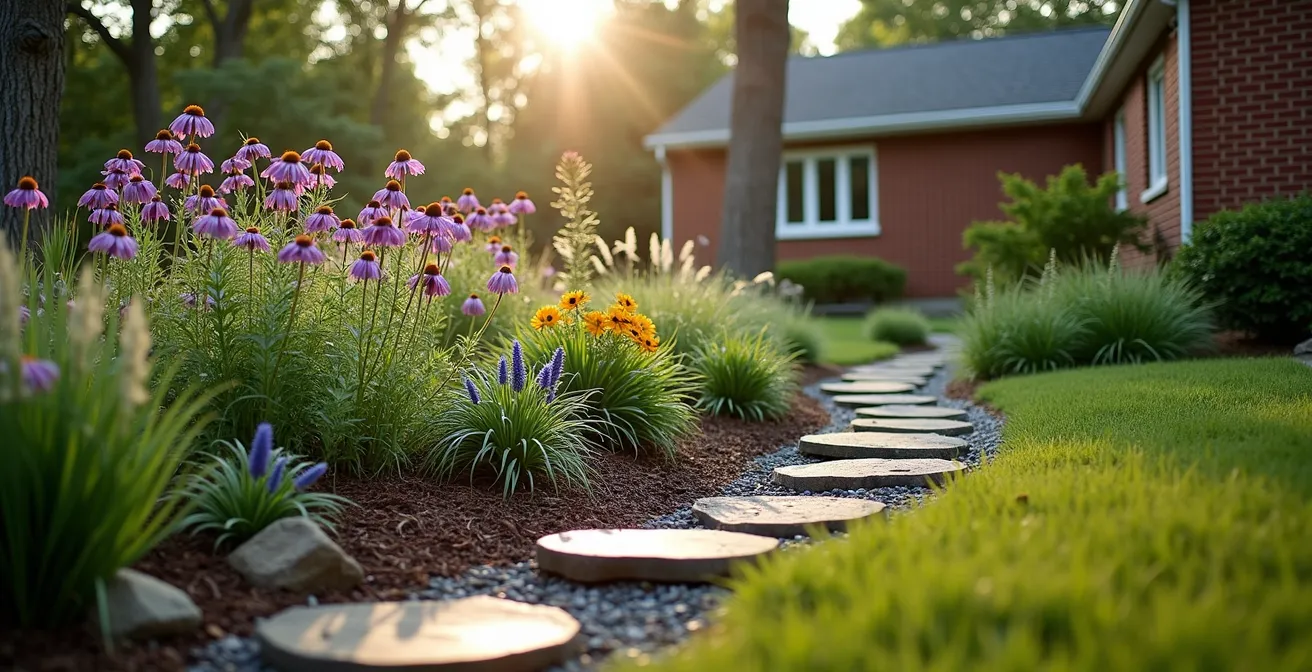
A truly low-maintenance Toronto garden isn’t about avoiding work; it’s about designing a resilient, self-sustaining ecosystem with native plants that actively solves problems and boosts your property’s value.
- Solve common Toronto property issues like poor drainage and privacy needs by using functional native plants as living infrastructure.
- Create genuine four-season beauty and curb appeal that goes beyond a simple lawn, significantly increasing your home’s market value.
Recommendation: Begin by viewing your yard not as a weekend chore, but as your most valuable ecological and financial asset waiting to be unlocked.
For the busy Toronto homeowner, the dream of a lush, beautiful garden often clashes with the reality of weekend traffic on the 401, family commitments, and the desire for a life beyond constant yard work. The conventional approach—a thirsty lawn, generic shrubs, and battling stubborn weeds—feels like a second job. You want stunning curb appeal that enhances your home, not a high-maintenance burden that consumes your precious free time.
Many turn to what seem like easy fixes: uniform cedar hedges, hardy but aggressive ground covers, or expansive decking to simply pave over the problem. While these can offer temporary solutions, they often create new issues, from pest infestations in monocultures to ecological dead zones. They miss the fundamental opportunity that your small piece of Toronto land represents.
But what if the secret to a truly low-maintenance garden wasn’t about fighting nature, but partnering with it? The answer lies in shifting your perspective: stop thinking about a “garden” and start designing a “resilient ecosystem.” By using plants native to Ontario, you can create a beautiful, largely self-sufficient landscape that not only thrives in our specific climate but also actively solves common property challenges and increases your home’s financial value.
This guide will walk you through the key decisions and strategies for creating this ecological asset. We will explore how to correct drainage issues, create natural privacy, choose the right materials, and even see how this landscape philosophy connects to larger investments, turning your entire property into a more valuable and enjoyable home.
Summary: A Homeowner’s Guide to a Native Plant Ecosystem in Toronto
- Negative slope: why water pools at your foundation and how to fix it
- Cedars or a fence: which solution offers quick privacy from neighbours?
- The mistake of planting ivy or mint in the ground
- Composite or pressure-treated wood: which material best withstands Canadian winters?
- Solar or wired: how to illuminate your walkway for safety and style
- Muskoka or the Kawarthas: where to buy a cottage to maximize summer rental income
- What viewing angles to favour to capture industrial architecture without the crowds
- Why basement underpinning is the most profitable investment in Toronto
Negative slope: why water pools at your foundation and how to fix it
In many older Toronto neighbourhoods, a common and stressful problem is the “negative slope,” where the ground improperly grades towards the house. This funnels rainwater directly against your foundation, leading to damp basements, cracked concrete, and costly repairs. The traditional fix often involves extensive, expensive re-grading. However, an ecological approach offers a more beautiful and functional solution: creating a rain garden as a piece of ecological infrastructure.
A rain garden is a shallow, landscaped depression designed to capture, hold, and absorb stormwater runoff. Instead of fighting the water, you are purposefully directing it to a garden filled with water-loving native Ontario plants. Species like Blue Flag Iris, Swamp Milkweed, and Joe Pye Weed have deep root systems that soak up excess moisture, filtering it naturally and keeping it away from your foundation. This transforms a drainage problem into a vibrant, living feature that attracts birds and butterflies.
This isn’t just a theoretical concept; it’s a proven success in Toronto. A well-designed rain garden is more than just a drainage solution; it’s your first step towards building a resilient ecosystem that actively works to protect your home.
Case Study: The Danforth East Village Rain Garden Project
In East York, a Toronto resident successfully tackled his property’s drainage issues by installing a 2m x 1.5m rain garden for about $1,000. Using native plants like purple coneflowers and Black-eyed Susans, the project effectively prevented basement flooding. Its success inspired a neighbourhood-wide initiative, leading to 10 more rain gardens funded by a Toronto Foundation grant, demonstrating how these “living sponges” are a beautiful, self-sustaining solution for urban homeowners.
Cedars or a fence: which solution offers quick privacy from neighbours?
The desire for privacy in Toronto’s dense urban landscape often leads to two default choices: a wooden fence or a monolithic wall of cedar trees. While both provide a screen, they are static and vulnerable. Fences require maintenance and cedars, being a monoculture, are susceptible to being wiped out by a single pest or disease, or damaged by road salt. A far more resilient and aesthetically pleasing alternative is a “living hedge” composed of a diverse mix of native Ontario shrubs.
Instead of a single-species wall, a living hedge layers different plants to create texture, seasonal interest, and a robust ecosystem. Imagine a screen that includes the delicate white spring flowers and edible berries of Serviceberry, the brilliant red winter stems of Red Osier Dogwood, and the year-round evergreen structure of Canada Yew. This diversity not only creates a more natural and beautiful view but also builds resilience. If one species struggles, the others thrive, ensuring your privacy screen remains intact.
The following comparison shows how a native mix outperforms a traditional cedar hedge across several key metrics for a Toronto property. An analysis from Landscape Ontario highlights the long-term benefits of choosing native diversity.
| Feature | Cedar Monoculture | Native Living Hedge Mix |
|---|---|---|
| Initial Cost | $30-50 per linear foot | $25-40 per linear foot |
| Growth Rate | Fast (30-60cm/year) | Moderate to Fast (varies by species) |
| Salt Tolerance | Poor | Excellent (Red Osier Dogwood) |
| Disease Resistance | Risk of total loss to single pest | High – diverse species resist different pests |
| Four-Season Interest | Green year-round only | Flowers, berries, fall color, winter stems |
| Wildlife Value | Limited | High – birds, pollinators, beneficial insects |
| Recommended Mix | Single species | Serviceberry, Red Osier Dogwood, Canada Yew |
This approach moves beyond a simple barrier and creates a dynamic, living system that adds value and beauty throughout the year, truly embodying the concept of designed wildness.
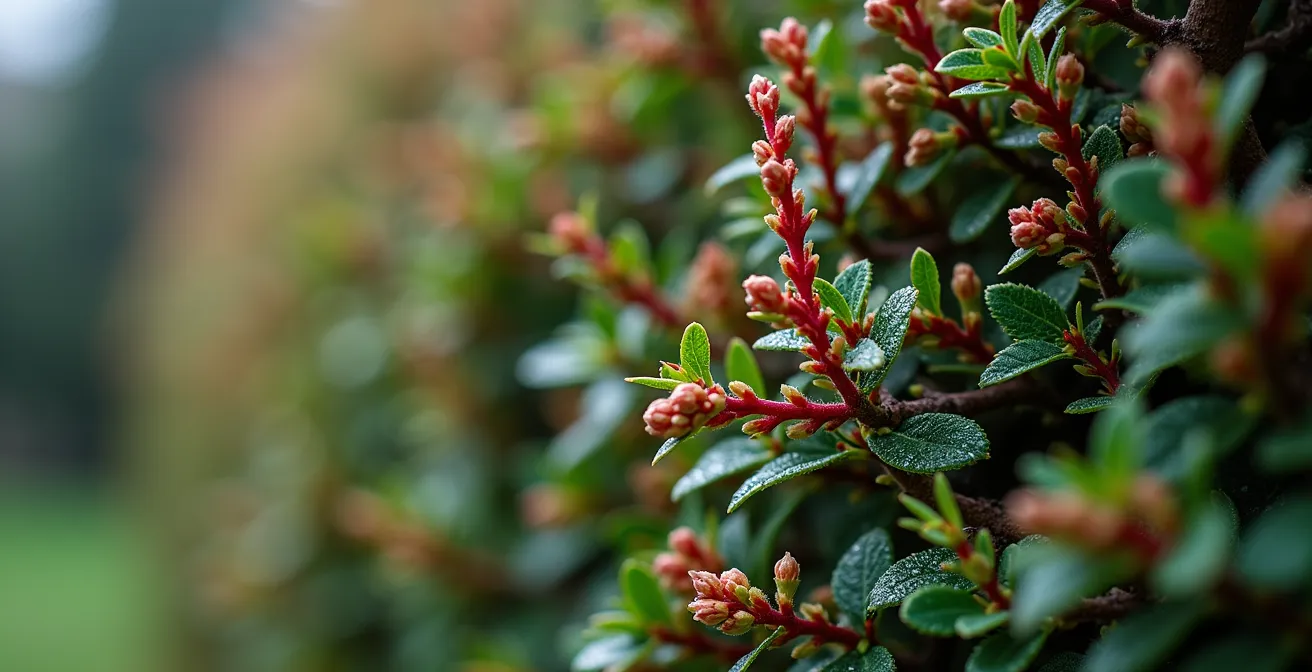
As you can see, the layered textures and colours provide a far richer visual experience than a simple green wall, offering a vibrant habitat that changes with the seasons.
The mistake of planting ivy or mint in the ground
In the quest for a fast-growing, low-maintenance ground cover, many homeowners are tempted by aggressive spreaders like English Ivy, Goutweed, or even common mint. This is a critical mistake that creates long-term “ecological debt.” These invasive or overly aggressive non-native plants quickly escape their intended boundaries, overwhelming other plants, destroying local biodiversity, and becoming a never-ending battle to control. They create a green desert, offering little to no value for local pollinators and wildlife.
Pulling out established ivy or mint is a thankless, difficult task that can take years. The responsible and, ultimately, easier approach is to choose native ground covers that are adapted to our Ontario ecosystems. These plants work with your garden, not against it. For example, in a shady spot where you might be tempted to plant ivy, native Wild Ginger (Asarum canadense) forms a lush, beautiful carpet with unique, hidden flowers. It spreads politely without becoming a menace.
As landscape professional Craig Willett notes in a piece for Ontario Nature on the subject, the benefits go beyond just being well-behaved.
High quality native plants can require less water and maintenance, which supports sustainability and also saves time, labour and money.
– Craig Willett, Ontario Nature – Going Wild for Native Plants
Choosing the right native plant from the start avoids years of frustration and creates a harmonious, self-sustaining ground layer. This is the foundation of a truly low-effort, high-reward garden.
Action Plan: Smart Native Swaps for Invasive Plants
- Instead of English Ivy: Plant Wild Ginger (Asarum canadense) for a lush, spreading ground cover in shady areas.
- Instead of Mint: Use Wild Bergamot (Monarda fistulosa) for an aromatic, pollinator-friendly plant that behaves itself.
- Instead of Periwinkle: Choose Canada Anemone for a field of beautiful white flowers that spreads effectively but is manageable.
- Instead of Goutweed: Plant Pennsylvania Sedge (Carex pensylvanica) for a fine-textured, lawn-like ground cover that requires no mowing.
- For the ‘hellstrip’ between sidewalk and street: Use ultra-tough, salt-tolerant natives like Prairie Smoke or Nodding Onion.
Composite or pressure-treated wood: which material best withstands Canadian winters?
When adding a deck to a Toronto home, the choice between composite and pressure-treated wood often comes down to budget and maintenance tolerance. Both materials are designed to withstand our harsh winters, with composite offering less upkeep and wood providing a more traditional aesthetic. However, from an ecological landscaping perspective, the more important question is: how does this material choice create a unique microclimate that will influence the plants around it?
A dark composite deck will absorb and radiate significant heat, creating a hot, dry zone along its edges that can scorch delicate plants. A lighter-coloured wood or composite deck will be cooler. The space under the deck becomes a zone of deep, dry shade. Understanding these microclimates is key to successful, low-maintenance planting. Instead of fighting these conditions, you should select native plants that are naturally adapted to thrive in them. This ensures your plants will flourish with minimal intervention.
Case Study: Toronto Master Gardeners’ Deck Integration
In central Etobicoke, homeowners with a west-facing property wanted to integrate their new deck into the garden. Following advice from Toronto Master Gardeners, they successfully used the deck’s structure to inform their plant choices. They planted tough native ground covers that could handle the heat between deck boards and established clumps of resilient native grasses like Little Bluestem around the perimeter. The key was matching the plant to the specific microclimate created by the decking, resulting in a beautiful, integrated landscape that requires very little care.
For example, the hot, sunny edge of a composite deck is the perfect spot for drought-tolerant natives like Butterfly Weed or Black-Eyed Susans. The dry shade beneath is ideal for native ferns or Pennsylvania Sedge. By pairing the plant to the place, you create a cohesive design where the hardscaping and softscaping work in harmony, not in conflict.
Solar or wired: how to illuminate your walkway for safety and style
Garden lighting is essential for safety and extending the enjoyment of your outdoor space into the evening. While the choice between solar and low-voltage wired systems depends on budget and installation complexity, the *style* of illumination should be guided by your native plant ecosystem. The goal is not to flood the yard with light, but to artfully reveal the textures and forms of your garden, creating four-season value and drama.
Good lighting design works with the plants. In winter, uplighting can showcase the persistent, snow-dusted seed heads of a Purple Coneflower or the stunning exfoliating bark of a River Birch. In fall, backlighting a stand of Big Bluestem grass turns it into a glowing, translucent screen. In summer, path lights can be used to create a soft, carpet-like effect across a ground cover of Pennsylvania Sedge. The focus is on creating silhouettes, shadows, and highlights that reveal the garden’s hidden beauty after dark.

To protect our urban ecosystem, it’s critical to use the right kind of light. Bright, cool-toned lights can disrupt nocturnal pollinators and wildlife. As recommended by conservation-focused designers at sources like In Our Nature, always choose warm-toned (around 2700K), shielded fixtures that cast light downwards. This minimizes light pollution, protects wildlife, and creates a more sophisticated, inviting atmosphere. This approach ensures your lighting enhances the ecosystem, rather than harming it.
Muskoka or the Kawarthas: where to buy a cottage to maximize summer rental income
When considering a cottage purchase in sought-after areas like Muskoka or the Kawarthas, investors focus on waterfront access, number of bedrooms, and proximity to amenities. However, an often-overlooked factor that can significantly boost rental appeal and property value is the landscape itself. A generic lawn that requires constant mowing is a turn-off for renters who want a natural escape, and a pain for owners to maintain. A native plant landscape, however, becomes a powerful financial asset.
A garden designed with deer-resistant, low-maintenance native plants like ferns, Milkweed, and native grasses creates the authentic “cottage country” feel that renters are seeking. It means less time spent on yard work for you or your property manager, and more time for renters to enjoy the dock. More importantly, professional landscaping with native plants provides a significant return on investment. Studies have shown that a well-designed native landscape can increase property value by 5-15%, an enormous margin on a high-value cottage property.
For a cottage, the landscape isn’t just decoration; it’s part of the product. By eliminating the lawn in favour of a resilient native meadow or woodland garden, you reduce maintenance costs, increase drought tolerance, and create a beautiful setting that stands out in rental listings. It’s a strategic investment that pays dividends in both higher rental income and long-term property appreciation.
What viewing angles to favour to capture industrial architecture without the crowds
Toronto’s rich industrial heritage, beautifully preserved in areas like the Distillery District and Evergreen Brick Works, presents a unique aesthetic. While photographers seek to capture the raw texture of brick and steel, the real magic happens where this industrial grit meets natural forms. The most compelling views are often found by focusing on the interplay between hard architecture and the “designed wildness” of a native plant landscape.
Instead of a wide, crowded shot, look for angles where the strong vertical lines of native grasses like Big Bluestem echo the pillars of a structure, or where the soft, mounding form of Prairie Dropseed spills over a concrete curb. Focus on how the rigid, dark seed heads of winter-standing Coneflowers create a sculptural foreground against a weathered brick wall. This is the approach used by forward-thinking landscape designers who transform post-industrial sites.
Case Study: Urban Pioneer Gardens in Post-Industrial Spaces
Design firms like In Our Nature specialize in transforming Toronto’s post-industrial sites using tough native plants that naturally colonize disturbed areas. Their designs integrate four seasons of beauty by using plants with strong architectural qualities. The rigid winter stems of native grasses and bold seed heads of coneflowers are intentionally used to complement industrial architecture, softening hard surfaces while telling the story of their resilient urban location.
This principle isn’t just for public spaces; it’s directly applicable to your home. If you have a modern addition, a concrete patio, or even a simple metal fence, pairing it with architectural native plants creates a sophisticated dialogue between the built and the natural. This elevates your garden from a simple collection of plants to a thoughtful, artistic composition.
Key Takeaways
- A native plant garden is not a chore, but a resilient ecosystem that solves property problems like drainage and privacy.
- Choosing a diverse mix of native plants over monocultures creates a stronger, healthier, and more beautiful four-season landscape.
- Viewing your garden as a financial asset is crucial; native landscaping increases property value and can be a key part of a larger investment strategy.
Why basement underpinning is the most profitable investment in Toronto
In the competitive Toronto real estate market, underpinning—the process of lowering a basement floor to increase ceiling height—is widely seen as one of the best investments for adding livable square footage and significant value to a home. It’s a massive undertaking that involves excavation and foundation work. What homeowners often overlook is that the period immediately following this construction is the single best opportunity to complete the value-add equation by investing in a native plant ecosystem.
After underpinning, your yard is typically a blank slate of disturbed soil. This is the perfect moment to solve grading issues permanently and install foundational ecological infrastructure like a rain garden. Instead of simply rolling out new sod, you can implement a cohesive landscape plan that will mature into a valuable, low-maintenance asset. The cost is marginal compared to the underpinning itself, but the return is substantial.
Furthermore, the City of Toronto actively encourages this. Through partnerships like the LEAF program, you can get subsidized professional planting of native trees, which are proven to increase long-term property value. A grant like PollinateTO can even provide up to $5,000 to help fund the creation of a pollinator garden. By combining a major structural investment like underpinning with a strategic landscape investment, you are maximizing your ROI from the ground up.
A finished basement is a huge plus, but a finished basement that looks out onto a beautiful, functional, and resilient native garden is a knockout feature that sets your property apart. A study from the City of Toronto shows that through their partnership with LEAF, residents can get professional native tree planting for only $160 to $230 per tree, a tiny investment for a massive long-term gain in value and curb appeal.
By reframing your yard from a chore to a resilient, value-adding ecosystem, you unlock its true potential. A low-maintenance native plant garden is not about doing less; it’s about making a smarter, more sustainable investment in your Toronto home that pays you back for years to come—in beauty, in enjoyment, and in real financial value. Begin planning your property’s ecological transformation today.