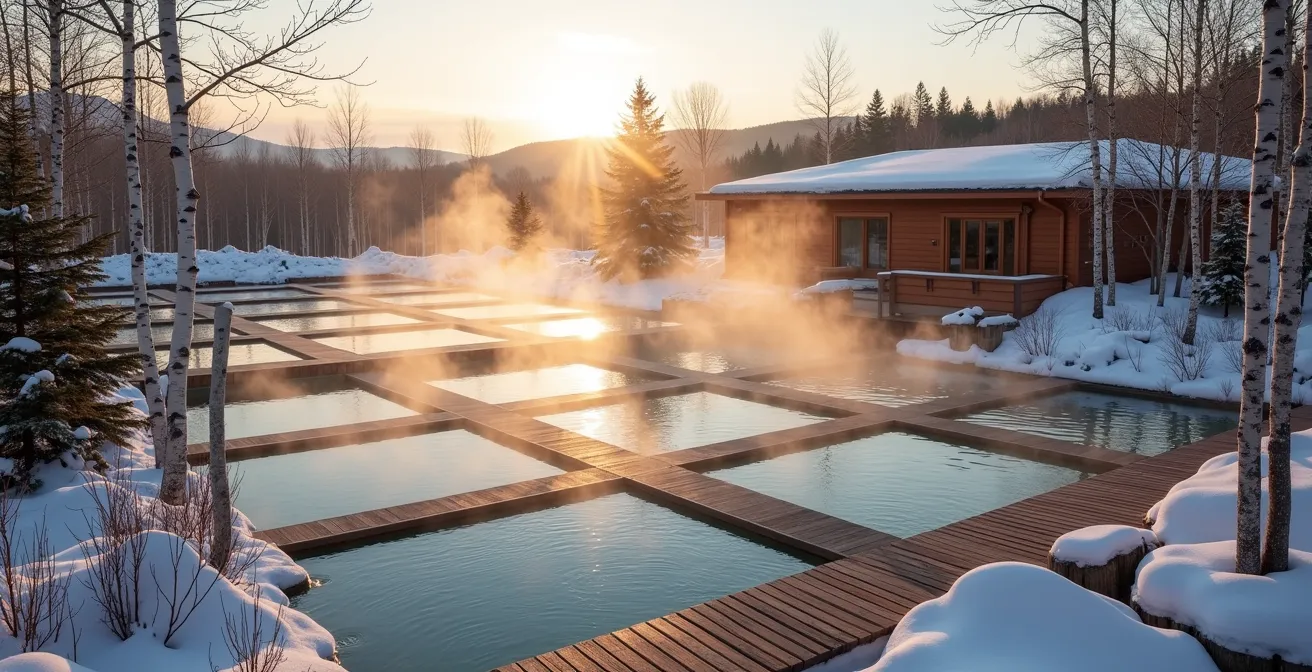
The key to true urban relaxation isn’t a long vacation, but mastering the art of the transit-accessible micro-retreat from Toronto.
- Nordic spas like Thermëa Whitby are designed to be reached via GO Transit, turning travel time into part of the decompression.
- Maximizing the experience involves strategic timing (off-peak weekdays) and understanding the science of the hot-cold-rest thermal cycle.
Recommendation: Integrate a monthly spa day into your schedule, leveraging PRESTO discounts and RMT benefits, to build a sustainable work-life equilibrium.
The relentless energy of Toronto is intoxicating, a vibrant hum of ambition and activity. But for the stressed city dweller or the exhausted tourist, that hum can quickly become a draining roar. The common advice is to plan a weekend getaway, a lengthy escape requiring a car and significant planning. This approach treats relaxation as a rare, major event, rather than a sustainable practice. We often search for sprawling countryside resorts, overlooking the powerful sanctuaries hiding in plain sight, reachable within an hour of Union Station.
But what if the solution wasn’t about escaping the city, but about mastering it? What if true rejuvenation could be found not by fleeing, but by intentionally weaving moments of profound calm into the urban fabric? The secret lies in reframing the Nordic spa experience from a destination-vacation into an integrated wellness tool. It’s about leveraging the city’s own infrastructure—its public transit network—to access oases of tranquility and learning the sensory rituals that transform a simple day trip into a deep physical and mental reset.
This guide moves beyond a simple list of locations. We will explore the science behind the essential thermal cycle that unlocks deep detoxification. We’ll detail the practicalities of accessing these world-class facilities with a day pass, optimizing your visit for quiet and savings. Finally, we’ll connect this practice to the broader goal of finding genuine work-life balance, proving that your urban sanctuary is just a train ride away.
In the following sections, we will delve into the specific strategies and mindsets needed to turn a GO Train ticket into a passport for deep relaxation. From understanding the core thermal ritual to navigating social etiquette, this is your complete guide to finding equilibrium amidst the effervescence of Toronto.
Summary: A Guide to Toronto’s Transit-Accessible Nordic Spas
- Hot-Cold-Rest: why is respecting the cycle essential for the detox effect?
- Day spa or hotel: how to enjoy the facilities without paying for the night?
- The Tuesday morning slot: why take a day off to go to the spa?
- RMT or relaxation: do you need a receipt for your insurance?
- Beach or hot studio yoga: which practice to decompress from the journey?
- How to find work-life balance in the hustle and bustle of Toronto?
- How to visit Ripley’s Aquarium without the peak-time crowds?
- Neighbourhood café: how to start a conversation with a Torontonian without being intrusive?
Hot-Cold-Rest: why is respecting the cycle essential for the detox effect?
The core of any authentic Nordic spa experience is not merely lounging in a hot tub; it is the deliberate, repeated practice of the thermal cycle. This ancient hydrotherapy ritual—moving from intense heat to a shocking cold, followed by deep rest—is the engine of its profound wellness benefits. Understanding this sensory ritual is the first step to unlocking the spa’s full potential. The cycle isn’t just a suggestion; it’s the entire point.
The first phase, 10-15 minutes in a hot environment like a sauna or steam room, raises your body temperature, dilates blood vessels, and induces a deep sweat to release toxins. This is followed by the crucial second phase: a brief but total immersion in cold water for 15-60 seconds. This crystalline shock constricts blood vessels, flushing the blood back towards your core and triggering a rush of endorphins. Scientifically, this process is proven to be a powerful regulator of stress. For instance, studies confirm that exposure to this cycle can result in a 29% reduction in cortisol levels, the body’s primary stress hormone.
This powerful contrast between hot and cold is what creates the therapeutic effect. The heat relaxes the muscles and mind, while the cold provides a jolt of clarity and vitality.
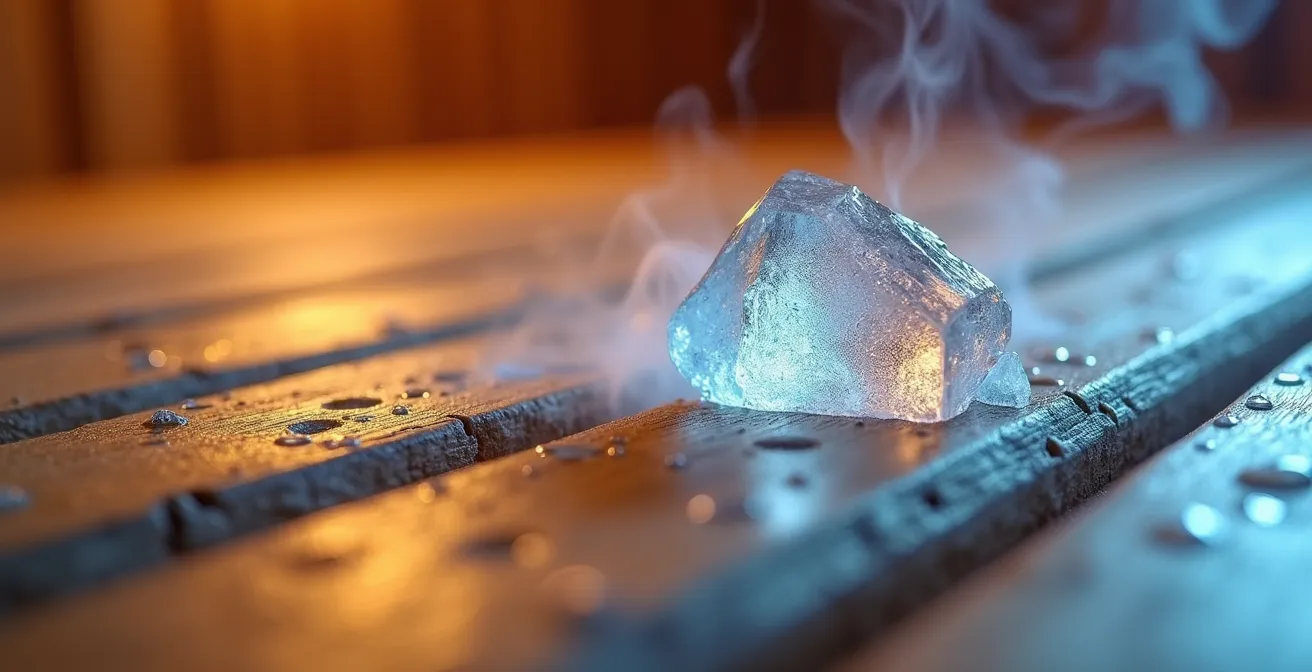
Finally, the third phase is at least 15 minutes of rest in a designated quiet area. This is where the magic happens. Your cardiovascular system stabilizes, your mind clears, and a feeling of profound calm and well-being settles in. Skipping this step is like brewing tea and not drinking it; you miss the entire payoff. Repeating this entire cycle 3-4 times during your visit is what creates a lasting sense of rejuvenation that goes far beyond simple relaxation.
Day spa or hotel: how to enjoy the facilities without paying for the night?
The misconception that a spa day requires an expensive overnight stay is a major barrier for many Torontonians. The reality is that the region’s premier Nordic spas are built around a “day spa” model, making them perfectly suited for a transit-accessible micro-retreat. The key is purchasing a thermal experience pass, which grants you access to all the core hydrotherapy facilities—saunas, steam rooms, hot pools, cold plunges, and relaxation areas—for a full day, without the cost of a hotel room.
This model makes world-class wellness incredibly accessible. For example, the most transit-friendly option from downtown, Thermëa Spa Village in Whitby, is just a GO Train ride and a short 10-minute cab from the station. Their day pass allows you to immerse yourself in the full experience from morning until night. Other spas in the region, while sometimes requiring more complex transit connections, operate on the same principle, offering a full day of escape for a set price.
To help you choose, here is a comparison of the primary Nordic spas in the Greater Toronto Area, focusing on accessibility and offerings for a day-tripper. This data helps to demystify the options and plan your urban escape.
| Spa Location | Day Pass Price | Transit Access | Key Features |
|---|---|---|---|
| Thermëa Whitby | $110 | GO Train + Bus/Taxi | 8 saunas, 8 baths, 3 restaurants |
| Vettä Barrie | $135-160 | GO Train to Barrie | Finnish-inspired, quiet zones |
| Scandinave Blue Mountain | $85-105 | Limited transit | Silence policy, mountain views |
By focusing on the day pass, you transform the spa from a once-a-year vacation into a repeatable, integral part of your urban wellness routine. It’s an affordable and efficient way to access a profound sense of peace without ever needing to pack an overnight bag.
The Tuesday morning slot: why take a day off to go to the spa?
The thought of using a precious vacation day for a spa visit might seem indulgent, but it is one of the most strategic decisions you can make for a truly restorative experience. Weekends at spas are often bustling, filled with groups and a level of social energy that can detract from the goal of deep quiet. A Tuesday morning, by contrast, offers a sanctuary of near-solitude. The reduced number of guests means more space in the saunas, uninterrupted moments in the relaxation lounges, and a pervasive sense of calm that is simply unattainable on a Saturday afternoon.
There’s also a significant practical advantage for the transit-savvy Torontonian: cost savings. Traveling on a weekday morning means you’re using the GO Train during off-peak hours. As a PRESTO card user, this translates to real savings on your journey. For instance, GO Transit offers substantial savings with PRESTO during these less-travelled times, making the entire trip more economical. This frames your “transit-as-transition” time not only as a mental buffer but also as a smart financial choice.
Furthermore, an off-peak visit allows you to embrace less-than-perfect weather, which can be a blessing in disguise. Many people avoid the spa on a rainy day, but this is often when the experience is most magical. As the team at Vettä Nordic Spa notes, this is a time for cozy replenishment:
Rainy days are quieter and magical. We have comfortable relaxation areas. Our saunas and hot baths will keep you warm.
– Vettä Nordic Spa, Vettä Nordic Spa Official Website
Choosing to go on a weekday is a conscious act of prioritizing your well-being over the conventional use of time off. It is an investment in a higher quality of rest, ensuring that every moment—from the quiet train ride to the peaceful thermal cycle—contributes to a deeper state of decompression.
RMT or relaxation: do you need a receipt for your insurance?
While the thermal cycle is the heart of the Nordic spa, many offer an additional layer of therapeutic care: massage treatments. For those with extended health benefits, this presents a valuable opportunity to combine a day of relaxation with a treatment that can be partially or fully covered by insurance. The key is understanding the distinction between a relaxation massage and a treatment by a Registered Massage Therapist (RMT). Only a massage performed by an RMT registered in Ontario will be eligible for an insurance receipt.
Booking an RMT at a spa requires a bit of planning. These appointments, especially at popular locations, can be booked weeks or even months in advance. It’s a service that bridges the gap between a wellness indulgence and a legitimate health treatment, making it a highly sought-after amenity. When you book, you are not just paying for a massage; you are investing in a therapeutic session that can address specific physical ailments, from muscle tension caused by sitting at a desk to soreness from a workout routine.
The serene environment of the spa enhances the therapeutic effects of the massage, creating a holistic experience that a city clinic can’t always replicate. Imagine receiving a deep-tissue treatment and then immediately continuing your relaxation in a quiet solarium or a warm pool, rather than stepping back out into the noise of a busy street.
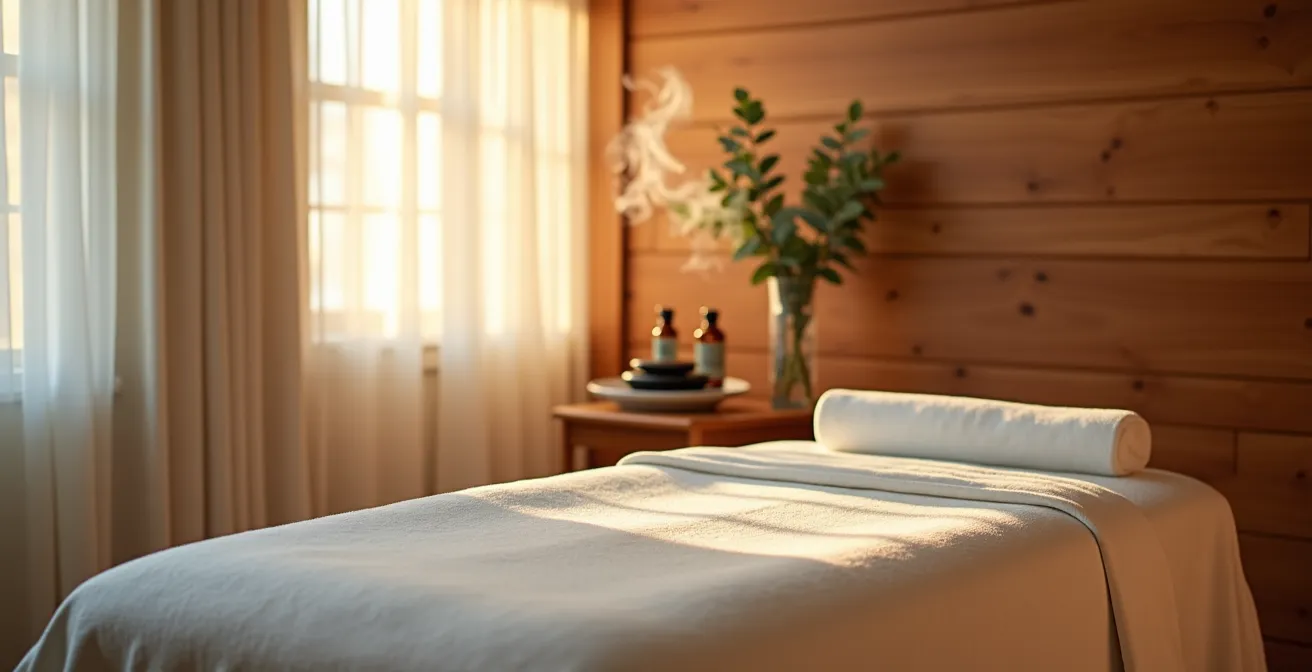
Navigating the process to ensure your treatment is covered is straightforward if you follow a few key steps. It involves verifying your therapist’s credentials and ensuring you keep all the necessary paperwork for your claim.
Your Action Plan: Navigating RMT Insurance at an Ontario Spa
- Verify your RMT is registered with the College of Massage Therapists of Ontario (CMTO).
- Book weekday appointments for better availability with spa RMTs.
- Request to be added to cancellation lists for last-minute openings.
- Compare spa RMT prices (e.g., $175/60min at Thermëa) versus local clinics to assess value.
- Keep all receipts with the RMT’s registration number for your insurance claims.
By planning ahead for an RMT treatment, you can elevate your spa day from a simple luxury to a strategic investment in your long-term health and well-being.
Beach or hot studio yoga: which practice to decompress from the journey?
For many wellness-minded Torontonians, a spa day isn’t an isolated event but a peak moment within a larger “wellness circuit.” The journey itself, particularly the transit time, becomes an opportunity for decompression. This is often complemented by another practice, like yoga, to prepare the body and mind. The question then becomes: what kind of practice best syncs with a Nordic spa day? Do you opt for a grounding, nature-focused session on a beach or a heat-acclimatizing class in a hot studio?
A gentle, restorative yoga session before your spa visit can be hugely beneficial. It helps to release initial layers of tension and primes the body for the thermal cycle. A practice focused on slow, mindful movements and deep breathing—perhaps in a quiet park or even a dedicated yoga studio in a character-filled area like the Distillery District—can serve as the perfect prelude. This creates a seamless transition from the city’s energy to the spa’s tranquility.
The integration of these activities is a common strategy for local wellness enthusiasts. It’s not unusual to see people combining a morning yoga class in the city with an afternoon spa visit via the GO Train. This approach turns the entire day into a curated experience. For example, a popular circuit involves a morning yoga session followed by a trip to Thermëa Whitby, the most easily accessible Nordic Spa from Toronto without a car, effectively creating a full-day, multi-faceted urban retreat.
Conversely, a gentle, restorative yoga practice *after* the spa day can help to prolong the benefits of the thermal cycle, easing the body back into its normal rhythm and solidifying the sense of calm. The choice depends on your goal: use yoga to prepare for deep relaxation, or use it to integrate that relaxation back into your life. Both approaches deepen the overall impact, turning a simple spa visit into a more holistic wellness journey.
How to find work-life balance in the hustle and bustle of Toronto?
Finding work-life balance in a city as ambitious and fast-paced as Toronto can feel like a constant struggle. The pressure to be always-on, connected, and productive can easily erode personal time, leading to burnout. The solution is not to work less hard, but to rest more intelligently. This is where integrating a regular, accessible spa day ceases to be a luxury and becomes a fundamental tool for sustainable urban living and a cornerstone of genuine work-life equilibrium.
A scheduled spa day acts as a hard stop in your calendar—a non-negotiable appointment with yourself. It forces a complete disconnect from screens, emails, and deadlines. The environment of a Nordic spa, particularly those with enforced silent zones, makes it impossible to do anything but be present. This is not passive rest; it’s an active practice of mindfulness and sensory awareness. As the experts at Thermëa Spa Village note, the ritual itself is a form of mental training.
The intentional practice of moving through the thermal cycle encourages mindfulness, letting you be fully present in the moment.
– Thermëa Spa Village, The Thermal Cycle: An Ancient Practice for Modern Wellness
This forced mindfulness breaks the cycle of chronic stress. By making the trip via GO Train, you use the transit time to transition out of your work mindset. Reading a book, listening to music, or simply watching the landscape pass by becomes a deliberate buffer between your professional and personal states. By the time you arrive at the spa, you are already halfway to a state of relaxation. Scheduling these visits monthly transforms them from a reactive cure for burnout into a proactive strategy for maintaining balance, ensuring you consistently replenish your mental and physical reserves before they run empty.
How to visit Ripley’s Aquarium without the peak-time crowds?
A common challenge for any Torontonian or tourist is navigating the city’s popular attractions without being overwhelmed by crowds. The same strategy used to find tranquility at a spa—visiting during off-peak hours—applies directly to places like Ripley’s Aquarium. To truly enjoy the mesmerizing glide of the sharks or the vibrant dance of the jellyfish, an early morning, weekday visit is essential. But the connection goes deeper: you can strategically pair a high-stimulation experience like the aquarium with a low-stimulation spa day to create a perfectly balanced urban adventure.
Imagine starting your day downtown, immersed in the dazzling underwater world of Ripley’s. By showing your PRESTO card, you can even make the experience more affordable; for example, at Ripley’s Aquarium, visitors can save 15% off general admission. After a few hours of visual and auditory stimulation, you can then seamlessly transition to your afternoon retreat. A short walk to Union Station and you are on your way to the quiet serenity of a Nordic spa, ready to soothe your senses.
This “sensory balancing” is a powerful way to experience the best of what the region has to offer without feeling overstimulated. The two experiences are not just different; they are complementary opposites, as this comparison illustrates.
| Experience | Ripley’s Aquarium | Nordic Spa | Sensory Level |
|---|---|---|---|
| Visual Stimulation | High – colorful displays | Low – natural views | Opposite |
| Sound Environment | Moderate – crowd noise | Silent zones available | Contrasting |
| Physical Activity | Walking/standing | Rest/float/soak | Complementary |
| Optimal Timing | Early morning | Afternoon/evening | Sequential |
By pairing these activities, you curate a day that is both exciting and deeply restorative. It’s a testament to the idea that finding balance in Toronto is not about choosing one or the other, but about learning how to artfully combine the city’s vibrant energy with its hidden pockets of calm.
Key Takeaways
- True urban wellness is achieved by integrating regular, accessible relaxation into your routine, not through rare, lengthy escapes.
- The GO Transit network is a key tool, transforming travel time into a deliberate transition phase and making world-class spas accessible without a car.
- Maximizing restoration depends on respecting the hot-cold-rest thermal cycle, choosing off-peak times, and leveraging health benefits like RMT coverage.
Neighbourhood café: how to start a conversation with a Torontonian without being intrusive?
After a day spent in the quiet introspection of a Nordic spa, re-entering the social fabric of Toronto can feel like a shift in consciousness. The same question of social navigation arises, whether at the spa itself or in a cozy neighbourhood café the next day: how does one connect with others without being intrusive? Torontonians are often characterized as polite but reserved, and understanding the unspoken rules of engagement is key. The answer, much like the design of a good spa, lies in reading the context.
Modern Nordic spas are cleverly designed with this in mind. They feature both designated silent zones for complete solitude and social areas like bistros or certain pools where quiet conversation is welcome. This mirrors Toronto’s broader social culture. For example, at Thermëa Whitby, respectful conversation is encouraged in some areas while others are strictly for silence. This teaches a valuable lesson: look for the signals. Are people making eye contact? Are they engrossed in a book or wearing headphones? The environment dictates the etiquette.
This skill of “reading the room” is directly transferable to any social setting in Toronto. In a café, a shared moment—a comment about the great coffee, the rainy weather, or even a book someone is reading—can serve as a safe, low-stakes opener. The goal isn’t to force a deep connection but to acknowledge a shared experience. It’s about being open to interaction while deeply respecting the other person’s space and desire for privacy, a balance that the spa experience so perfectly embodies.
Ultimately, the calm and heightened awareness cultivated during a spa day can make you a more observant and considerate social actor. You return to the city not just rested, but more attuned to the subtle cues of those around you, able to navigate the social landscape with the same mindfulness you practiced in the sauna.
For those ready to integrate this powerful wellness practice into their lives, the next step is to plan your first transit-accessible journey. Begin by exploring the day pass options and GO Train schedules to find a time that works for you, and commit to making this ritual of urban decompression a regular part of your routine.
Frequently asked questions about What Nordic spas are accessible by transit from downtown Toronto?
Should I do yoga before or after the thermal cycle?
Gentle yoga before helps prepare the body for heat exposure, while restorative poses after enhance the relaxation benefits of the thermal cycle.
What breathing techniques enhance the spa experience?
Practice deep diaphragmatic breathing during the hot phase, quick energizing breaths during the cold plunge, and slow mindful breathing during rest periods.
Are there yoga classes at Toronto-area Nordic spas?
While most Nordic spas focus on thermal experiences, some offer special wellness events including guided meditation and gentle movement sessions.