
The secret to experiencing the real Kensington Market isn’t what you do, but how you do it—by syncing with its unique, anti-gentrification rhythm.
- Timing is everything: Avoiding specific hours and days transforms your visit from a crowded nightmare into an authentic stroll.
- Authenticity has signals: Learn to spot the difference between curated vintage and bulk clutter, and know the signs of a can’t-miss street performance.
Recommendation: Stop treating the market like a checklist. Start observing its flow, engage with its people, and you’ll uncover the gems hidden in plain sight.
You see them every weekend. Wide-eyed visitors clutching a list, marching down Augusta Avenue on a mission. They snap a photo of a graffiti wall, grab a taco from the place everyone talks about, and buy a t-shirt. They’ve “done” Kensington Market. But they haven’t experienced it. They’ve just skimmed the surface, a predictable tour that misses the entire point.
For decades, this neighbourhood has been the city’s stubborn, beating heart. It’s a chaotic symphony of cultures, smells, and sounds that refuses to be tamed or turned into a polished, predictable theme park like so many other parts of Toronto. The usual advice—”go on a Pedestrian Sunday,” “try the food”—is fine, but it’s incomplete. It leads you straight into the crowds and away from the soul of the place.
But what if the key wasn’t a better list of things to see, but a different way of seeing? The real Kensington experience is about learning its rhythm, reading its unspoken signals, and understanding the forces that keep its gritty, independent spirit alive. It’s about moving with its flow, not against it. This isn’t a guide for tourists. It’s a manual for those who want to understand the market from the inside out.
This article will break down the unwritten rules of Kensington. We’ll explore why it has resisted the sterile march of gentrification, how to strategically navigate its vintage shops and food scene, and the critical timing errors that most visitors make. Prepare to see the market not as a destination, but as a living ecosystem.
Summary: A Local’s Playbook for Navigating Kensington Market
- Why has Kensington Market resisted gentrification unlike other neighbourhoods?
- Vintage or New: how to unearth unique pieces in the boutique maze?
- Pedestrian Sunday: what’s the best strategy for tasting everything without the queues?
- The timing error that turns your bohemian stroll into a crowd nightmare
- What are the tell-tale signs of an unmissable street performance?
- How to spot the best food trucks in Toronto before they change location?
- How to spend a ‘West Queen West’ day like a true trendy local?
- Kensington culinary tour: how to manage your appetite to survive 6 tastings?
Why Has Kensington Market Resisted Gentrification Unlike Other Neighbourhoods?
Walk through Kensington, and you feel it instantly: a raw, unpolished energy that has been scrubbed clean from so many other Toronto hotspots. This isn’t an accident; it’s by design. The neighbourhood is protected by a cultural and legal “gentrification firewall” that other areas lack. While districts like West Queen West have seen independent shops replaced by mainstream brands, Kensington holds the line thanks to its powerful community spirit and, crucially, its official status as a Heritage Conservation District (HCD).
This isn’t just a fancy plaque. Under the Ontario Heritage Act, the HCD designation imposes strict rules. Any plans for demolition, major alterations, or new construction must go through a rigorous permit process. This effectively blocks the large-scale, cookie-cutter redevelopment that would kill the market’s character. The process to secure this was a long-fought battle, with the city officially approving the designation after a study that began in 2015 and culminated in a final decision on January 8, 2025, when Toronto cemented its HCD status.
This legal shield empowers the neighbourhood’s true guardians: its residents and multi-generational shop owners. They have actively fought to maintain the area’s affordability and eclectic mix of small businesses. This collective will is the soul of the firewall, ensuring that Kensington remains a place of authentic commerce and community, not just a backdrop for Instagram photos. It’s a living museum of what Toronto used to be, preserved not in amber, but in brick, mortar, and fierce independence.
Vintage or New: How to Unearth Unique Pieces in the Boutique Maze?
The vintage shops in Kensington can be overwhelming. Racks overflow, and the line between treasure and trash feels impossibly thin. The tourist approach is to wander aimlessly. The local’s strategy is to learn the difference between curated collections and cluttered inventory. Not all vintage is created equal, and the key is to read the signals the shops are sending.
Start by observing the shop’s philosophy. Places like Courage My Love are beloved institutions, a chaotic wonderland where you can find everything from cowboy boots to cashmere and DIY beading supplies. Next door, Sub Rosa Vintage offers a more edited experience with higher-end, curated pieces and an excellent denim selection. One is a dig, the other is a gallery. Knowing what you’re in for is half the battle. For a truly unique find, look for new pieces by Toronto-based designers often sold within these vintage havens—a perfect fusion of old and new.

The ultimate pro-tip, however, goes beyond the clothes on the rack: engage the shopkeepers. Ask about an item’s origin. A passionate owner who can tell you the story behind a piece is a sign of a truly curated shop. An indifferent shrug tells you it’s likely bulk-bought filler. This simple interaction is a powerful filter. To get the best access, visit on a weekday morning. You’ll avoid the crowds and get first dibs on new stock before the weekend rush picks it clean.
Pedestrian Sunday: What’s the Best Strategy for Tasting Everything Without the Queues?
Pedestrian Sundays are the market at its most vibrant and, potentially, its most frustrating. From May to October on the last Sunday of the month, the streets transform into a massive block party with music, performers, and incredible food. The common mistake is to arrive late and follow the herd, which guarantees you’ll spend more time in line than eating. The secret is a simple two-part strategy: timing and tactical navigation.
First, timing. While a local food tour guide notes that the streets officially close to cars at 1 PM, most food vendors are set up and ready by noon. That one-hour window is your golden opportunity. Arriving at noon allows you to get your first few bites in before the main surge of humanity descends. The atmosphere is buzzing but manageable, a perfect prelude to the full-blown festival to come.
Second, navigation. The main flow of traffic comes from Spadina Avenue, creating a bottleneck. Don’t be part of it. The superior strategy is to start on the periphery and work your way in. Begin your food crawl on the outer edges, like Dundas or College Street, where the lines are shorter. By the time you reach the crowded core of Augusta Avenue, you’ll have already sampled several places and can afford to be more selective, enjoying the performances and atmosphere without the “hanger” setting in. This “outside-in” approach lets you move with the market’s rhythm instead of getting trampled by it.
The Timing Error That Turns Your Bohemian Stroll Into a Crowd Nightmare
Beyond Pedestrian Sundays, the single biggest mistake visitors make in Kensington is a simple failure of timing. Thinking “anytime is a good time” is a recipe for a miserable, shoulder-to-shoulder experience. The market has a distinct daily and weekly rhythm, and understanding its ebbs and flows is the difference between a charming discovery and a stressful ordeal. For starters, many shops and eateries remain closed on Mondays, so a visit then will be disappointingly quiet.
The most chaotic period to avoid is the weekday lunch rush, roughly from 12 PM to 2 PM. During this window, the market is flooded with students from the nearby University of Toronto, and lines for food can be punishing. Conversely, the true “golden hour” for a relaxed stroll is between 3 PM and 5 PM on a weekday. The lunch crowds have vanished, the shops are all open (many vintage stores don’t open until noon), and the late afternoon sun gives the neighbourhood a magical glow. This is when you can browse in peace and have genuine conversations.
Seasonal timing is just as critical. The first warm, sunny Saturday in spring is universally a bad idea, as the entire city has the same thought. You’re better off waiting a week or two. Also, be aware of major city-wide events like TIFF or Pride. While not in the market itself, they create overflow crowds that spill into the neighbourhood, making it unexpectedly busy. Always do a quick check for conflicting major events before you plan your visit.
Your Anti-Crowd Game Plan: A Timing Audit
- Visit Plan: Check your intended day. Is it a Monday? Reschedule. Is it the first sunny Saturday of spring? Postpone.
- Time Slot: Are you planning to arrive between noon and 2 PM on a weekday? Shift your visit to the 3-5 PM golden hour instead.
- Event Overlap: Do a quick search for major Toronto festivals (TIFF, Pride, etc.) happening on your planned day. If there’s a conflict, expect bigger crowds.
- Shop Openings: If you’re focused on vintage, plan to arrive after noon, as many stores have a late start. Don’t show up at 10 AM expecting everything to be open.
- Exit Strategy: Know when the shops close. According to local business data, most shops operate between 10 a.m. and 6 p.m. on weekdays, so don’t plan a late-night shopping trip.
What Are the Tell-Tale Signs of an Unmissable Street Performance?
Street performances are the lifeblood of Kensington’s public spaces, but their quality can be wildly inconsistent. For every breathtaking musician, there are a dozen forgettable acts. Tourists flock to the biggest crowd, but locals know that crowd size isn’t the best metric. The real sign of a must-see performance is more subtle: you have to read the audience, not just count it.
The unofficial main stage of the market is Bellevue Square Park, home to a statue of Al Waxman (the “King of Kensington”). This is where many of the best concerts and impromptu shows happen. When you see a performance gathering there, ignore the tourists with their phones out. Look at the doorways of the surrounding shops. Are the shopkeepers and staff standing there, watching? If the people who see performers every single day have stopped what they’re doing to listen, you know you’re witnessing something special. This is the ultimate seal of approval.
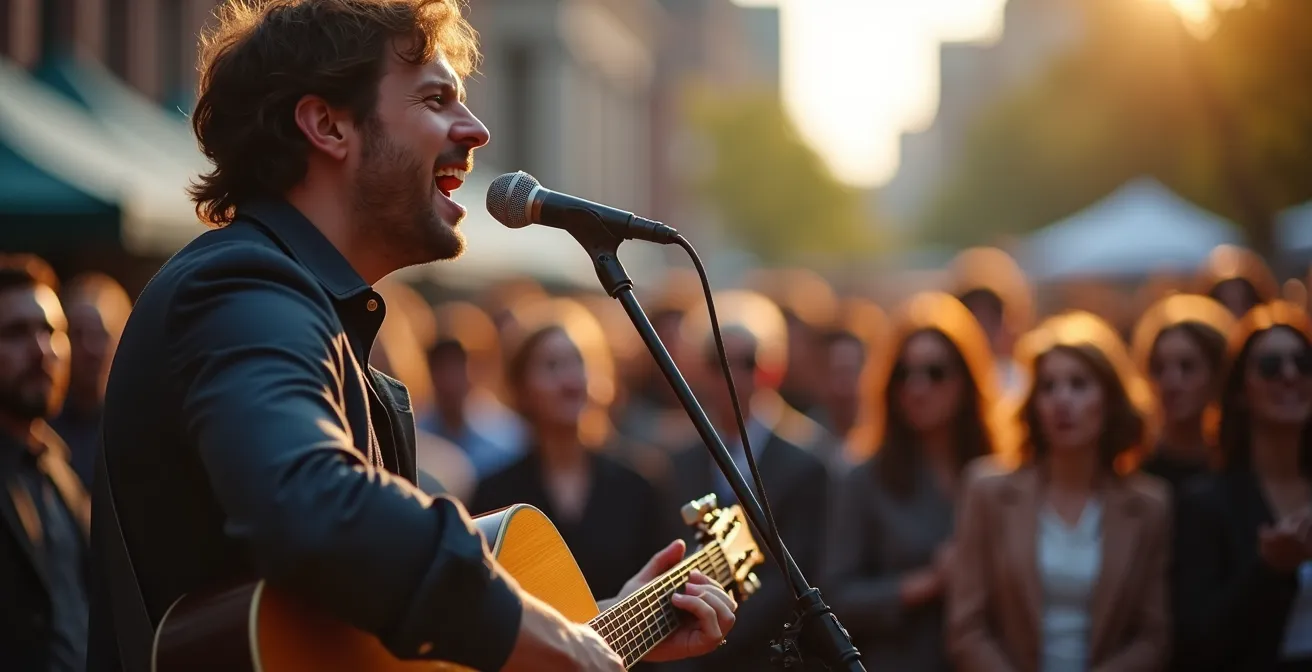
These are often the beloved regulars, the artists who are part of the market’s fabric. Their performances are more than just a show; they are a community gathering. A crowd of locals indicates a performance with history and heart. A crowd of tourists might just mean it’s loud. So, next time you’re in the park, look for the audience of experts. It’s the most reliable sign that you should stop and listen.
How to Spot the Best Food Trucks in Toronto Before They Change Location?
Many visitors come to Kensington expecting to find a fleet of trendy food trucks. Here’s the most important piece of insider information you’ll get: there are none. In a move that protects the market’s brick-and-mortar restaurants, strict bylaws mean that there are zero food trucks operating inside Kensington Market proper. So, if your goal is to hunt down Toronto’s best mobile eats, you need to look just outside the market’s borders and use a digital strategy.
Your first move should be to download a tracking app. The ‘Street Food App’ or the website torontofoodtrucks.ca provide real-time maps of truck locations across the city. This is the most reliable way to know who is where on any given day. Food truck owners are savvy with social media, so following your favourites on Instagram or Twitter is essential for their daily location announcements and specials.
Another pro-tip is to follow Toronto’s craft breweries, such as Bellwoods, Blood Brothers, or Left Field. They often have rotating food trucks parked outside their taprooms, creating a perfect food-and-drink pairing. Finally, check the peripheries of the market during major events or look for permitted spots near the University of Toronto campus or the hospital complexes along University Avenue. The trucks are out there, but they’re not in the market—knowing that is the first step to actually finding them.
How to Spend a ‘West Queen West’ Day Like a True Trendy Local?
To truly understand what makes Kensington special, you have to understand what it’s not. And the perfect contrast is a day spent in West Queen West. Named one of the coolest neighbourhoods in the world, WQW represents Toronto’s more polished, curated, and trendy side. A day there is less about chaotic discovery and more about a well-defined, fashionable ritual.
The experience is anchored by Trinity Bellwoods Park. The local routine is almost a script: grab a high-end coffee from Sam James or Found Coffee, pick up an exquisite pastry from Nadege, and then settle in the park for prime people-watching. The shopping that follows is less about digging for vintage and more about browsing independent boutiques and art galleries. The real heart of the local scene isn’t on Queen Street itself, which has become more commercialized, but on the Ossington Avenue strip between Queen and Dundas. This is where you’ll find the hidden-patio bars, niche restaurants, and galleries that the trend-setters frequent.
The difference between the two neighbourhoods is stark, and understanding it is key. Kensington is bohemian and gritty; WQW is curated and polished. One is about multicultural food stalls, the other is about designer boutiques.
| Aspect | Kensington Market | West Queen West |
|---|---|---|
| Character | Bohemian, gritty, multicultural | Curated, polished, trendy |
| Shopping Focus | Vintage excavation, global foods | Boutiques, art galleries |
| Best Time | Pedestrian Sundays (May-Oct) | Patio season (June-October) |
| Transport | 506 College or 510 Spadina streetcar | 505 Dundas streetcar |
| Crowd Type | Students, artists, immigrants | Young professionals, creatives |
Key Takeaways
- Kensington’s character is protected by a Heritage Conservation District designation, making it a “gentrification firewall.”
- The best time to visit is a weekday afternoon (3-5 PM); avoid the student lunch rush and Monday closures.
- True vintage finds are identified by engaging with passionate shopkeepers, not just by browsing racks.
- On Pedestrian Sundays, arrive at noon (before the 1 PM street closure) and navigate from the outside-in to beat the crowds.
Kensington Culinary Tour: How to Manage Your Appetite to Survive 6 Tastings?
With over 240 shops and restaurants packed into a few small blocks, Kensington is a minefield for the unprepared appetite. Going in without a plan means you’ll be full after two stops, missing out on the incredible diversity. The key is “Strategic Grazing”: a tactical approach that lets you sample a half-dozen places or more without hitting a wall.
The first rule is to share everything. One item per stop, split between your group, is the only way to maximize your tasting potential. The second rule is to structure your tour by richness. Start with lighter, savoury items. A single Jamaican patty or half an empanada is a perfect opening. From there, you can progress to richer foods like the legendary tacos at Seven Lives or a small poutine. Save the sweets, like churros or a pastry from a place like Blackbird Baking Co., for the end of your tour.
Don’t forget to hydrate, but do it strategically. Between every two food stops, grab a fresh coconut water or a unique imported soda from one of the many fruit and vegetable markets. Finally, expand your definition of a “tasting.” It doesn’t always have to be a hot, prepared meal. Incorporate stops for non-cooked items to give your palate a break. Sample some aged cheese from Global Cheese or try an exotic fruit you’ve never seen before from a Caribbean grocer. This variation is the secret to a long and successful culinary exploration.
This isn’t a museum. It’s a living, breathing neighbourhood that rewards observation and respect. So take these rules, internalize them, and then go put them into practice. Find your own rhythm, discover your own hidden gems, and become the kind of visitor the market welcomes, not just tolerates.