
The secret to an affordable Toronto family vacation isn’t just cutting costs—it’s mastering logistics and timing to unlock hidden value.
- Strategic accommodation choices, like university residences or suburban GO Train hubs, can cut lodging costs by up to 50%.
- Timing your visits to major attractions (e.g., after 7 PM at Ripley’s) saves money and drastically improves the experience by avoiding crowds.
Recommendation: Adopt a “hub-and-spoke” travel model: stay in a more affordable area like Port Credit or Pickering and use the efficient GO Transit system to get downtown.
The moment you start planning a family trip to Toronto, you’re hit with a dose of reality: the sticker shock of downtown accommodation. For a family of four, a week-long stay can feel like it consumes the entire vacation budget before you’ve even bought a single butter tart. The standard advice floods in immediately: stay in a distant suburb, eat only sandwiches, and stick to the free parks. While well-intentioned, this approach often trades cost for convenience, leaving you with tired kids and long, frustrating commutes.
But what if the key to an affordable and enjoyable Toronto vacation wasn’t about relentless penny-pinching? What if, instead, it was about strategic planning and thinking like a savvy local parent, not a typical tourist? The real secret lies in mastering logistics and timing. By understanding concepts like “time arbitrage”—trading peak hours for lower prices and smaller crowds—and using strategic “logistical hubs,” you can dramatically reduce costs without sacrificing the experiences your family is excited about.
This guide moves beyond the generic tips. We’ll show you precisely when to book to get the best rates, how to create a food strategy that’s both delicious and budget-friendly, and how to navigate the city’s transit system like a pro. Forget compromise; it’s time to plan a smarter vacation that maximizes both your budget and your family’s fun.
text
To help you navigate these strategies, this guide is broken down into key areas of planning. From accommodation and food to navigating attractions and transport, you’ll find a clear path to building a memorable and affordable Toronto family adventure.
Summary: Your Blueprint for a Budget-Friendly Toronto Family Getaway
- When to book your vacation rental for the best summer rates?
- Cooking vs. restaurant: what strategy to adopt for feeding a family of 4 for a week?
- The MAT tax and tips: how to anticipate the 20% extra costs?
- Ripley’s or the Zoo: which attraction offers the best time/price value for kids under 10?
- City Sightseeing Bus or public transport: the comparison for a tired family
- How to visit Ripley’s Aquarium without suffering the peak day crowds?
- How to organize a perfect day at the Toronto Islands without missing the last ferry?
- How to combine car and public transport to cross the GTA efficiently?
When to book your vacation rental for the best summer rates?
The single biggest factor in your Toronto accommodation budget is timing, but not in the way most people think. It’s not just about booking early; it’s about booking *smartly*. The most effective strategy is a form of time arbitrage: identifying windows when demand temporarily drops, even during the popular summer months. Major city-wide events like Pride Toronto or Caribana cause accommodation prices to spike. The key is to schedule your visit for the week immediately following these events.
Case Study: Post-Event Price Drops
An analysis of Toronto’s rental market shows a clear pattern. In the week after Pride, average nightly rates for family-sized units can fall from $280 to as low as $195. Similarly, post-Caribana, prices often decrease from over $300 to around $210. By simply shifting their travel dates by one week, a family can save over $500 on a seven-night stay while still enjoying peak summer weather.
Another powerful, often overlooked option is booking a stay at a university residence. From May to August, universities like the University of Toronto and Toronto Metropolitan University rent out their empty dorm rooms. These aren’t spartan single rooms; many offer family suites with multiple bedrooms and even kitchenettes. A family suite can cost between $80-$120 per night, a stark contrast to the $250+ you’d pay for a comparable downtown hotel. The best selection is typically available 60-90 days in advance, making it a perfect target for spring planning.
Cooking vs. restaurant: what strategy to adopt for feeding a family of 4 for a week?
Feeding a family of four in a major city can quickly drain your funds, with travel budget data suggesting an average food cost of $244 CAD per day for a family of 4 in Toronto. While eating out every meal is a budget-buster, a “cook everything” approach can feel like a chore on vacation. The best strategy is a hybrid model that balances convenience, cost, and the local experience. Dedicate your budget to one or two memorable restaurant meals and supplement the rest with smart grocery shopping and picnics.
Your choice of grocery store matters immensely. For stocking up on basics like pasta, cereal, and snacks, budget chains like No Frills or FreshCo are your best bet, offering prices 20-30% below the city average. However, don’t miss the experience of a place like St. Lawrence Market. While it carries a premium, it’s the perfect place to assemble an iconic Toronto picnic: peameal bacon sandwiches, local cheeses, and fresh-baked butter tarts. This turns a meal into a memorable activity.

A smart food plan might look like this: have breakfast in your rental every day, pack lunches and snacks for your daytime adventures (saving you from expensive attraction food), and alternate between cooking a simple dinner and enjoying a meal out. This blend allows you to control costs for about 70% of your meals while still indulging in Toronto’s vibrant food scene without guilt. This approach can bring a family’s weekly food budget down to a manageable $200-$250 CAD.
The MAT tax and tips: how to anticipate the 20% extra costs?
One of the most common budget pitfalls for visitors to Toronto is underestimating the “hidden” costs associated with accommodation and dining. The price you see advertised is rarely the final price you pay. Understanding these extras upfront is crucial to avoiding a nasty surprise on your credit card statement. In Toronto, accommodation taxes alone can add a significant amount to your bill.
The two main charges to be aware of are the 4% Municipal Accommodation Tax (MAT) and the 13% Harmonized Sales Tax (HST), which is applied on top of both the base rate and the MAT. This compounding effect means you’re looking at a total tax of over 17% on your stay. Furthermore, platforms like Airbnb and Vrbo add their own service fees (10-15%), and most rentals have a separate cleaning fee ($50-$150). If your accommodation doesn’t include parking, that’s another $25-$40 per day downtown. Suddenly, a $200/night rental can easily become $275/night in reality.
For dining, the standard tipping etiquette in Toronto is 15-20% for sit-down restaurant service, calculated on the pre-tax amount. This is not optional and is a standard part of service industry compensation. To avoid stress, simply get into the habit of mentally adding 20% to any advertised accommodation rate and 15% to any restaurant menu price. This simple mental adjustment will give you a much more realistic picture of your actual expenses and keep your budget on track.
Ripley’s or the Zoo: which attraction offers the best time/price value for kids under 10?
When you have young children, choosing attractions isn’t just about the ticket price; it’s about “value density.” How much engagement and fun can you pack into each dollar and hour spent, especially for shorter attention spans? Let’s compare two of Toronto’s top family attractions: Ripley’s Aquarium and the Toronto Zoo. While both are fantastic, they serve very different needs for a family with kids under 10.
Ripley’s Aquarium is centrally located, making it incredibly accessible. The experience is concentrated and visually spectacular, perfect for holding a younger child’s attention for its 2-3 hour duration. The Toronto Zoo, on the other hand, is a full-day commitment requiring a 45-60 minute drive from downtown. It’s sprawling and best for active kids who love animals and have the stamina for a lot of walking. The Zoo is less expensive per person, but Ripley’s offers a higher “value density” for families short on time or with less-mobile children.
This table breaks down the core differences, based on recent analysis from travel guides.
| Attraction | Adult Price | Child Price | Duration | Travel Time from Downtown | Best For |
|---|---|---|---|---|---|
| Ripley’s Aquarium | $44 CAD | $29 CAD | 2-3 hours | 0 min (downtown) | Shorter attention spans, easy access |
| Toronto Zoo | $35 CAD | $25 CAD | Full day | 45-60 min | Active kids, outdoor enthusiasts |
| Ontario Science Centre | $28 CAD | $21 CAD | 4-5 hours | 30 min | Curious, hands-on learners |
The ultimate value hack, however, comes from strategic timing. As a case study on family experiences showed, booking Ripley’s “Sharks After Dark” experience (entry after 7 PM) not only saves a family of four around $32 on tickets but also provides a calmer, less overwhelming environment with 50% fewer crowds. For kids under 10, this can mean the difference between an exciting adventure and a stressful sensory overload.
City Sightseeing Bus or public transport: the comparison for a tired family
Navigating a huge city with tired kids is a logistical challenge. The Hop-on-hop-off sightseeing buses seem like an easy solution: they take you to all the major sites with commentary and no need to navigate. However, for a family of four, this convenience comes at a steep price, often running between $160-$200 CAD for a single day. For a budget-conscious family, Toronto’s public transit system, the TTC, offers a vastly more affordable and surprisingly effective alternative.
The key is the TTC’s family pass. As highlighted by budget travel experts, on weekends and holidays, a single Family Weekend Pass costs just $13.50 CAD and provides unlimited travel for up to two adults and four children. Even on weekdays, two adult day passes would total around $27, a fraction of the sightseeing bus cost. While this requires a bit more planning, the TTC network of subways, streetcars, and buses is extensive and can get you almost anywhere a tourist would want to go.
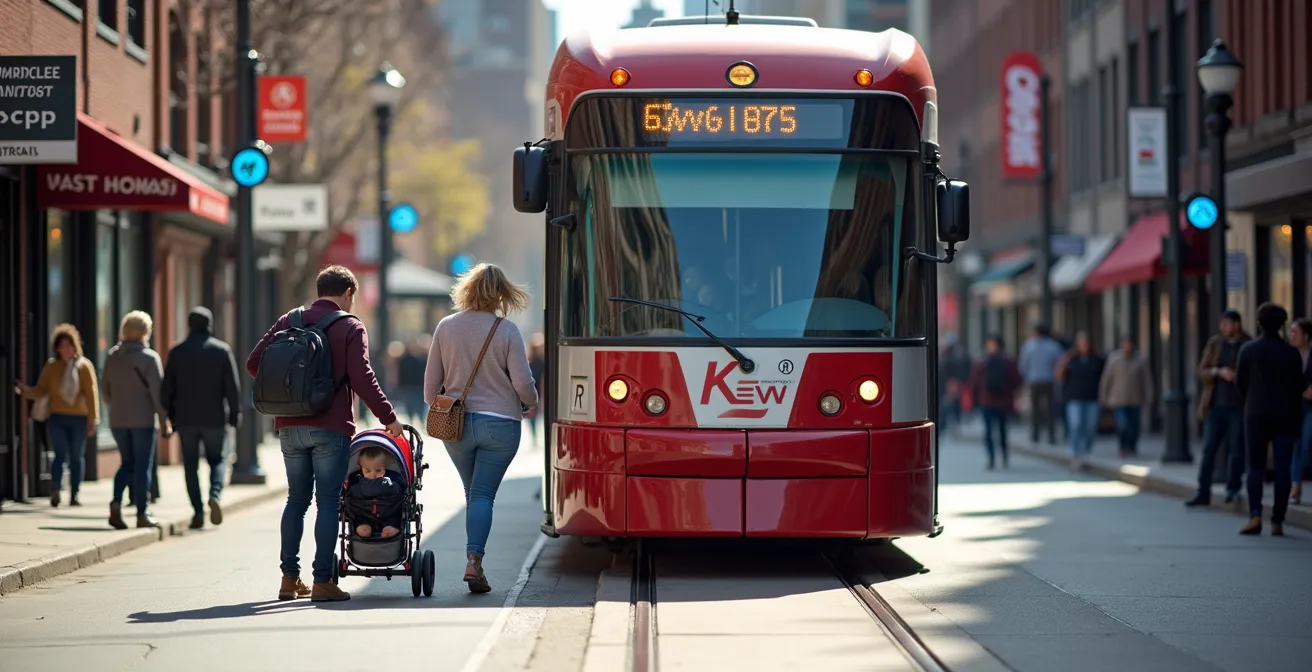
For a dose of authentic Toronto charm, consider using your pass for some “streetcar sightseeing.” The 501 Queen streetcar route is one of the longest in North America, taking you through diverse and interesting neighbourhoods like the artsy West Queen West and the Beaches. Newer streetcars are low-floor, making them much more accessible for strollers. While you won’t get a tour guide’s commentary, you will get a genuine slice of city life for an unbeatable price, leaving more of your budget for attractions and treats.
How to visit Ripley’s Aquarium without suffering the peak day crowds?
Ripley’s Aquarium of Canada is a world-class attraction, which means it draws world-class crowds. For a family with young children, navigating a packed environment can be stressful and diminish the magic of the experience. The good news is that with a little strategic planning, you can experience the stunning marine life without being stuck in a human traffic jam. The absolute worst times to visit are midday on weekends and any school holiday.
The most effective strategy is to go against the flow. The vast majority of visitors arrive between 11 AM and 4 PM. By planning your visit for the very beginning or the very end of the day, you can have a completely different experience. As an added bonus, late-night tickets often come with a discount. Data shows that evening visits to Ripley’s Aquarium see up to 60% fewer visitors after 7 PM, creating a much more relaxed atmosphere for children to get up close to the exhibits.
Another pro-tip is to tour the aquarium backward. Most guests start at the beginning and move sequentially. If you book the first timed entry of the day, head straight to the back (near Ray Bay) and work your way to the front. You’ll be moving against the building crowds and will likely have the famous Dangerous Lagoon shark tunnel nearly to yourself by the time you reach it.
Your Action Plan: Ripley’s Crowd-Avoidance Strategy
- Book the very first timed entry slot (e.g., 9 AM) on a weekday (Tuesday-Thursday are best).
- Arrive 15 minutes before your ticket time to be at the front of the line when doors open.
- Once inside, start your visit at the end of the exhibit (Ray Bay) and work your way backward toward the entrance.
- Alternatively, book a discounted “Sharks After Dark” ticket for entry after 7 PM for the quietest experience.
- Check the Toronto school board calendar online and avoid visiting on professional development days or during spring/fall field trip season (May/June, Sep/Oct).
How to organize a perfect day at the Toronto Islands without missing the last ferry?
A day trip to the Toronto Islands is a quintessential summer experience, offering a peaceful escape from the city bustle with beaches, parks, and stunning skyline views. However, this idyllic day can quickly turn sour with a common logistical mistake: missing the last ferry back. The end-of-day rush creates massive queues, frayed nerves, and the risk of being stranded. A perfect island day requires a simple but counter-intuitive strategy.
Case Study: The ‘Ward’s Island First’ Strategy
Instead of taking the main ferry to the busy Centre Island, a savvy Ottawa family took an early 9 AM ferry to the much quieter Ward’s Island on the east side. They enjoyed a peaceful morning exploring the quaint residential community and beaches. As the midday crowds began arriving at Centre Island, the family simply walked westward across the island, enjoying the parks along the way. By 3 PM, they were already positioned near the Centre Island ferry dock for an easy, early return, completely avoiding the 5 PM queue-pocalypse.
This strategy is the key: start where most people finish. To ensure a stress-free departure, you need to be proactive. Don’t wait until the last minute to head to the ferry dock. Instead, make a plan to be in the queue well before the final departure times, which can be as early as 5 PM in the shoulder seasons.
Here are some essential survival tips for your return trip:
- Set a recurring alarm on your phone for 90 minutes and 60 minutes before the last ferry is scheduled to depart.
- Plan a “wind-down” activity, like a final snack or playground visit, near your chosen departure dock.
- Aim to be physically in the ferry line at least 30-45 minutes before departure, especially on a busy weekend.
- Save the numbers for a few Toronto water taxi services in your phone as an emergency backup. It’s more expensive (around $15 per person), but it’s better than being stranded.
- Always pre-purchase your return ferry tickets online to bypass the ticket-buying queues on the mainland.
Key Takeaways
- The smartest way to save on accommodation is to book your trip in the weeks immediately following major summer events like Pride or Caribana.
- Adopt a “hub-and-spoke” transit model by staying in a cheaper suburban hub and using the efficient GO Train or TTC commuter lots to travel downtown.
- Maximize attraction value by using “time arbitrage”: visit popular spots like Ripley’s Aquarium during off-peak hours (e.g., after 7 PM) to save money and avoid overwhelming crowds.
How to combine car and public transport to cross the GTA efficiently?
For many families, especially those driving into Toronto, the idea of navigating and parking downtown is a nightmare. The solution isn’t to abandon your car, but to use it strategically in a “hub-and-spoke” model. This is the ultimate Greater Toronto Area (GTA) hack: stay in a more affordable suburban hotel with free parking, and use the excellent GO Transit train system as your personal express shuttle into the city core. This gives you the best of both worlds: lower accommodation costs and freedom from downtown traffic and parking fees.
Suburban hubs along the GO Train lines offer incredible value. A hotel in a location like Port Credit (Mississauga) or Pickering can be 40-50% cheaper than a comparable downtown property. From there, it’s a relaxing 35-45 minute train ride directly to Union Station, in the heart of everything. And with the GO Weekend Pass offering families unlimited travel for just $10, it’s an unbeatable deal.
This table from a recent travel analysis shows how a “hub-and-spoke” strategy works in practice, combining accommodation savings with efficient transit.
| Suburban Hub | Hotel Savings vs Downtown | GO Train to Union | Free Parking | Family-Friendly Hotels |
|---|---|---|---|---|
| Port Credit | 40-50% cheaper | 35 min / $8.30 | Yes at station | Multiple options |
| Oakville | 35-45% cheaper | 40 min / $9.70 | Yes at station | Waterfront hotels |
| Pickering | 45-55% cheaper | 45 min / $8.90 | Yes at station | Near shopping |
If you prefer to drive closer, you can use the TTC’s commuter parking lots. For a flat daily rate of around $7, you can park your car at a terminal subway station like Finch, Don Mills, or Kipling and take the subway directly downtown. This is still far cheaper and less stressful than trying to park in the city center. Just be sure to arrive before 9 AM on a weekday to secure a spot. This blended approach frees your budget and your mind from the biggest hassles of visiting a major city.
By shifting your perspective from simple cost-cutting to smart logistical planning, you transform your vacation. It’s no longer about what you have to give up, but about the new, better experiences you unlock. Now that you have the blueprint for a strategic, budget-friendly Toronto adventure, it’s time to start putting the pieces together for your own family’s unforgettable trip.