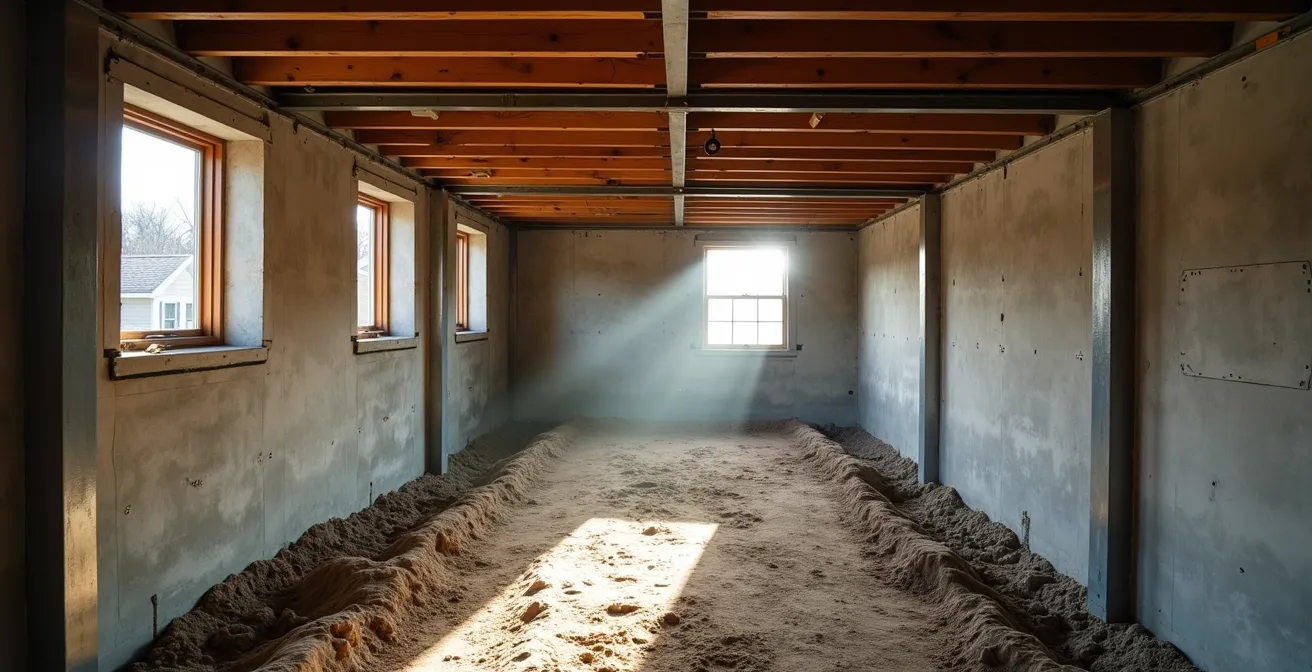
In Toronto’s high-stakes property market, underpinning is not an expense; it is the single most effective strategy for unlocking your home’s hidden structural and financial asset value.
- It directly addresses foundational risks common in Toronto’s older housing stock, turning a potential liability into a solid asset.
- It is the foundational first step required to create a legally compliant, high-revenue secondary suite, a critical income generator in the city.
Recommendation: Approach your underpinning project as a structural engineering mandate first and a renovation second. Prioritize licensed engineering oversight, thorough due diligence, and full compliance from day one to secure your investment.
For many owners of Toronto’s century-old homes, the basement is a dark, low-ceilinged space relegated to storage. The thought of transforming it involves more than just new drywall and flooring; it requires a foundational re-engineering of the home itself. This process, known as underpinning, is often viewed through the narrow lens of its significant cost. This perspective, however, misses the larger picture. In a city with immense pressure on living space, underpinning is not merely about gaining a recreation room; it’s about a fundamental reassessment of your property as a structural asset.
While surface-level renovations may offer aesthetic appeal, they do not alter the core value proposition of your property. Underpinning, by contrast, is a strategic investment that directly mitigates long-term structural risks, such as water ingress and foundation settlement, common in Toronto’s Victorian and Edwardian homes. It is the only method to create the ceiling height necessary for a legally compliant and habitable living space, including a valuable secondary rental suite—a significant advantage in the city’s competitive rental market.
This guide departs from the simple “more space equals more value” narrative. Instead, we will adopt the perspective of a structural engineer to analyze why underpinning represents the most intelligent, albeit complex, capital investment you can make in your Toronto property. We will dissect the process, from identifying structural constraints and navigating the city’s rigorous permit process to managing financial realities and ensuring the long-term integrity of your most valuable asset.
This detailed examination will provide a clear, step-by-step understanding of the structural, legal, and financial mechanics at play. The following sections break down each critical phase, empowering you to make an informed decision based on engineering principles and sound financial strategy.
Summary: A Structural Engineer’s Guide to Underpinning in Toronto
- Open space: how to identify a load-bearing wall before you pick up the sledgehammer
- Spray foam or mineral wool: which insulation for old brick walls?
- Committee of Adjustment: why your structural modification project could take 6 months
- Insurance and WSIB: the vital documents to check before signing the contract
- Structural renovation: why you must keep a 20% financial cushion
- How to transform your basement into a legal rental apartment in Toronto
- How to modernize a Victorian house in Toronto without destroying its historical soul
- Wallpaper or paint: which finish to choose to hide the flaws of an old wall?
Open space: how to identify a load-bearing wall before you pick up the sledgehammer
The allure of an open-concept living area is strong, but the act of removing a wall without proper assessment is the most critical error a homeowner can make. In any home, and especially in Toronto’s older brick houses, walls are not just dividers; they are integral components of a complex structural system. A load-bearing wall is responsible for transferring the weight from the floors above and the roof all the way down to the foundation. Removing one without providing an alternative load path can lead to catastrophic failure, including sagging floors, cracked drywall, and in the worst cases, structural collapse.
Identifying these walls is not a DIY task. While clues like the direction of floor joists or the presence of a wall running continuously through multiple floors can provide hints, only a qualified structural engineer can make a definitive determination. Professionals like Ken Davis of K H Davis Engineering, with experience on over 3,000 residential projects, specialize in the unique challenges of Toronto’s housing stock, particularly the century-old double-brick walls common in heritage properties. An engineer will analyze your home’s original plans (if available), conduct a site inspection, and calculate the loads to determine which walls are critical.
If a load-bearing wall must be removed to achieve your design goals, the engineer will design a solution to safely redistribute the weight. This typically involves installing a laminated veneer lumber (LVL) beam or a steel I-beam in its place, supported by new posts that transfer the load down to the footings. This is not a simple task; it is a precise engineering operation that ensures the long-term structural integrity of your home. The cost of an engineer is negligible compared to the potential cost of repairing a structural failure.
Spray foam or mineral wool: which insulation for old brick walls?
Once your basement’s structure is secured through underpinning, the next engineering challenge is creating a comfortable, dry, and energy-efficient space. For Toronto’s older homes with exposed brick or rubble foundations, insulation and moisture management are paramount. The choice of insulation is not merely about warmth; it is a critical decision that impacts air quality, prevents mould, and protects the structural materials of your home. The two primary contenders for this application are closed-cell spray foam and mineral wool.
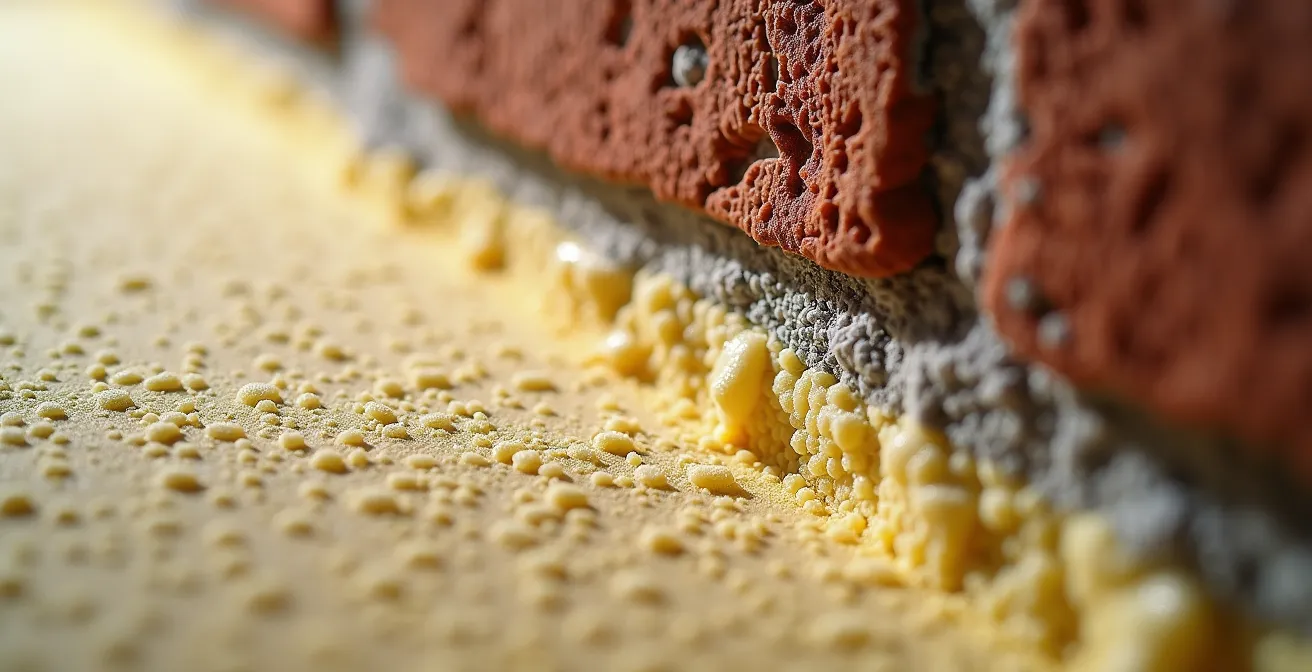
As the image above details, closed-cell spray polyurethane foam (SPF) is often the superior engineering choice for below-grade foundation walls. When applied directly to the brick, it forms a monolithic, airtight barrier. Its key advantage is that it functions as an insulator, an air barrier, and a vapour barrier in a single application. This is crucial for preventing condensation, which occurs when warm, moist indoor air meets a cold foundation wall. By stopping this moisture drive, closed-cell SPF significantly reduces the risk of mould and protects the integrity of interior framing and finishes.
Mineral wool (like Roxul) is another excellent insulator with high fire resistance and sound-dampening properties. However, in a basement setting, it requires a separate, meticulously installed vapour barrier to be effective. Any imperfection in this barrier can trap moisture within the wall cavity, leading to the very problems you are trying to prevent. While spray foam represents a higher initial investment, its all-in-one performance and superior moisture control often provide better long-term value and peace of mind. This investment in high-performance insulation is a key component of maximizing the return on your underpinning project by ensuring the longevity and usability of the newly created space.
Committee of Adjustment: why your structural modification project could take 6 months
Underpinning is not a simple renovation; it is a major construction project that requires formal approval from the City of Toronto. Navigating this bureaucratic process is a critical phase that requires patience and professional guidance. The first step is to obtain a building permit, a process that involves submitting detailed structural drawings prepared by a licensed engineer. These drawings must outline all proposed changes, including foundation modifications, structural supports, plumbing, electrical, and egress requirements like windows and exits. Typically, the timeline for acquiring a standard building permit is around 25 to 30 days, assuming all documentation is in perfect order.
However, the timeline can extend significantly if your project requires a “minor variance”—a deviation from the city’s zoning by-laws. This is common in underpinning projects that aim to create a legal secondary suite, as you might need exceptions for ceiling height, parking, or setbacks. In this case, you must apply to the Committee of Adjustment. This process is far more involved and can easily add four to six months to your pre-construction timeline. It involves public hearings and requires a strong, well-documented case to be made for why the variance should be granted. Failure to secure this approval means your project cannot proceed as planned.
The permit and variance process involves several key stages, each requiring expert input and city oversight. Understanding these steps and their associated costs is essential for realistic project planning.
- Initial Engineering Assessment: An engineer visits the site to create a detailed project plan, which forms the basis of the permit application. This often includes soil testing to determine ground conditions.
- Permit Application: The finished engineering drawings are submitted to the local municipality.
- Scheduled Inspections: Once work begins, city inspectors must be called in at critical milestones—such as before excavation, after forms are built, and before concrete is poured—to ensure all work complies with the Ontario Building Code.
These non-negotiable steps ensure the safety and legality of your renovation. The costs associated with this phase are a necessary part of the investment, protecting you from future legal issues and ensuring the structural soundness of your home.
| Service Type | Cost Range | Timeline |
|---|---|---|
| Building Permit | $2,000 – $3,000 | 2-4 weeks |
| Structural Engineer | $100 – $200/hour | 1-2 weeks |
| Architectural Drawings | $2,500 – $4,500 | 2-3 weeks |
Insurance and WSIB: the vital documents to check before signing the contract
Selecting a contractor for an underpinning project is the single most important decision you will make. This is not a job for a general handyman; it requires a specialized company with proven experience, proper licensing, and comprehensive insurance. Before signing any contract, your primary responsibility is to perform rigorous due diligence to protect your investment and your property. As CSG Renovation, a company with over a decade of experience, states, all work must be performed in line with “building code requirements.” This commitment must be backed by verifiable credentials.
The two most critical areas to verify are liability insurance and Workplace Safety and Insurance Board (WSIB) coverage. A contractor must carry a minimum of $2 million in commercial liability insurance. This protects you in the event of accidental damage to your property or, critically, to a neighbouring property—a very real risk when excavating along shared party walls in Toronto. Ask for a copy of their insurance certificate and call the provider to confirm it is valid and active.
Equally important is confirming the contractor has current WSIB coverage for all their workers. WSIB is Ontario’s mandatory workplace safety insurance. If a worker is injured on your property and the contractor is not covered, you, the homeowner, could be held liable for their medical costs and lost wages. You can and should request a WSIB Clearance Certificate online, which proves the contractor is in good standing. A refusal to provide these documents is an immediate red flag. Your goal is to hire a team that is not only skilled but also operates with full legal and financial accountability.
Your Action Plan for Contractor Due Diligence
- Verify Licenses: For underpinning, confirm the contractor is fully licensed for structural foundation work in Ontario. If plumbing is involved, ask to see a Master Plumber Licence.
- Check Certifications: Look for relevant qualifications like IICRC certification for waterproofing, which indicates specialized training and adherence to industry standards.
- Confirm Engineering Oversight: Ensure the contractor has a certified structural engineer on their team or as a retained consultant to sign off on all plans and work, guaranteeing code compliance.
- Request Insurance Certificate: Obtain a copy of their commercial liability insurance policy and verify its active status with the insurance provider.
- Obtain WSIB Clearance: Use the contractor’s legal business name to get a real-time WSIB Clearance Certificate online to confirm they are in good standing.
Structural renovation: why you must keep a 20% financial cushion
Underpinning is a significant financial undertaking, and establishing a realistic budget is fundamental to a successful project. While it’s tempting to anchor to the lowest quote, it is critical to understand the full scope of costs and, most importantly, to plan for the unexpected. In Toronto, the cost for a full basement underpinning project can vary widely, but a typical range is between $40,000 and $90,000 or more, depending on the size of the foundation, soil conditions, and complexity of the job.
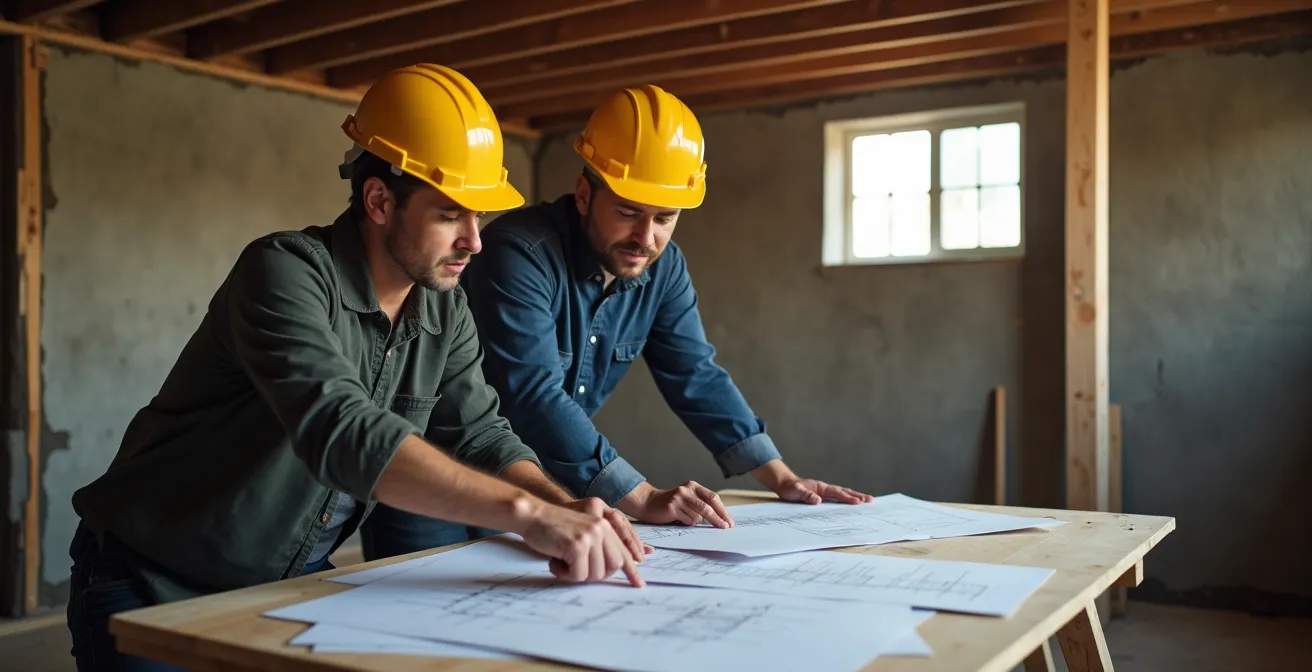
The most crucial element of budgeting for this type of work, especially in older homes, is the contingency fund. As an engineering standard, you must set aside a financial cushion of at least 20% of the total quoted cost. This is not “extra” money; it is an essential part of the budget allocated for unforeseen issues that are impossible to predict until excavation begins. These can include dealing with unexpected boulders, managing high water tables, discovering buried debris, or finding that the existing foundation is in worse condition than initially thought. A contractor who suggests a contingency is not trying to inflate the price; they are being realistic and responsible. The conversation shown above, where details are reviewed and concerns are addressed, is a hallmark of a professional relationship built on transparency.
Case Study: Budgeting for a Victorian Home Underpinning
A Toronto homeowner embarking on an underpinning project for their Victorian house provides a real-world example of budgeting. After consulting multiple specialists, they received quotes ranging from $55,000 to $80,000. Experienced contractors advised them to budget approximately $80 per square foot to underpin and excavate the basement by an additional two feet. This case highlights the significant investment required and reinforces the importance of obtaining multiple, detailed quotes from specialized firms to establish a realistic baseline budget before adding the critical 20% contingency.
Viewing this 20% fund as a mandatory project cost from the outset prevents financial stress and project delays down the line. It ensures that when an inevitable surprise arises, you have the resources to address it correctly without cutting corners on safety or quality, thereby protecting your primary investment.
How to transform your basement into a legal rental apartment in Toronto
The ultimate financial payoff of an underpinning project for many Toronto homeowners is the creation of a legal secondary suite. In a city with high rental demand, a basement apartment can generate significant monthly income, accelerating the return on your investment. However, the key word is “legal.” An illegal basement unit is a major liability, subject to city fines and potential orders to vacate. Underpinning is the first and most crucial step in meeting the city’s strict requirements for a legal dwelling.
The primary hurdle that underpinning solves is ceiling height. The Ontario Building Code requires a minimum habitable ceiling height, and after underpinning, a typical basement can achieve a comfortable 8 to 10-foot ceiling height, transforming a cramped space into a bright, desirable apartment. But height is only the beginning. Creating a legal unit involves a comprehensive approach to safety and livability, guided by specific code requirements.
Beyond the structural work, converting your newly deepened basement into a compliant rental unit requires several critical installations. Each element is designed to ensure the safety and well-being of its future occupants and must be part of your renovation plan from the very start.
- Egress and Natural Light: You must install larger windows that meet egress requirements (large enough for a person to escape in a fire) and a separate, legal entrance for the unit.
- Fire Separation: The ceiling and walls between the basement unit and the main house must have a specific fire-resistance rating, typically achieved with fire-rated drywall and insulation.
- Moisture and Water Management: A robust system including a sump pump with a battery backup is essential to handle groundwater, especially during power outages. A check valve on the drain system is also required to prevent sewer backflow.
- Proper Ventilation: The unit must have adequate mechanical ventilation to ensure healthy air quality, independent of the main house’s HVAC system.
By investing in these requirements upfront, you are not just building an apartment; you are creating a safe, legal, and highly valuable financial asset that will generate income for years to come.
Key takeaways
- Underpinning is a structural engineering project first, not just a renovation. Prioritize professional engineering oversight.
- A 20% contingency fund is not optional; it is a mandatory part of the budget to cover the inevitable unknowns of excavating old foundations.
- The primary financial return comes from creating a legally compliant secondary suite, which requires meeting strict building code requirements for height, egress, and safety.
How to modernize a Victorian house in Toronto without destroying its historical soul
Underpinning a heritage home, such as one of Toronto’s iconic Victorians, presents a unique set of challenges and responsibilities. The goal is not simply to add space but to do so while respecting and preserving the historical character that makes these properties so valuable. This requires a delicate balance between modern engineering and historical sensitivity. The process involves more than just digging; it’s about carefully reinforcing a century-old structure without compromising its integrity or aesthetic.
As noted by CTA Contracting, many Toronto homeowners pursue these projects to “transform dark, low-ceiling basements into legal living spaces or rental units,” but in a heritage context, the approach must be surgical. The foundations of these homes are often made of brick or rubble stone, materials that require specialized knowledge. A contractor experienced with heritage properties, like GJ MacRae who worked on a 130-year-old house, understands how to excavate in careful sequence to prevent settlement or cracking in the fragile brickwork above.
Many Toronto homeowners pursue underpinning to transform dark, low-ceiling basements into legal living spaces or rental units.
– CTA Contracting, Toronto Foundation Repair Guide
Modernization should complement, not erase, the home’s history. When creating new spaces in the basement, consider using materials and finishes that echo the home’s original character. For example, leaving a section of the original stone or brick foundation exposed (after it has been properly cleaned, sealed, and insulated from behind) can become a stunning feature wall. Similarly, design choices for new windows and doors should be in keeping with the home’s architectural style. The objective is to create a seamless transition between the old and the new, ensuring the modern upgrades enhance the historical asset rather than detracting from it. This thoughtful approach not only creates a beautiful and functional space but also significantly increases the property’s unique market value.
Wallpaper or paint: which finish to choose to hide the flaws of an old wall?
After the immense structural effort of underpinning, waterproofing, and insulating, the final finishing touches bring the new space to life. However, the walls in a newly renovated basement, especially one in an older home, are rarely perfect. The process of underpinning and waterproofing can leave foundation walls repaired but uneven. Your choice of wall covering is therefore not just an aesthetic one; it’s a practical decision to create a smooth, polished look. Before any finishes are applied, the wall must be properly prepared. This is the final stage of moisture defense.
The first step is a meticulous process of sealing and protection. Any visible cracks in the foundation walls must be repaired. Then, a specialized moisture-protective membrane is applied and wrapped around the new footings, connecting directly with the drainage system. Finally, an even layer of gravel is distributed before the new concrete floor is poured, completing the multi-layered defense against moisture. This preparation ensures that whatever finish you choose will last. Toronto even offers incentives for this work, with up to 10% money back through rebates for waterproofing services, acknowledging its importance in preserving the city’s housing stock.
When it comes to covering these prepared but imperfect walls, you have two main options: paint or wallpaper. Paint is a simple, cost-effective choice, but it tends to highlight every bump and wave in the wall surface. For a truly professional finish, the wall must first be framed, drywalled, and then skim-coated with plaster to create a perfectly flat surface (a Level 5 finish). This is a labour-intensive process. On the other hand, heavy-grade or textured wallpaper can be a more forgiving and strategic choice. Certain modern wallpapers are specifically designed to mask minor surface imperfections, offering a decorative and practical solution in one. They can add character, warmth, and a high-end feel to the space, effectively hiding the scars of major structural surgery and completing the transformation from a rough foundation to a refined living area.
By approaching an underpinning project with an engineering mindset, you transform a significant expense into a strategic, multi-faceted investment. You are not just adding a room; you are correcting foundational flaws, mitigating future risks, and creating a legally compliant, income-generating asset that substantially increases the overall value and resilience of your Toronto property. To ensure your project realizes its full potential, the next logical step is to consult with a licensed structural engineer and a specialized underpinning contractor to begin a detailed assessment of your home.